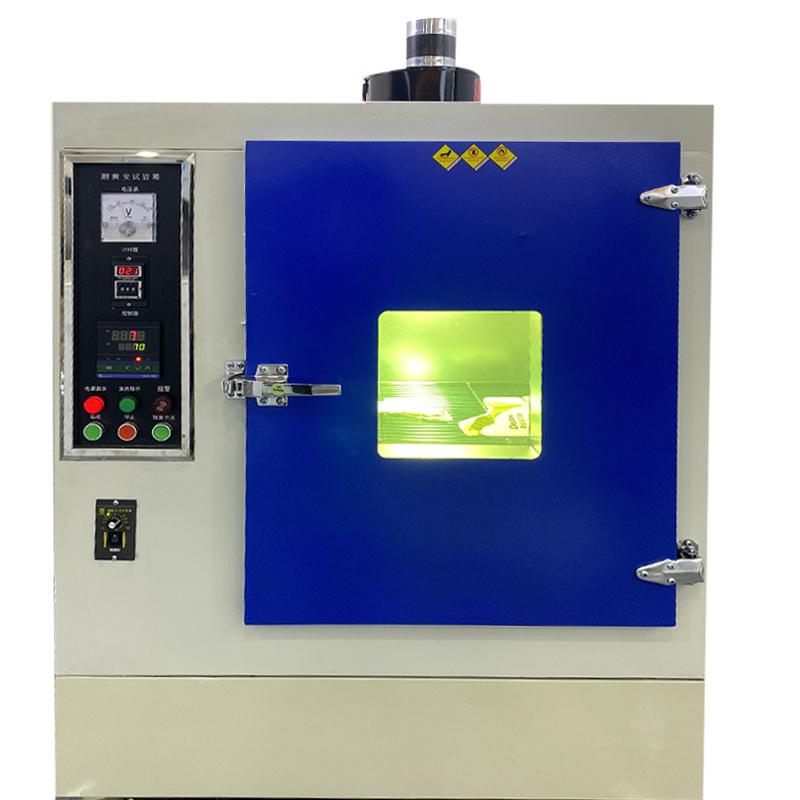
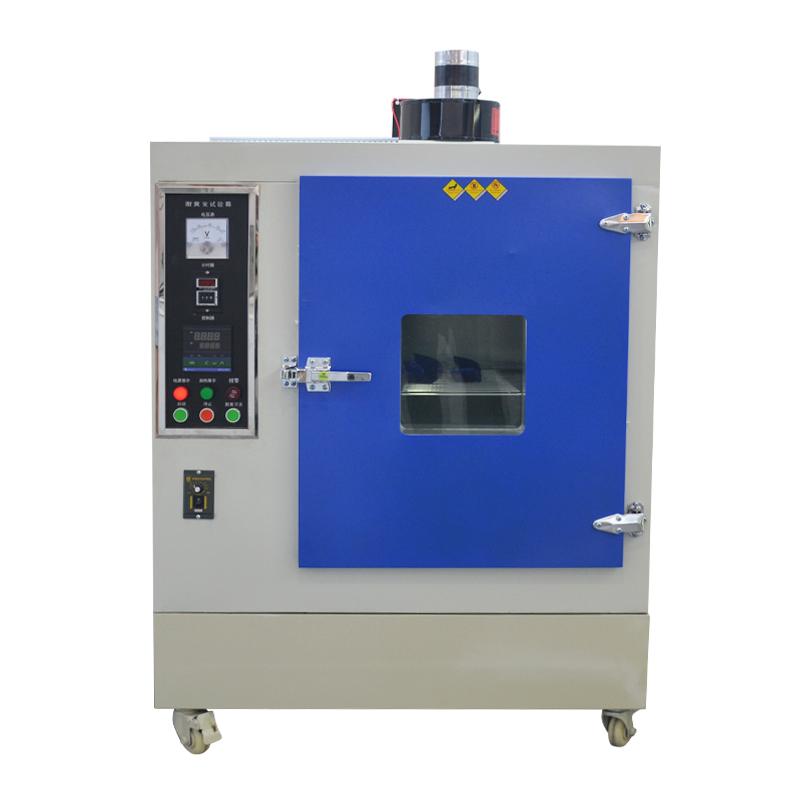
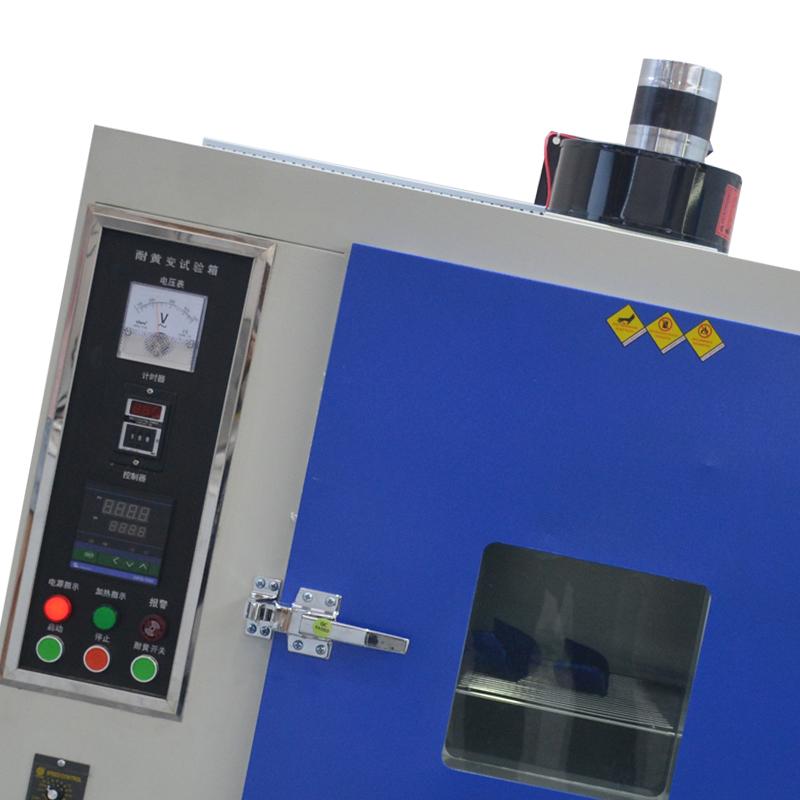
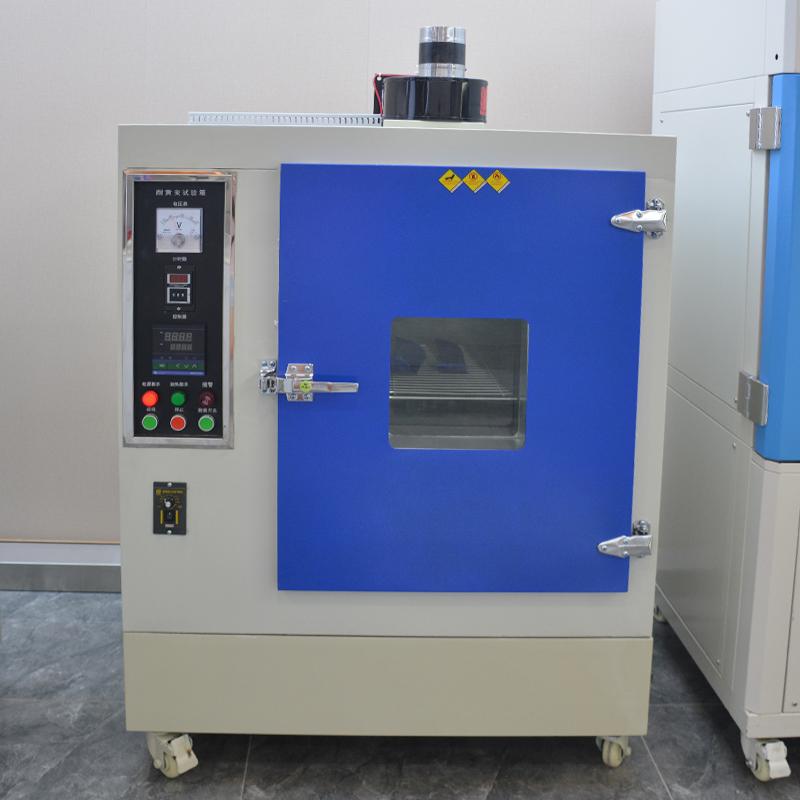

CHINA NBC-NH-225 Non-yellowing Test Chamber 225L without turntable
SE NBC-NH-225

HuiTai NBC-NH-225 Non-yellowing Test ChamberSPEC
HuiTai NBC-NH-225 Non-yellowing Test ChamberDetails
HuiTai NBC-NH-225 Non-yellowing Test ChamberPacking list
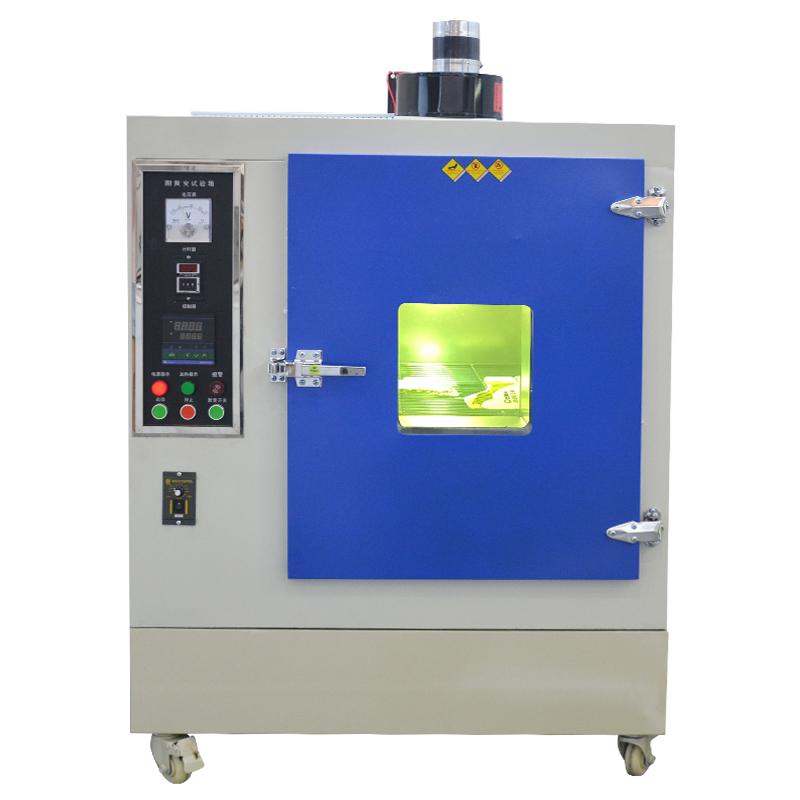
- SKU
- NB039792
- Inner box size
- 600*500*750mm
- Volume
- 225L
- Inner box material
- Galvanized sheet
- Enclosure Material
- Cold plate baking paint
- Temperature range
- RT+10~60°C
- lamp
- Yellowing resistant bulb 300W * 1
- Time setting
- 1~999min
- temperature Controller
- digital display
- Power
- 220V 3.5kW
- Standards
- Comply with ASTM-D1148, AATCC16-1998 HG/T 3689 and other national standards
product description
Yellowing is one of the manifestations of aging. The cause of yellowing may be light or heat. Under natural sunlight, ultraviolet rays for a long time, or under the action of heat, oxygen, stress, trace moisture, impurities, improper processes, etc. The phenomenon of yellowing in color is called yellowing.
The anti-yellowing Test Chamber is suitable for simulating the ultraviolet radiation and heat of sunlight. The sample is exposed to ultraviolet light and temperature in the machine. After a period of time, observe the degree of yellowing resistance of the sample. You can use the stained gray mark as a reference. To determine the level of yellowing, the test time depends on the agreement of the manufacturer. The machine is equipped with complete accessories, which can be used as a basic anti-yellowing test, and can also be used as an aging test machine and oven, showing the multi-purpose function of one machine.
use
It is used for accelerated yellowing test of materials (generally at 60°C, the test of materials in this box for 3 hours is equivalent to the yellowing results of 2 months in the natural environment). The pollution gray mark can be used as a reference to determine the yellowing level of the material. The degree of yellowing of the material can also be visually inspected
2. The influence of light
When the material absorbs light energy, the molecular chain on the absorbing site will produce carbon-carbon bond or carbon-hydrogen bond cleavage.
Effect of heat and oxygen
Oxidation of the material occurs and heat accelerates the oxidation process of the material. Free radicals are easily formed after the formation of peroxidized structures, resulting in discoloration of light, white materials. Oxygen has the most significant destructive effect on unsaturated diene materials. The effect of heat, in addition to activating oxidation, can also lead to the breakage of -C—C— bonds and the breakage of double bonds.
other factors
Yellowing is also related to the additives added to the material, the existing moisture, impurities and the processing and production process. Incorporation of various chemical or mechanical impurities will reduce the stability of the polymer. The reasons are complex and require specific analysis of specific issues.
Therefore, light aging test and heat aging test are both types of yellowing resistance test. Commonly used standards for yellowing resistance testing include ASTM D1148, etc. Anti-yellowing Tester According to the phenomenon that light-colored or white products are prone to yellowing under long-term exposure to natural sunlight, use solar bulbs or lamp tubes and heating and temperature control devices to simulate the natural environment. The solar light bulb and the heating temperature control device irradiate the sample. Observe the color change on the surface of the sample, determine the degree of discoloration of the sample, and then determine the ability of the material to resist yellowing under solar radiation. It is suitable for arbitration and precision scientific research and development.
Standards
Anti-yellowing Tester conforms to ASTM-D1148, AATCC16-1998 HG/T 3689 and other national standards
Box structure
Light source: standard anti-yellowing lamp x 1
Weight: 120kg
Accessories
Product Manual
After-sales service agreement
Equipment regular maintenance book (each set)
One adjustable compartment,
Mobile casters (4 pcs)
maintenance
1. Clean the dust on the surface and inner cavity to keep the machine clean and hygienic.
2. Check whether the current of the ammeter is the same as normal. If there is any abnormality, notify the maintenance worker to check it.
3. In the event of a sudden power failure, the heating switch should be turned off to prevent automatic activation when the power comes in.
4. Check whether the fan is running normally and whether there is any abnormal sound. If there is any abnormal sound, turn off the machine immediately and notify the maintenance worker to check it.
maintenance
1. Check the vents for clogging and clean out any accumulated dust.
2. Whether the fan is running normally.
3. The maintenance worker checks whether the current is normal.
4. Check whether the thermostat is accurate, if not, please adjust the static compensation or sensor correction value of the thermostat.
5. Check whether the heat pipe is damaged and whether the circuit is aging.
6. Check that the delay timer is accurate
- 1Working Principle and Application Analysis of Leather Yellowing Resistance Test Box
- 2Introduction of working principle and application scenario of fabric yellowing resistance aging Test Chamber