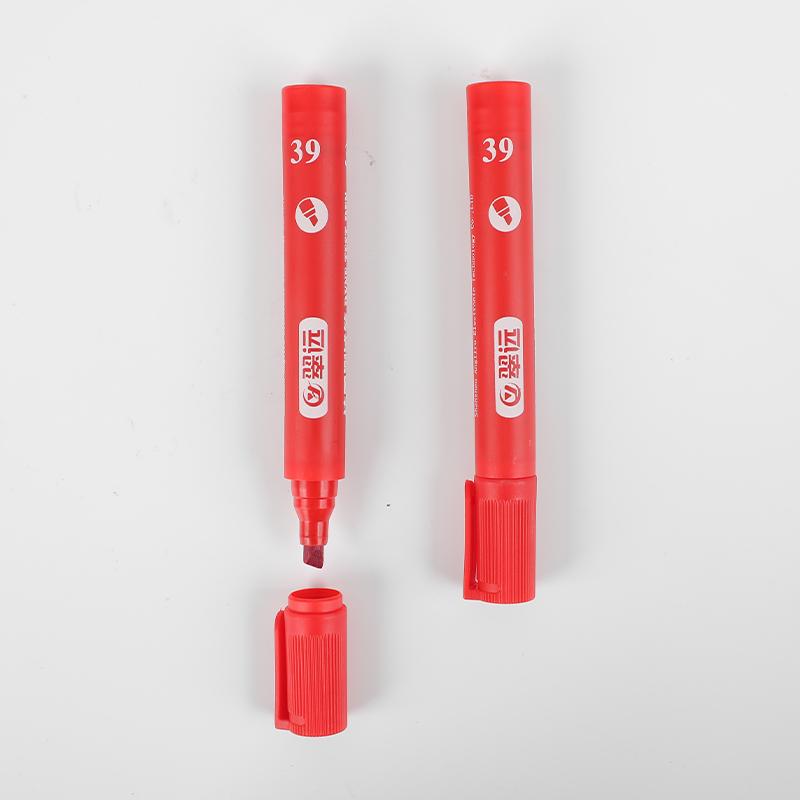
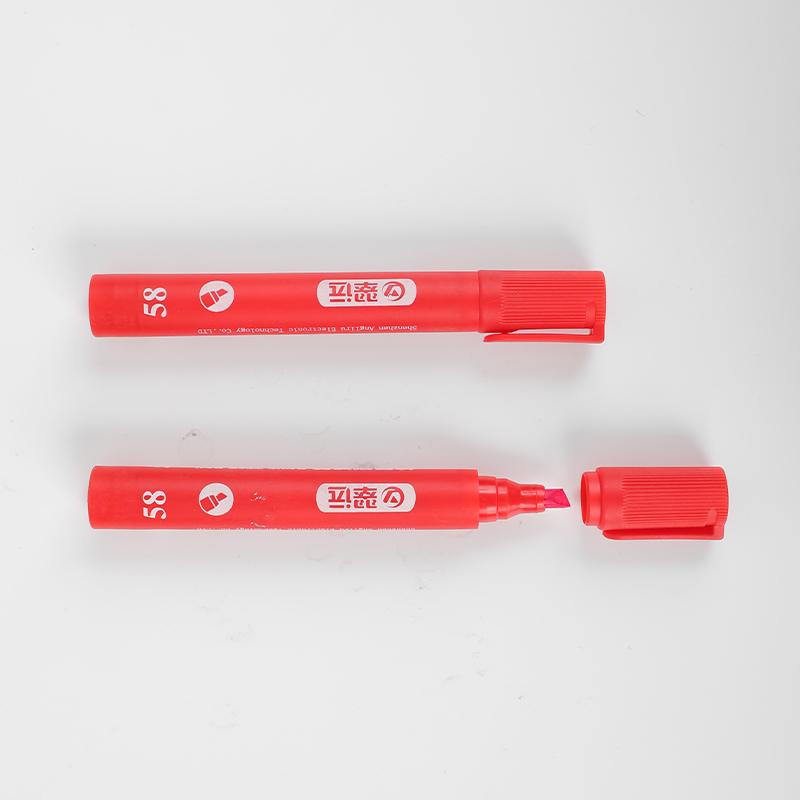
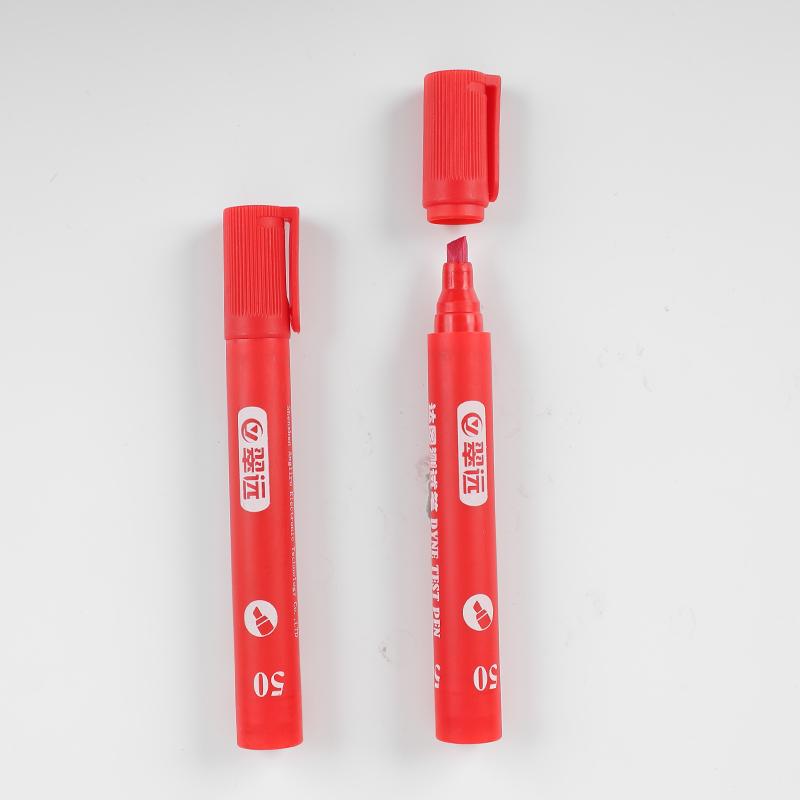


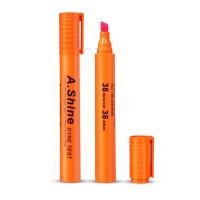
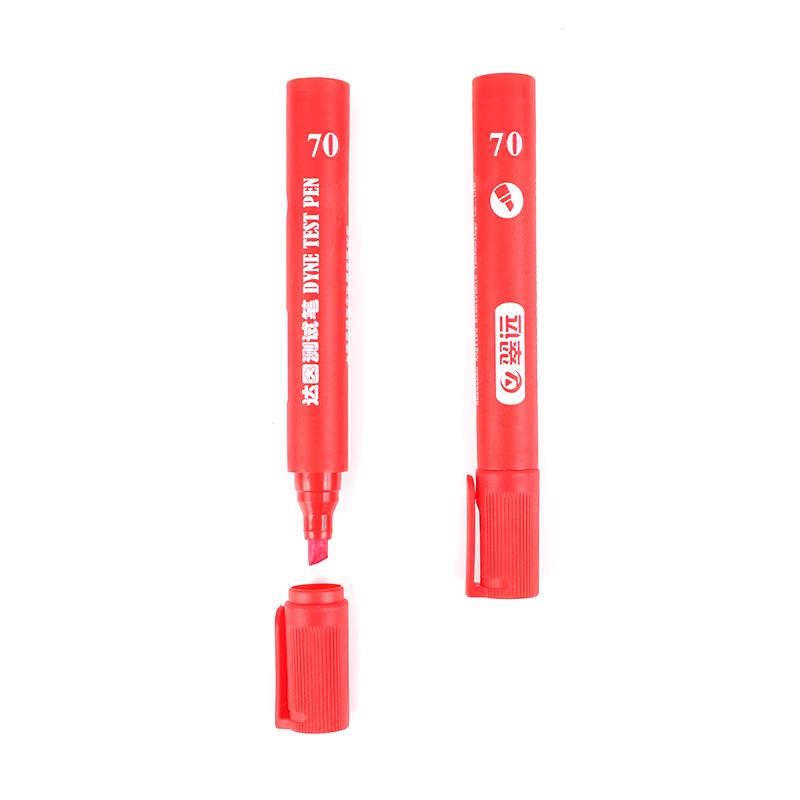
CUIYUAN CY 70 Dyne pen Corona pen Surface Tension Test Pen
SE 70
70

CuiYuan 70 Dyne penSPEC
CuiYuan 70 Dyne penDetails
CuiYuan 70 Dyne penPacking list
- SKU
- NB041254
- Color
- Red
Introduction
CY Dyne pen (liquid) can be customized according to your actual needs, including some special needs such as the color of the ink, the shape and size of the pen head, and so on.
Applications
Dyne pen, also known as corona pen and Surface Tension Test Pen, can accurately test whether the surface tension of the plastic film reaches the value of the test pen. Let users know clearly whether the film is suitable for printing, lamination or vacuum aluminum plating, etc., so as to effectively control the quality and reduce the loss caused by unqualified . It is not limited to plastic films, but can also test the surface .
Specification
Available in pens and bottles.
Bottle specification: 10ml 30ml 60ml 100ml 200ml 500ml
Color: red, blue and special colors customized by customers (white, black, etc.)
Application
Suitable for gravure printing, offset printing, UV printing, screen printing, tie-dye printing, inkjet , blown film, T-extrusion film, stretch film, coating, aluminizing, etc. .
Applicable material
Plastic films: PS, PE, PP, PET, PI, PC, NY, CPP, OPP, PVC,
Conductive materials: aluminum foil, copper foil, carbon foil, evaporated film.
Other materials: glass, ceramics, plastic sheets, plastic pipes, etc.
- 1Application of Dyne pen in surface tension measurement
- 2Working mechanism and selection considerations of anti-shrinkage agent
- 3Types, applications and evaluation methods of levelling agents
- 4Dyne pen in film printing