


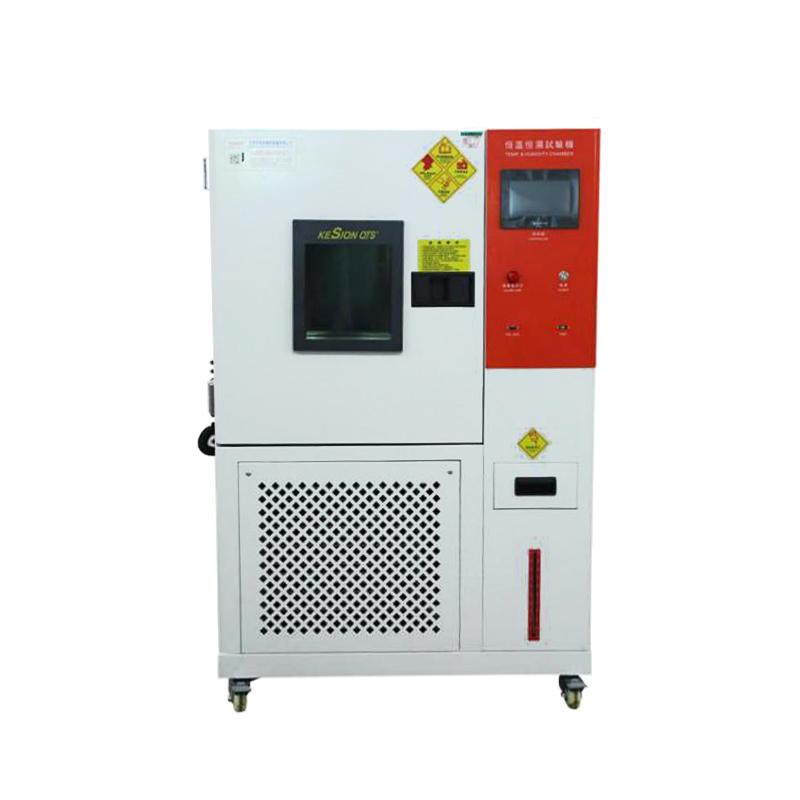
KESIONOTS KS-HW150F Experimental Constant Temperature and Humidity Chamber -60~ 150 ℃/150L
SE KS-HW150F(150℃)

-
 CHINA NBC-150L-60 Electronic High and Low Temperature Humidity Cyclic Chamber Paint Panel -60 ℃/150L$ 3428.00SE
 -
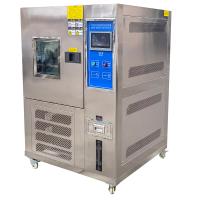 CHINA NBC-150L-60 Precision constant temperature and humidity machine Constant Temperature and Humidity Chamber -60 ℃/150L$ 3428.00SE
 -
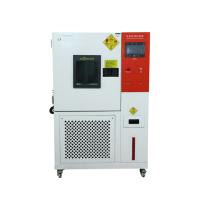 KESIONOTS KS-HW150E Low Temperature Constant Temperature and Humidity Chamber -50~ 150 ℃/150L$ 4927.00SE
 -
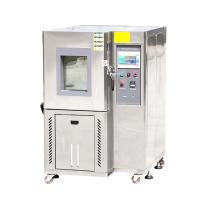 Haiyoda programmable constant temperature and Humidity Test Chamber QT-E702-150B60 -60 ℃/150L$ 2914.00SE
 -
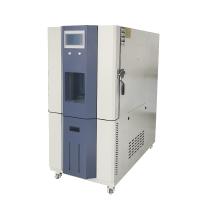 Haiyoda small constant temperature and Humidity Test Chamber QT-E702-100K60 -60 ℃/150L$ 2914.00SE





kesionots KS-HW150F(150℃) humidity ChamberSPEC
kesionots KS-HW150F(150℃) humidity ChamberDetails
kesionots KS-HW150F(150℃) humidity ChamberPacking list

- SKU
- NB041517
- Temperature range
- -60~150℃
- Temperature Resolution
- ±0.1℃
- Temperature fluctuation
- ±0.5℃
- Temperature Uniformity
- ±1℃
- Humidity control range
- 20~98%R.H.
- Humidity fluctuation
- ±2.0%R.H
- Humidity Uniformity
- ±3.0%R.H
- Heating rate
- ≈4.0℃/min
- Power
- 220V AC (+/- 10%), protective ground wire, ground resistance ≤ 4Ω;
- Interior size
- 500*600*500mm
- Dimensions
- 1000*1460*1040mm
- Interior Volume
- 150L
- Humidity resolution
- ±0.1%R.H
- Temperature control Accuracy
- ±1.0℃
- Humidity Control Accuracy
- ±2.0%R.H.
- Display
- Programmable 5.7-inch LCD color liquid crystal display
- Communication interface
- RS-232 standard communication interface device, which can be connected to a personal computer (PC) at the same time for multi-machine control and management
- display toggle
- Chinese/English display subtitles, can be freely switched.
- Product test stand
- 2
- Safety Devices
- Air burn prevention, high Voltage protection, overheating protection, overcurrent protection, Pottery and porcelain E-16 fast fuse, no fuse overload protection
- frequency
- 50±0.5Hz
- power
- About 3.5KW
- Power switch
- Air switch (40A prohibits knife switch or power socket)
- Humidification water resistivity
- ≥ 500MZ
- material
- Outer box high-grade cold-rolled sheet nano-baking paint, inner box is stainless steel
- Thermal insulation material
- High temperature resistant high density formic acid vinegar foam insulator material
- Chill down the system
- Air and water cooled double stage compressor
- Controller
- Korean "TEMI" "TH-900C" or Japanese "OYO" card to choose
- Cooling rate
- ≈1.0℃/min
Introduction
The temperature and Humidity Test Chamber can accurately simulate the natural environment of low temperature, high temperature, high temperature and high humidity, low temperature and low humidity, and is suitable for product reliability in various industries such as plastics, electronics, food, clothing, vehicles, metals, chemicals, and building materials. detection.
Features
1. With the function of automatic calculation;
2. With constant temperature and slope setting function;
3. With hold, skip, standby and two sets of time signal output functions;
4. With cold engine/hot engine start selection function;
5. With temperature display value correction function;
6. With temperature sensing body correction function;
7. It has the function of automatic stop and start of the compressor;
8. It has the function of scheduled start/stop operation;
9. With power failure memory function: after power failure, program data memory can be kept for 6 months;
10. With powerful network monitoring and control network functions;
11. It has a capacity of 1000 programs, each of which can cycle 999 steps, and the maximum value of each segment is 99 hours and 59 minutes;
12. It has the function of fault alarm, reason and processing reminder;
13. Has the upper and lower limit temperature protection function;
14. With self-diagnosis function;
15. Possess PC link air energy;
Control System Features
This machine adopts: TH-1200C/TEM880 programmable 5.7-inch LCD color liquid crystal display. System capacity: 120 groups of programs X 100 segments, the number of segments required by each group of programs can be divided arbitrarily, and each group of programs can be freely connected to each other. Cycle Setting: Each group of operation programs can be executed, 9999 times or countless cycles can be repeated, and at this level can be divided into 5 resistance segments to execute additional part of the cycle. Operation mode: fixed value/program/link and so on. The operation mode can meet the execution of various temperature test conditions.
1. Control method: intelligent microcomputer PID+SSR/SCR automatic forward and reverse bidirectional synchronous output.
2. Data setting: Built-in program directory management, which facilitates the establishment, modification, inspection or operation of various test names and program data.
3. Curve drawing: After the data setting is completed, the setting curve of relevant data can be obtained immediately, and the drawing screen of the actual operation curve can also be known during operation
4. Timing control: 2 sets of timing output control interfaces, with 10 kinds of Timer Control modes, which can be used for external logic drive components to execute start/stop timing planning.
5. Scheduled start: All test conditions can be set to schedule the start-up function.
6. Operation lock: It can lock the functional conditions of start and stop to prevent other personnel from accidentally touching and affecting the experimental results.
7. Power failure recovery: with power failure memory device and restart mode of the machine when power is restored 1. BREAK (interruption) 2. COLD (cold machine start) 3. HOT hot machine start).
8. Safety detection: Built-in 15 full-featured system detection and sensing devices to ensure the safe operation of the machine. When abnormal faults are sensed, the control power of the machine will be cut off immediately, and the fault occurrence time and abnormal items will be automatically displayed. Troubleshooting and traceability: It can display the historical data of abnormal faults.
9. External protection: an electronic over-temperature protection device independent of the controller.
10. Communication interface: RS-232 standard communication interface device, which can be connected with a personal computer (PC) at the same time for multi-machine control and management
11. Display switching: Chinese/English subtitles can be switched freely.
12. Humidification system box-type water supply, manually add water 20L each time
13. The weight of the product rack should be within 20 kg
14. Two product test racks
Cooling System
The refrigeration system is one of the key parts of the comprehensive Test Chamber. Generally speaking, the refrigeration methods are mechanical refrigeration and auxiliary liquid nitrogen refrigeration. Mechanical refrigeration adopts vapor compression refrigeration. They are mainly composed of compressors, condensers, throttling mechanisms and evaporators. If the low temperature of our test should reach -55°C, single-stage refrigeration is difficult to meet the requirements, so the refrigeration method of the constant temperature and Humidity Chamber generally adopts cascade refrigeration. The refrigeration system of the constant temperature and Humidity Chamber consists of two parts, called the high temperature part and the low temperature part, each part is a relatively independent refrigeration system. The evaporation of the refrigerant in the high-temperature part absorbs the heat from the refrigerant in the low-temperature part and vaporizes; the evaporation of the refrigerant in the low-temperature part absorbs heat from the cooled object (air in the Test Chamber) to obtain cooling capacity. The high temperature part and the low temperature part are connected by an evaporative condenser, which is not only the condenser of the high temperature part, but also the condenser of the low temperature part.
Heating system
The heating system of the Test Chamber is relatively simple compared to the refrigeration system. It is mainly composed of high-power resistance wires. Due to the high temperature rise rate required by the Test Chamber, the heating system power of the Test Chamber is relatively large, and a heater is also installed on the bottom plate of the Test Chamber.
6. Temperature and humidity system
The temperature system is divided into two subsystems of humidification and dehumidification.
The humidification method generally adopts the steam humidification method, that is, the low-pressure steam is directly injected into the test space for humidification. This humidification method has high humidification ability, fast speed, and sensitive humidification control, especially when the temperature is lowered, it is easy to realize forced humidification.
There are two ways of dehumidification: mechanical refrigeration dehumidification and dry dehumidification. The dehumidification principle of mechanical refrigeration dehumidification is to cool the air below the dew point temperature, so that the water vapor greater than the saturated moisture content is condensed and precipitated, thus reducing the humidity. The dehumidification of the dryer is to use the air pump to extract the air in the Test Chamber, inject the dry air, and at the same time send the humid air into the recyclable dryer for drying, and then send it into the Test Chamber after drying, so that the cycle is repeated for dehumidification . At present, most comprehensive Test Chambers adopt the former dehumidification method and the latter dehumidification method, which can make the dew point temperature below 0°C. It is suitable for occasions with special requirements, but the cost is more expensive.
sensor system
The sensors are mainly temperature and humidity sensors. Platinum electric groups and thermocouples are widely used in temperature sensors. There are two methods of measuring humidity: wet and dry bulb thermometer method and solid-state electronic sensor direct measurement method. Due to the low measurement accuracy of the dry-wet bulb method, the current constant temperature and Humidity Chambers are gradually replacing the dry-wet bulb with solid-state sensors to measure humidity.
Related standards
The performance indicators of the constant temperature and Humidity Chamber meet the requirements of GB5170, 2, 3, 5, 6-95 "Basic parameter verification methods for environmental test equipment for electrical and electronic products: low temperature, high temperature, constant damp heat, alternating damp heat test equipment":
Basic environmental test procedures for electrical and electronic products Test A: Low temperature test method GB2423.1-89 (IEC68-2-1)
Basic environmental test procedures for electrical and electronic products Test B: High temperature test method GB2423.2-89 (IEC68-2-2)
Basic environmental test procedures for electrical and electronic products Test Ca: Constant damp heat test method GB/T2423.3-93 (IEC68-2-3)
Basic environmental test procedures for electrical and electronic products Test Da: Alternating damp heat test method GB/T423.4-93 (IEC68-2-30)
GJB150.3 (ML-STD0-810D) high temperature test method
GJB150.4 (MIL-STD-810D) low temperature test method
GJB150.9-1986 "Military Equipment Environmental Test Method: Damp Heat Test"
GJB4.6-1983 "Environmental Test of Marine Electronic Equipment Alternating Humidity and Heat Test"
GJB367.2-1987 "Environmental Test Methods for General Technical Conditions of Military Communication Equipment" 411 Damp Heat Test
GJB4.5-1983 "Constant Damp Heat Test for Environmental Test of Ship Electronic Equipment"
GB10592-93 "Technical Conditions for High and Low Temperature Test Chambers"
GB10586-93 "Technical Conditions for Humidity and Heat Test Chamber"
GJB360.8-87 (MIL-STD-202f) high temperature life test
GB/T5170.2-96 "Temperature Test Equipment"
GB/T5170.5-96 "Damp Heat Test Equipment"
YD1268-2003 "Safety Requirements Standard for Mobile Communication Handset File Batteries and Chargers High Temperature Performance Test, Temperature Cycle Test, Thermal Shock Test"
UL1642 "Environmental Tests in Lithium Battery Standards - Heating and Thermal Cycle Test Methods and Requirements"
UN38.3 "Standard Regulations for Testing Lithium Batteries and Batteries - Temperature Test"
GB/T18287-2000 "General Specification for Lithium-ion Batteries for Cellular Phones High Temperature, Low Temperature, Constant Humidity Performance, Thermal Shock Test"
GB8897.4-2002 "Primary Batteries Part 4: Environmental Tests for Safety Requirements of Lithium Batteries - Thermal Shock and Thermal Abuse Tests"
UL2054-2005 "Environmental testing in battery standards - heating and thermal cycle testing"
SJ/T 11169-1998 "Lithium battery standard oven oven temperature cycle, temperature test"
GB8897.4-2002 "Primary Batteries Part 4: Environmental Tests for Safety Requirements of Lithium Batteries - Thermal Shock, High and Low Tests"
SJ/T11170-1998 "Heating and Temperature Cycle Test in Standard Environmental Test of Household and Commercial Batteries"
YD1268.2-2003 "Safety Requirements Standard for Battery Chargers of Mobile Communication Handsets Damp Heat Test"
QC/T743-2006 "Standard Heating Test of Metal Hydride Nickel Batteries for Electric Vehicles"
QC/T744-2006 "Standard Heating Test of Metal Hydride Nickel Batteries for Electric Vehicles"
- 1How to solve the problem after the failure of the constant temperature and humidity Test Chamber is found?
- 2How to solve the leakage of large constant temperature and humidity Test Chamber?
- 3Troubleshooting method of constant temperature and humidity Test Chamber
- 4How to do a good job in the regular maintenance and cleaning of the constant temperature and humidity Test Chamber?
- 5What should be paid attention to when using a constant temperature and humidity Test Chamber?
- 6What should be paid attention to in the maintenance of the constant temperature and humidity Test Chamber?
- 7How to use the constant temperature and humidity Test Chamber to save energy and electricity?
- 8Introduction of alarm function of constant temperature and humidity Test Chamber
- 9System introduction of constant temperature and humidity Test Chamber
- 10What is the principle of the walk-in constant temperature and humidity Test Chamber? What are the method steps?
- 1IEC 《Environmental testing – Part 2-78: Tests – Test Cab: Damp heat, steady state》
- 2IEC 《Environmental testing – Part 2-67: Tests – Test Cy: Damp heat, steady state, accelerated test primarily intended for components》
- 3ASTM 《Standard Practice for Heat and Humidity Aging of Oxidatively Degradable Plastics》
- 4GB/T 2423.34-2024《Environmental testing—Part 2:Test methods—Test Z/AD: Composite temperature/humidity cyclic test》
- 5JJF 1564-2016《Calibration Specification for Temperature and Humidity Standard Chambers》
- 6JJF 1270-2010《Calibration Specification for Temperature/Humidity/Vibration Combined Environmental Testing System》
- 7JJF 1101-2019《Calibration Specification for Environmental Testing Equipment for Temperature and Humidity Parameters》
- 8 2058-2023《Calibration Specification for Environment Parameters of Constant Temperature and Humidity Laboratories》
- 9SJ/T 10454-2020《Dielelectric paste for multilayer lay out of thick film hybrid integrated circuits》
- 10QX/T 16-2020《Calibration chambers for temverature and humiditv instrument》