RDS #4 HJFOSH-V04T1 Extruded custom wire rod 1500mm φ 9.5
 HJFOSH-V04T1

RDS HJFOSH-V04T1 custom wire rodSPEC
RDS HJFOSH-V04T1 custom wire rodDetails
RDS HJFOSH-V04T1 custom wire rodPacking list

- SKU
- NB042996
- Production process
- Formed
- WFT
- 9.1μm
- diameter
- 9.5mm
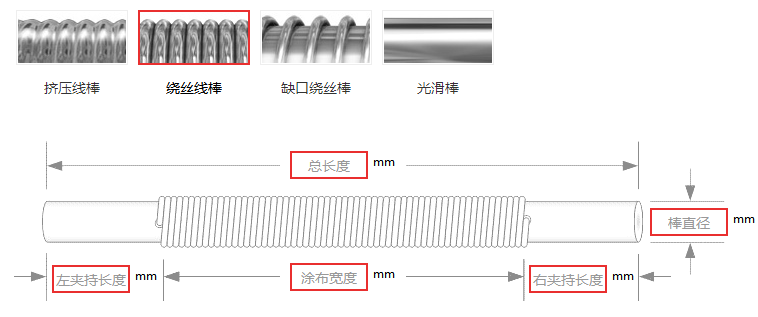
- Total length
- 1500mm
- Effective application width
- 1200mm
- Grip end (handle) length 1
- 150mm
- Gripping end (grip) length 2
- 150mm
- chrome plating
- standard
- core material
- 303

RDS is an American company that has been developing and producing coating metering rods for more than 80 years (founded in 1936). RDS coating rods are favored by a large number of users in CHINA.
The Mayer stick method is simple, accurate, uniform, and inexpensive, making it the third most popular method of applying films. Quickly change coating weight and a wide range of film thicknesses, making it flexible enough for a wide range of substrates. We have experience in coater retrofits using metered rod coating stations and can provide simple solutions for most applications.
RDS provides a variety of coating metering rods with different process specifications to meet the needs of various industries such as coatings, manufacturing window films, tapes, release papers, photovoltaic films, wall covering materials, special papers, etc. Available in wire-wound, formed (slotted), double-wound and gapped rods up to 12 feet long. 15 different diameters of multi-grade stainless steel rods, over 70 sizes of stainless steel wire. Customization accepted.
Metering rod type

wire wound rod
Original "Mayer" stick. It was popularized by Charles Mayer in the 1920s and remains popular. Available in sizes 3 to 75, including many half sizes. Dimensions are guideline diameter in mils (.001 inches). The wire-wound rods can be stripped and re-wound to save costs and reduce waste. There is no minimum fee for wire-wound rods and there are no installation fees.
Forming rod
Formed (threaded, grooved, etc.) rods are rolled from solid steel bars and are very similar to wire-wound rods. The size of the groove, which is the same as the cavity between the wire windings, determines the thickness of the coating. However, the radii in the grooves of the formed rod are less likely to clog and easier to clean than their wire-wound equivalents.
smooth rod
Commonly used to smooth previously metered paint onto paper, cardboard and plastic film. Coating thickness is controlled by pressure (relative to the support roller) or web force. RDS smooth rods can be ground to meet any surface finish requirement and hard chrome plated to significantly extend rod life.
notched rod
For higher viscosity paints, a gapped rod reduces clogging and eliminates lines. By wrapping smaller wires at intervals (see picture), the cavity created is both wide and shallow, allowing thick coatings to flow better. Smaller wires create smaller interruptions in the coating flow, allowing for more complete wetting of the coating. While gapped poles are less durable than double-wrap poles, they are also less expensive.
Double wound rod
For higher viscosity paints, the double-wrap rod reduces clogging and eliminates lines. By wrapping a smaller wire around a larger wire (see picture), the cavity created is both wide and shallow, allowing thick coatings to flow better. A smaller top line creates smaller interruptions in the coating flow, allowing for more complete wetting of the coating. Although a double-wrap pole is more expensive than a gapped pole, it is also more durable.
Coating method
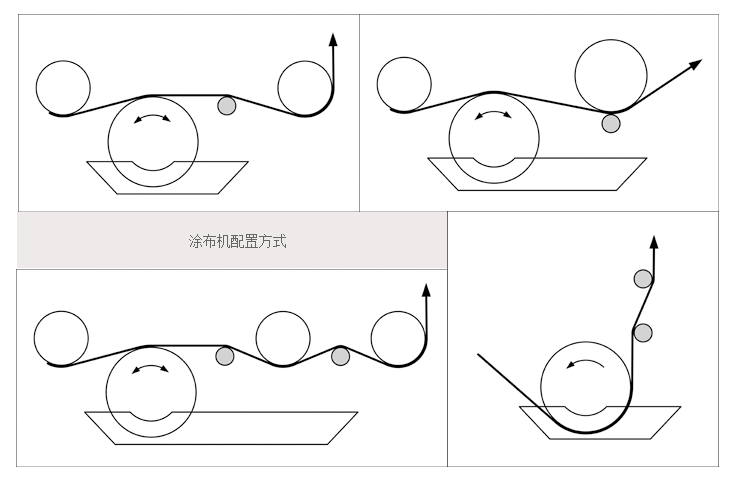
Specification selection
Users can submit customization requirements through the North and South Tide Measuring Rod customization tool , and we will quote based on specific needs. click here