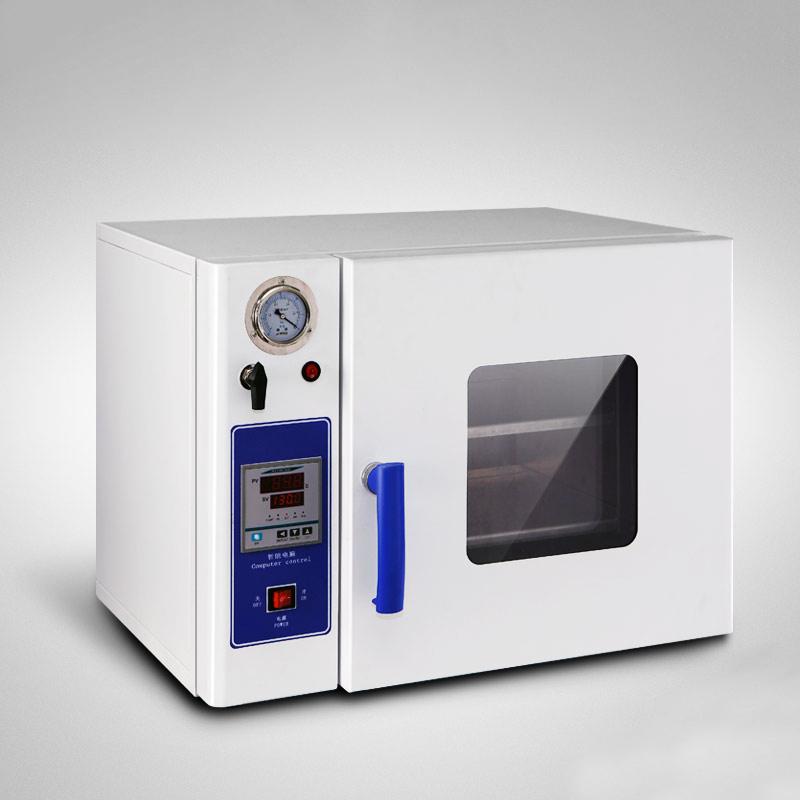
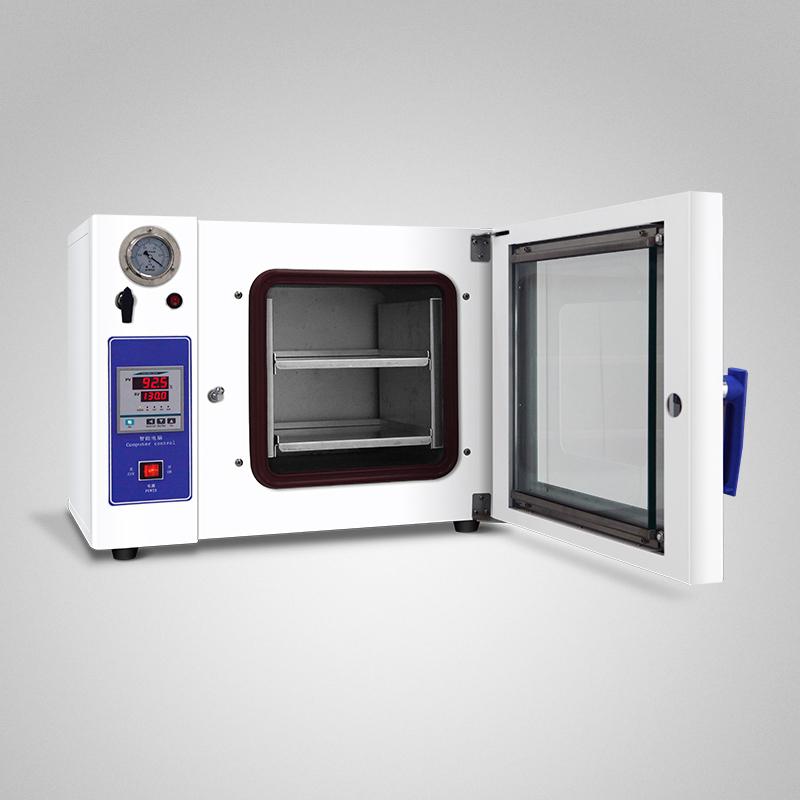
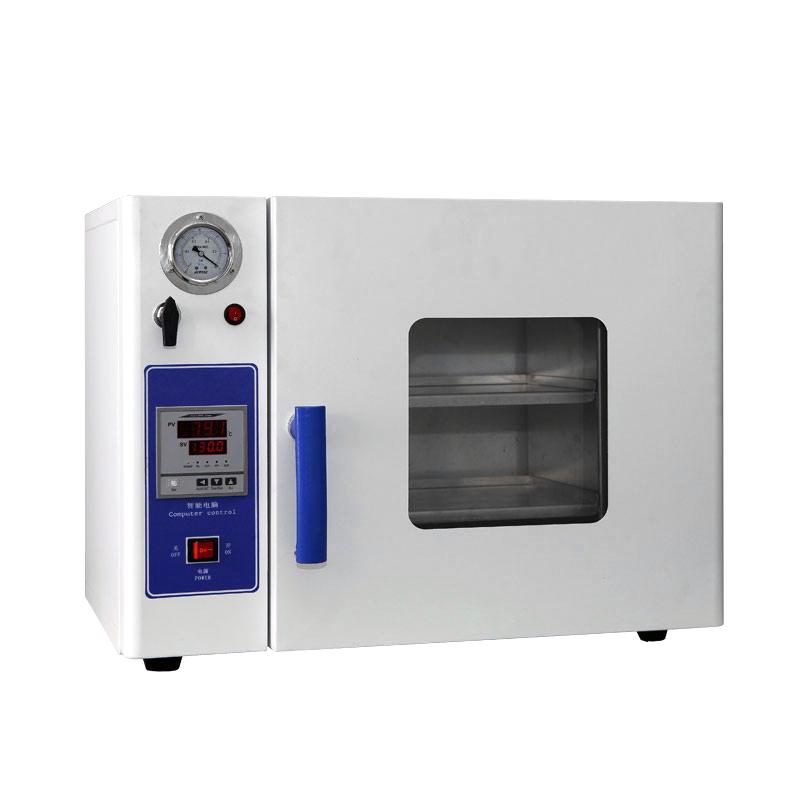

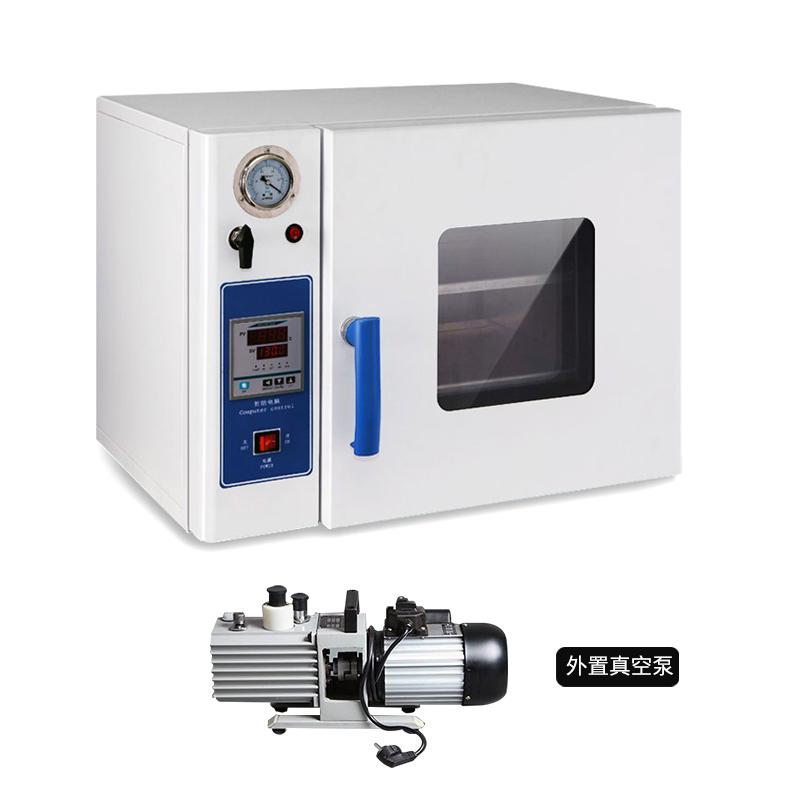
Kenton DZF-5050S Precision Vacuum Oven 4-sided heating with 2L Vacuum Pump
SE DZF-5050S + Vacuum Pump 2L

-
 HENGLI KZ-50G LCD Vacuum Oven digital display electronic automatic control$ 1844.00SE
 -
 HENGLI KZ-50 LCD Vacuum Oven pointer display, manual control$ 1412.00SE
 -
 HUITAI HTZ-6050L vacuum degree digital drying oven vacuum drying oven volume 50L$ 1594.00SE
 -
 HUITAI DZF-6050 Vacuum oven 2 stencil plates can be extracted, volume 50L$ 660.00SE



Kenton DZF-5050S + Vacuum Pump 2L Vacuum OvenSPEC
Kenton DZF-5050S + Vacuum Pump 2L Vacuum OvenDetails
Kenton DZF-5050S + Vacuum Pump 2L Vacuum OvenPacking list

- SKU
- NB043576
- Temperature range
- 50~200℃
- Temperature Resolution
- ±0.5
- Timer
- 0~999min
- Dimensions
- 570*750*515mm
- Interior size
- 370*370*315mm
- Volume
- 50L
- Chamber material
- Stainless steel liner
- Nominal Power
- 1.4KW
- Power
- Single phase AC220V/50Hz
- vacuum
- <133Pa
Technical advantages
The vacuum environment greatly reduces the boiling point of the liquid that needs to be removed, so the vacuum Drying Oven can be easily applied to heat-sensitive substances. For samples that are not easy to dry, such as powder or other granular samples, using a vacuum Drying Oven can effectively shorten the drying time;
Under vacuum inert conditions, the possibility of thermal explosion of oxides is completely eliminated;
Compared with ordinary Drying Ovens that rely on air circulation, powdery samples will not be blown away and move when drying;
Application
Vacuum Drying Oven is widely used in biochemistry, chemical and pharmaceutical, medical and health, agricultural scientific research, environmental protection and other research and Applications, for powder drying, baking and disinfection and sterilization of various glass containers. It is especially suitable for fast and effective drying of heat-sensitive, easily decomposed, easily oxidized substances and complex composition items.
Structural features
1. The liner adopts a streamlined arc design, the outer shell is made of cold-rolled steel plate, and the surface is electrostatically sprayed;
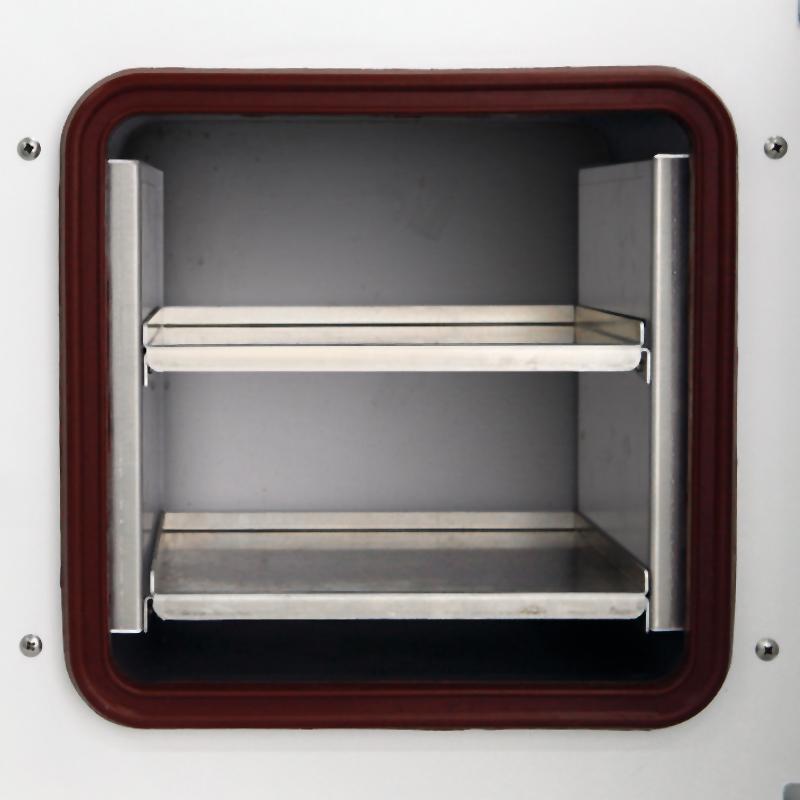
2. The inner tank is made of stainless steel or cold-rolled steel plate, and the semicircular four corners are easy to clean;
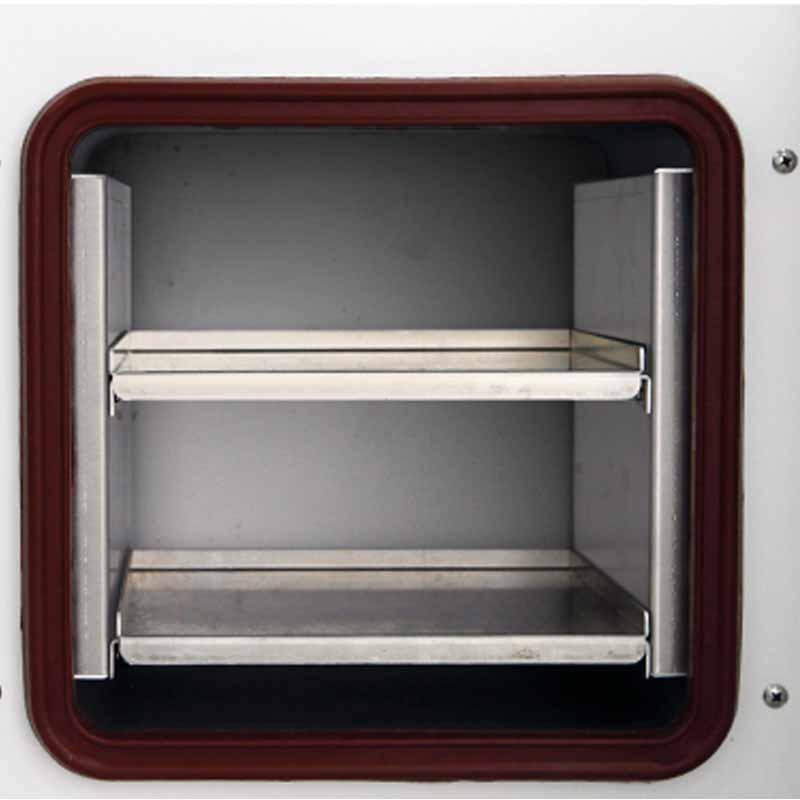
3. The tightness of the cabinet door can be adjusted by the customer arbitrarily, and the integrally formed silicone rubber door seal ensures high vacuum in the cabinet;
4. The control panel adopts microcomputer intelligent PID control, with timing and over-temperature alarm functions;
5. The door of the box is made of toughened, explosion-proof double-layer glass door, so that the objects cultivated in the observation studio can be seen at a glance;
6. Among them, the DZF-60 series is the basic type, which conducts heat through both sides of the inner tank; the DZF-30 series has independent heating tubes for each layer, and can set different required temperatures independently for each layer; the DZF-50 series is the inner tank A total of four sides are heated on the left, right, back, and bottom to make the temperature transfer more uniform.

- 1JB/T 11365-2013《Vacuum dryer》
- 2QB/T 2568-2002《Solvent cements for unplasticized poly (vinyl chloride)(PVC-U) plastic piping system》
- 3SJ 21318-2018《General specification for vacuum high-temperature ovens》
- 4GB/T 7048-2012《Colour carbon black - Determination of blackness》
- 5GB/T 8077-2023《Methods for testing uniformity of concrete admixtures》
- 6GB/T 3810.3-2016《Test methods of ceramic tiles—Part 3: Determination of water absorption, apparent porosity, apparent relative density and bulk density》