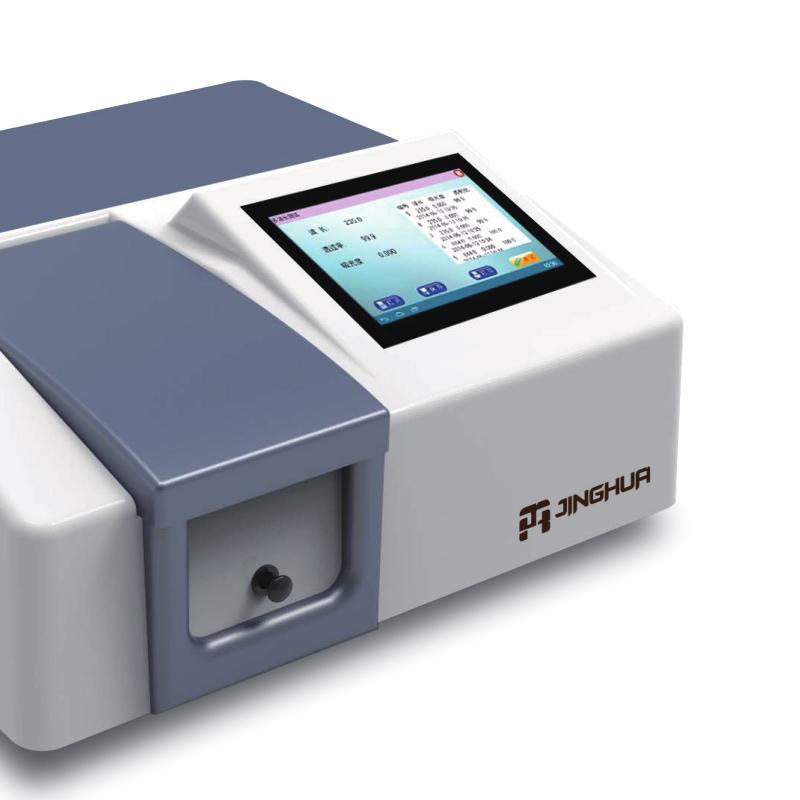
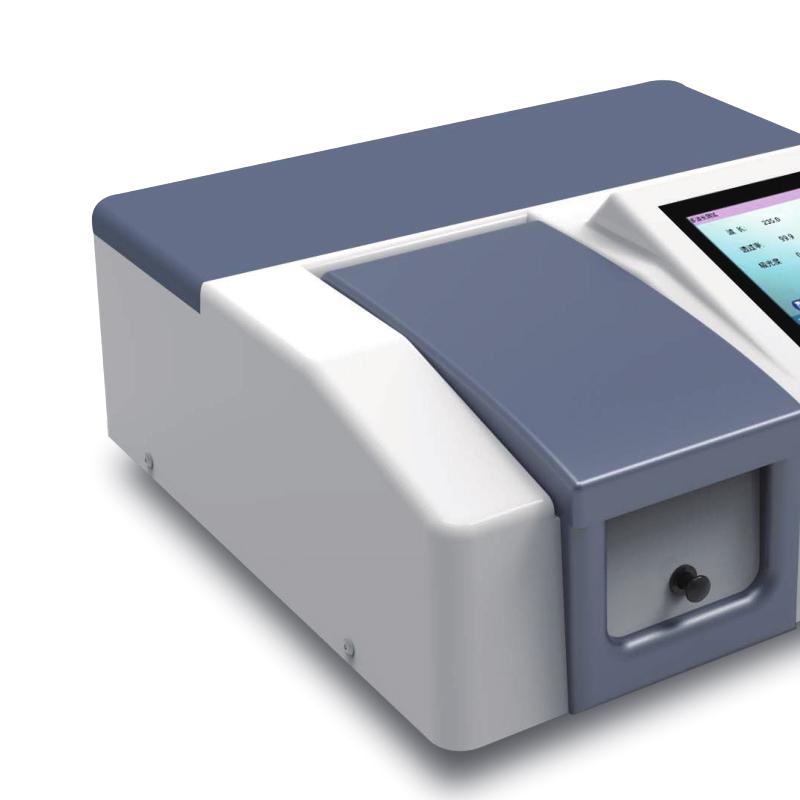

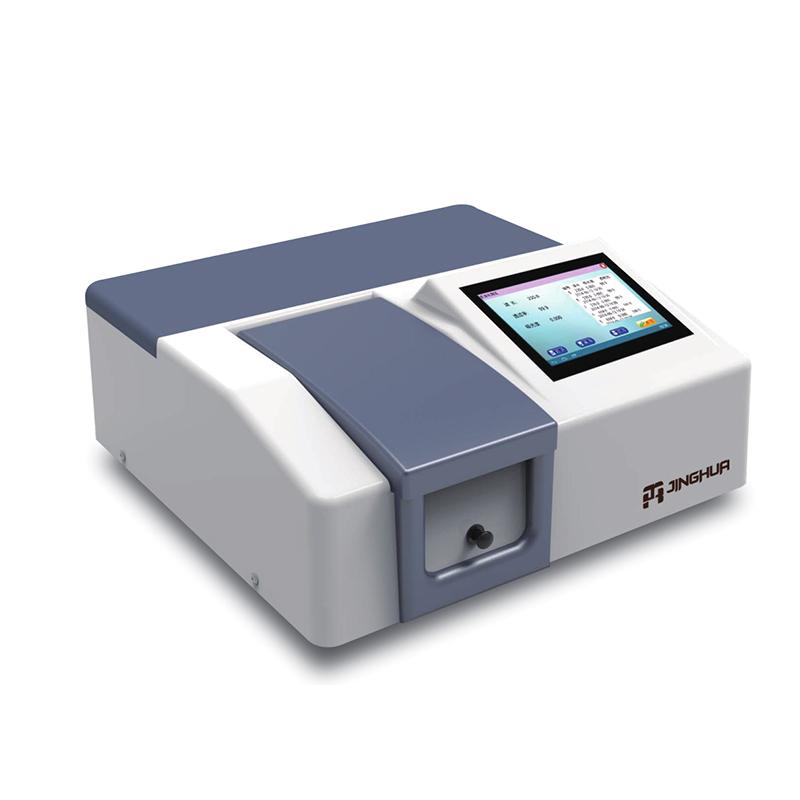
JINGHUA JH752 Benchtop UV-Visible Spectrophotometer Bandwidth 4nm
SE JH752
JH752

-
 YueFeng 752N Ultraviolet-visible Spectrophotometer$ 651.00SE
 -
 YueFeng 754N Ultraviolet-visible Spectrophotometer 195~ 1100nm$ 823.00SE
 -
 YueFeng 754 Ultraviolet-visible Spectrophotometer 195~ 1000nm Bandwidth 4.0nm$ 792.00SE
 -
 YueFeng 752NPC Ultraviolet-visible Spectrophotometer wavelength 190~960nm$ 1027.00SE




jinghua JH752 UV-Vis SpectrophotoMeterSPEC
jinghua JH752 UV-Vis SpectrophotoMeterDetails
jinghua JH752 UV-Vis SpectrophotoMeterPacking list

- SKU
- NB043748
- Light spectrum Bandwidth
- 4nm
- Wavelength Precision
- ±1nm
- Wavelength Repeatability
- 0.5nm
- stray light
- ≤0.1%T
- display
- Large screen color Chinese and English touch display
- Wavelength driving method
- automatic
- Wavelength range
- 190nm-1100nm
- Transmittance Precision
- ≤0.3%T
- Transmittance Repeatability
- 0.1%T
- Transmittance Range
- 0~200%T
- Absorption range
- -0.4-4A
- Display range of concentration
- 0~99999
- Stability
- ±0.001A/h
- Baseline flatness
- ±0.002A
- output interface
- USB RS-232
- Light source
- Longevity noodle deuterium lamp/tungsten lamp
Introduction
A Spectrophotometer is a commonly used laboratory instrument that measures the ability of a substance to absorb, transmit, or reflect light at different wavelengths. It determines the concentration or optical properties of a sample by how well the light emitted by the light source is absorbed through the sample. Spectrophotometers are widely used in chemistry, biology, environmental science, and other fields, and are an important tool for quantitative analysis, quality control, and research.
JH752 desktop ultraviolet-visible Spectrophotometer has a spectral bandwidth of 4nm, stray light accuracy of ≤0.1%T, adopts C-T monochromator structure, is equipped with a touch display, has the function of automatic correction of wavelength error and light source switching, and also has a variety of practical functions such as photometry, quantification and standard curve. It is a high-precision, high-reliability laboratory instrument that can provide accurate and reliable optical measurement and quantitative analysis results to meet the various needs of scientific research and laboratory work.
Features
High-performance UV encoder:The 1200L/mm high-performance UV encoder can provide high resolution and accurate wavelength selection, which is conducive to accurate measurement and analysis.
Long Life Lamp/Tungsten Lamp:The instrument uses a long-life lamp or tungsten lamp as a light source, which has a long service life and can provide a stable and long-lasting light source.
Imported Media Converters:Equipped with imported photoelectric converter, it helps to improve the accuracy and sensitivity of measurement.
C-T monochromator structure:The C-T monochromator structure helps to reduce the interference of stray light and improve the resolution and photometric linearity of the instrument.
Spacious sample chamber:The large sample chamber can accommodate larger sample holders, extending the testing range and applicability of the instrument.
Automatic correction of wavelength errors and light source switching:It has the function of automatic correction of wavelength error and light source switching, which can realize the automatic correction of wavelength error and automatic switching of light source to ensure the accuracy and continuity of measurement.
Large color touch screen:Equipped with a large-screen color Chinese/English touch screen, it can clearly and intuitively display various data and spectra of the measured sample, providing a good user experience.
With photometric, quantitative, standard curve and other functions:The instrument has functions such as photometry, quantitative analysis, and standard curve plotting, which can realize a variety of analysis and measurement needs, such as regression equations, kinetics, DNA/protein, and other functions.
Introduction to the structure of the instrument
The working principle of a Spectrophotometer is based on the Bill-Lambert law, which states that the absorption of light is directly proportional to the concentration of the sample.
It usually consists of the following main parts:
Light source:Spectrophotometers typically use visible or ultraviolet light sources, such as incandescent, halogen, or deuterium lamps. The light emitted by the light source is selected by a selection device to select a specific wavelength of light.
Monochromator:The monochromator is used to select and adjust the desired wavelength. It can be a prism or grating structure that separates multiple wavelengths of light and selects a specific wavelength by the principle of dispersion.
Sample Chamber:The sample chamber is the area where the sample to be tested is placed. Samples can be liquid, gaseous, or solid samples. As light passes through a sample, its intensity is affected by the absorption or transmission of the sample.
Photoelectric Sensors:Photosensors are used to measure the intensity of light after passing through a sample. It converts light energy into an electrical signal, and the degree of absorption of light is determined based on the magnitude of the electrical signal.
Inspection systems and data processing:Spectrophotometers are usually equipped with a detection system and data processing capabilities. These functions can include light intensity measurements, wavelength calibration, data logging and analysis, and more.
By selecting the appropriate wavelength, calibrating the instrument, measuring the absorbance or transmittance of the sample, a Spectrophotometer can be used to measure the concentration of the sample, reaction kinetics, solution equilibrium, spectral analysis, and more. It can also perform quantitative analyses, such as constructing standard curves to determine the concentration of unknown samples.
Series model parameter table
| Model | Spectral bandwidth | Wavelength accuracy/repeatability | Stray light |
| JH752 | 4nm | ±1nm/0.5nm | ≤0.1%T |
| JH754 | ±0.5nm/0.2nm | ≤0.05%T | |
| JH754PC | |||
| JH755B | 2nm | ||
| Gas parameters | |||
| display | Large color touch screen display in Chinese and English | ||
| Wavelength driven | automatic | ||
| Wavelength range | 190nm-1100nm | ||
| Transmittance accuracy | ≤0.3%T | ||
| Transmittance repeatability | 0.1%T | ||
| Transmittance range | 0~200%T | ||
| Absorbance range | -0.4-4A | ||
| Concentration display range | 0~99999 | ||
| stability | ±0.001A/h | ||
| Baseline flatness | ±0.002A | ||
| noise | ±0.0005A | ||
| Output interface | USB RS-232 | ||
| light source | Longevity deuterium lamp/tungsten lamp | ||
- 1Principle, characteristics and application of ultraviolet Spectrophotometer
- 2Application of UV-Vis Spectrophotometer in Industry
- 3Working mechanism, common types and performance considerations of light stabilizers
- 4The difference between fluorescent UV Lamp and xenon arc: Two Light sources in artificial accelerated aging
- 5UV-9100 Ultraviolet-visible Spectrophotometer operation steps
- 6Six points to buy an Ultraviolet-visible Spectrophotometer
- 7Ultraviolet-visible Spectrophotometer key performance indicators
- 8What are the types of Spectrophotometer s?
- 9Spectrophotometer principle, structure and application do you know geometry?
- 10UV-1600 Ultraviolet-visible Spectrophotometer operation steps
- 1GB/T 713.2-2023《Steel plate,sheet and strip for pressure equipments—Part 2:Non-alloy and alloy steel with specified temperature properties》
- 2GB/T 23850-2024《Sodium perchlorate for industrial use》
- 3SL/T 788.4-2019《Water quality- -Determination of anionic surfactants》
- 4SL/T 788.5-2019《Water quality. Determination of total nitrogen, volatile phenolic compounds, sulfide; anionic surfactants and chromium(VI) by continuous flow analysis spectrophotometry. Water quality. Determination of chromium(VI)》
- 5SL/T 788-2019《Water quality. Determination of total nitrogen, volatile phenolic compounds, sulfide, anionic surfactants and chromium (VI) by continuous flow analysis spectrophotometry》
- 6HJ 668-2013《Water quality.Determination of total nitrogen by flow injection analysis (FIA) and N-(1-naphthyl)ethylene diamine dihydrochloride spectrophotometry》
- 7SL/T 788.1-2019《Water quality. Determination of total nitrogen, volatile phenolic compounds, sulfide; anionic surfactants and chromium(VI) by continuous flow analysis spectrophotometry. Water quality. Determination of total nitrogen》
- 8GB/T 6730.89-2024《Iron ores—Determination of thorium content—Arsenazo Ⅲ spectrophotometric method》
- 9JJF 1641-2017《Program of Pattern Evaluation of Ultraviolet—Visible Spectrophotometers》
- 10HB 20056.1-2011《Methods for analysis of Sn-Bi alloy plating and plating Sn-Bi alloy solutions.Part 1:Determination of bismuth content by spectrophotometric method》