
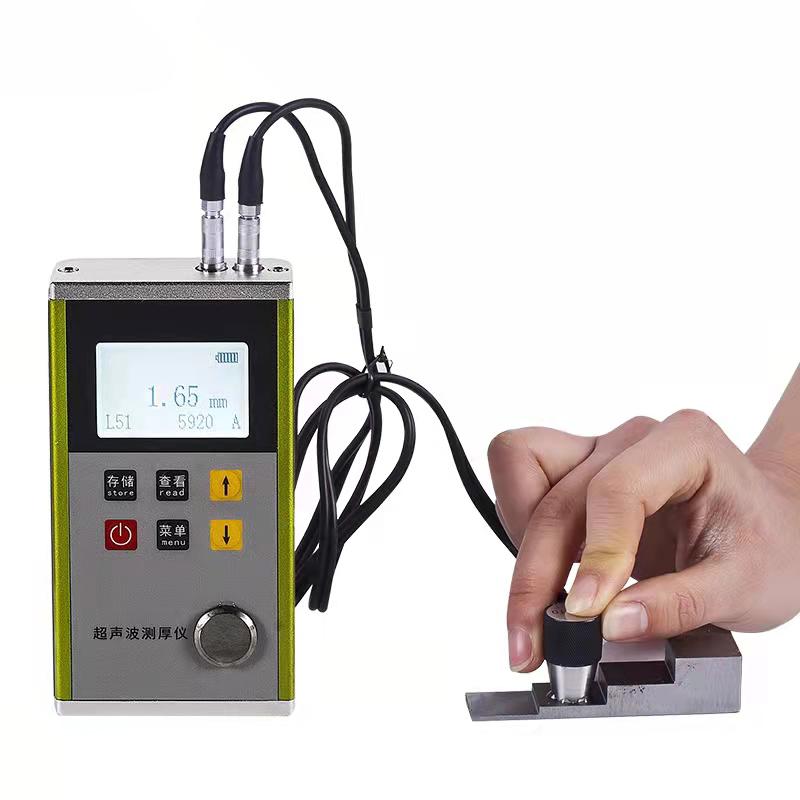
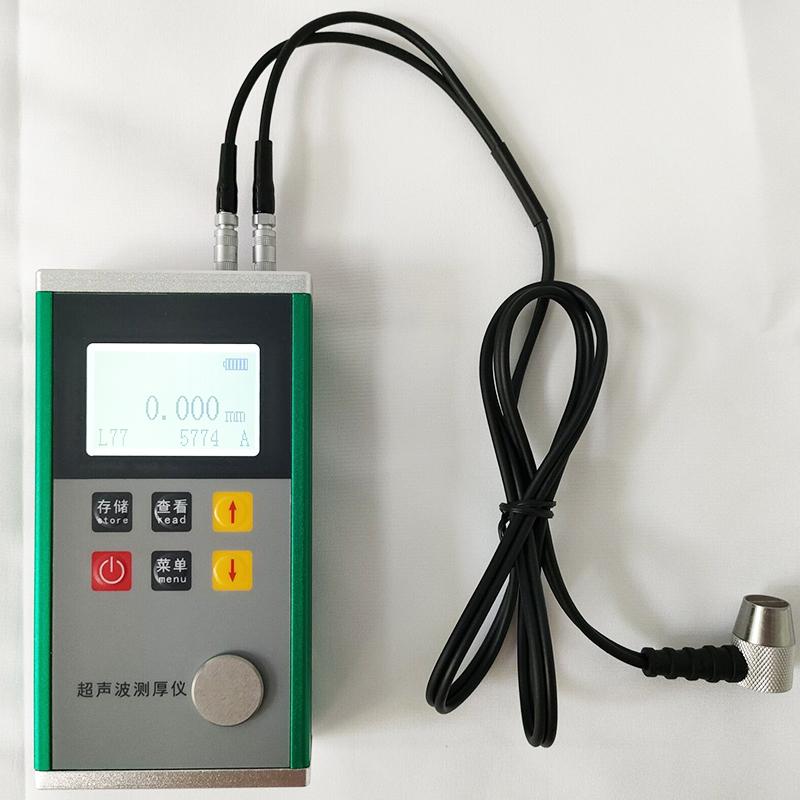

LEEB333 high-precision Ultrasonic Thickness Gauge Display resolution 0.001mm
SE leeb333

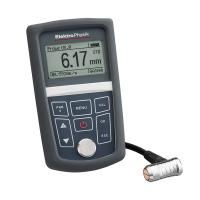
Leeb leeb333 Ultrasonic Thickness GaugeSPEC
Leeb leeb333 Ultrasonic Thickness GaugeDetails
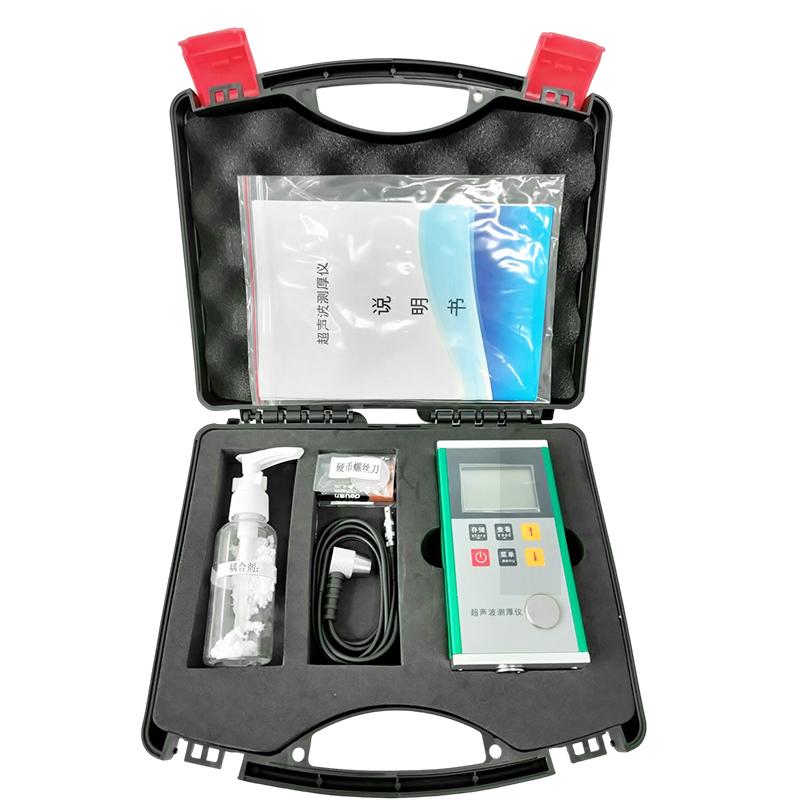
Leeb leeb333 Ultrasonic Thickness GaugePacking list

- SKU
- NB043792
- Measurement range
- 0.75~ 350Mm (steel, determined by the probe) Standard probe Measurement Range 1-250mm
- Display resolution
- 0.001mm
- Speed of sound
- 1000~9999m/s
- Surface temperature
- -10~60℃
- Error of indication
- +/- (1% H + 0.1) mm, H is the actual thickness of the measured object
- Power
- AA type alkaline battery (2 cells)
- Operation time
- About 200 hours
- Dimensions
- 130×70×25mm
- shell
- Metal shell
- Weight
- About 0.2kg (host)
- Optional
- Probe, Coupler, PC Communication
- L51 Standard Probe Frequency
- 5MHz
- L51 Probe diameter
- 10mm
- L51 standard probe Measurement Range
- 1.0mm~250.0mm(钢)
- L51 Standard Probe Minimum Diameter
- Φ20mm×3.0mm
- L51 Standard Probe Feature Description
- Use at room temperature (< 60 ℃)
- Store data
- 200 groups
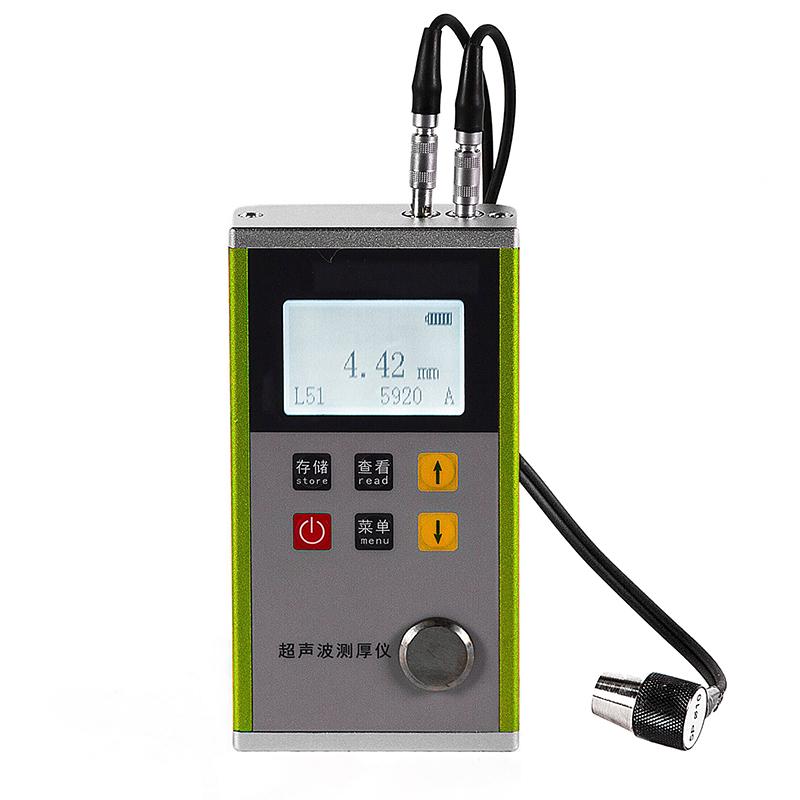
overview
Using the principle of ultrasonic measurement, it is suitable for the measurement of the thickness of the material in which ultrasonic waves can propagate at a constant speed and can be reflected from the back surface.
This instrument can accurately measure plates and processed parts. Another important aspect is that it can monitor pipes and pressure vessels in production equipment and monitor their thinning after corrosion during use. It can be used in various fields such as petroleum, chemical industry, metallurgy, shipbuilding, aviation, aerospace, etc.
Main function
Accurate sound velocity is measured against the known thickness of composite and unknown materials;
Set the upper and lower limit tolerances to exceed the automatic alarm;
Status prompt function.
Adjustable speed of sound;
With instrument calibration function;
With coupling status prompt function;
There is a high-brightness LED backlight display, which is convenient for use in dimly lit environments;
There is a remaining power indication function, which can realize the display of the remaining battery power;
With automatic sleep, automatic shutdown and other power-saving functions;
Small, portable, high stability, suitable for harsh operating environments, anti-vibration, shock and electromagnetic interference;
Metric and imperial systems are available.
Applicable materials
It is suitable for measuring the thickness of good conductors of metals (such as steel, cast iron, aluminum, copper, etc.), plastics, ceramics, glass, glass, fiberglass and other ultrasonic waves.
basic principle
The principle of ultrasonic measurement of thickness is similar to that of light wave measurement. The ultrasonic pulse emitted by the probe reaches the back-measured object and propagates in the object, and is reflected back to the probe when it reaches the material interface. The thickness of the measured material is determined by accurately measuring the time that the ultrasonic wave propagates in the material.
- 1Analysis of Factors Affecting the Accuracy of Ultrasonic Thickness Gauge
- 2Principle and Application of Ultrasonic Thickness Gauge
- 3Application, Principle Introduction and Precautions for Selection of Pipeline Thickness Gauges
- 1JJF 1224-2009《Calibration Specification for Reinforced Concrete Covermeter and Floorslab Thickness Tester》
- 2JJF 1126-2004《Calibration Specification for Ultrasonic Thickness Instruments》
- 3JJF 1126-2004《Ultrasonic Thickness Gauge calibrating specification》
- 4ZB N 77001-1989《General Technical Conditions for Ultrasonic Thickness Gauge》