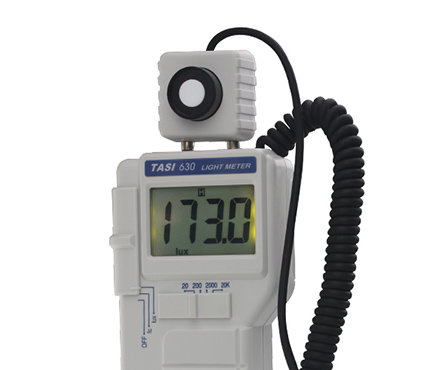
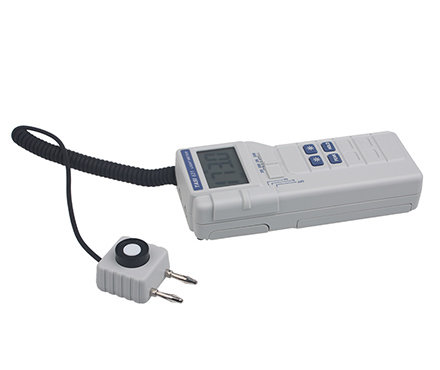
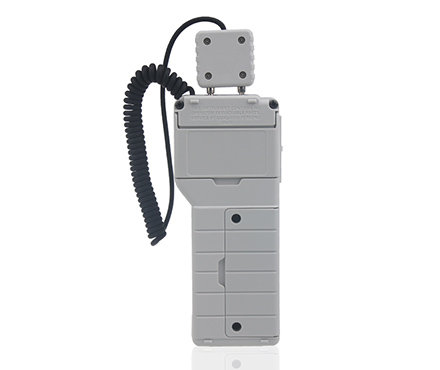

TASI TASI-630 luminometer for simultaneous measurement of Lux/Fc display backlight function
 TASI-630

TASI TASI-630 LuminoMeterSPEC
TASI TASI-630 LuminoMeterDetails
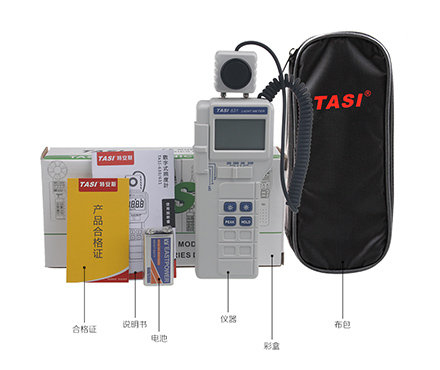
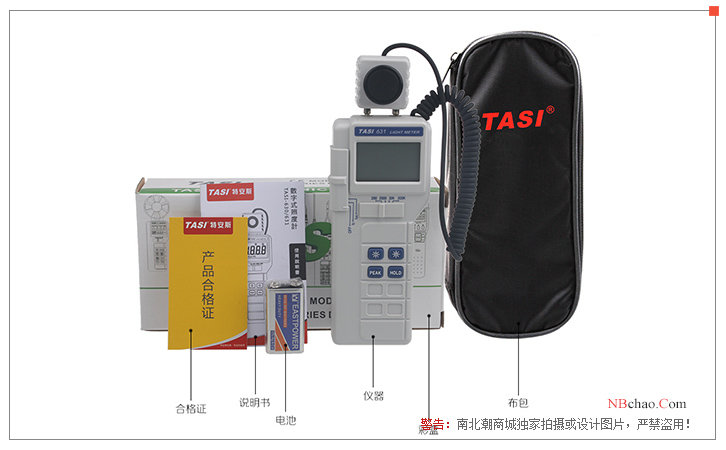
TASI TASI-630 LuminoMeterPacking list

- SKU
- NB000438
- Gear selection
- 20lux、200lux、2000lux、20Klux、20fc、200fc、2000fc、20Kfc
- Sensors
- Silicon optical diode sensor
- Accuracy
- +/- (3% read value +/- 10) All Accuracies are based on A Light source (2856K) as the correction source
- Resolution
- 0.01Lux,0.01fc
- Accuracy test environment
- 23 ℃ +/- 5 ℃, Relative Humidity < 75% R.H.
- show
- 3 ½ digit LCD display, maximum 1999 readings
- Low battery Voltage display
- When the battery Voltage is lower than the operating Voltage, "+ -" is displayed
- Sampling rate
- 2.5 times/second
- Power Supply
- 9V alkaline battery
- Operating environment
- 0 ℃~ 50 ℃, Relative Humidity < 80% R.H.
- Storage environment
- -20℃~60℃,0~70%R.H.
- Host size
- 190*65.5*35mm
- Instrument Weight
- 210G (including battery)
Introduction
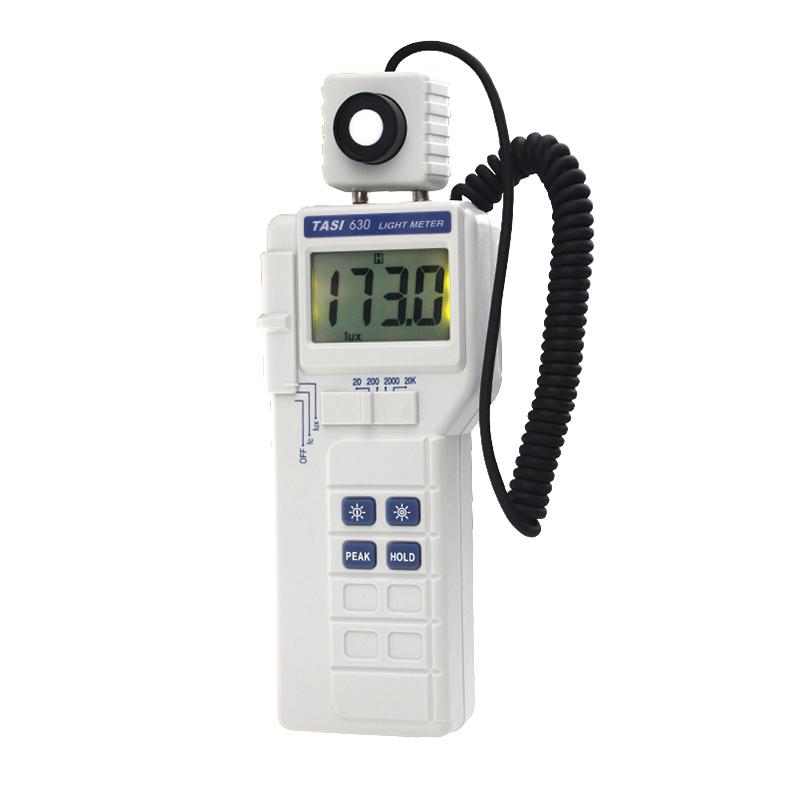
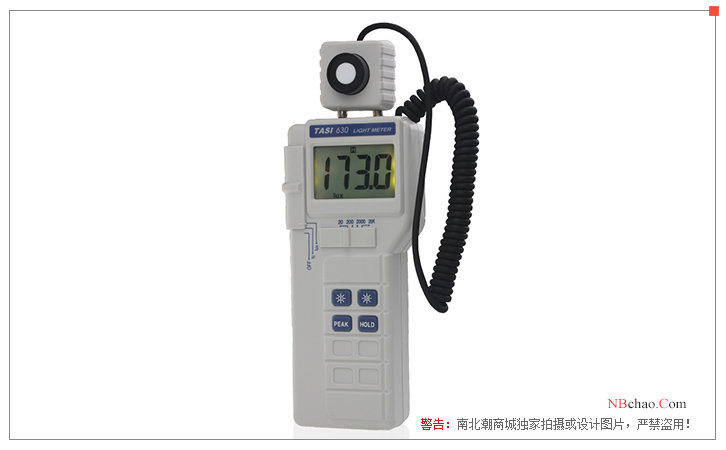
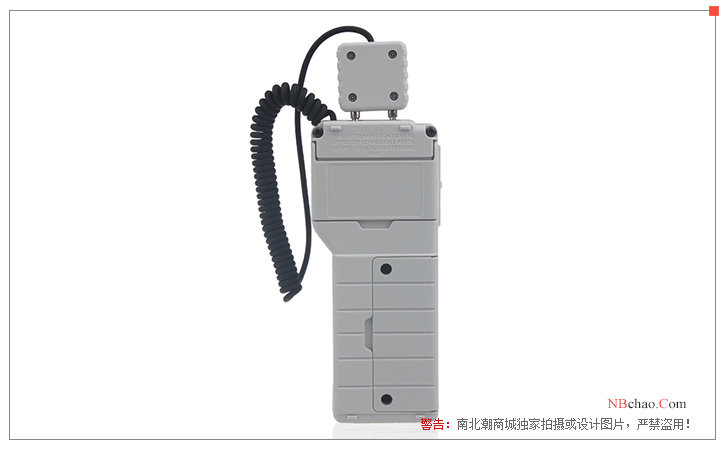
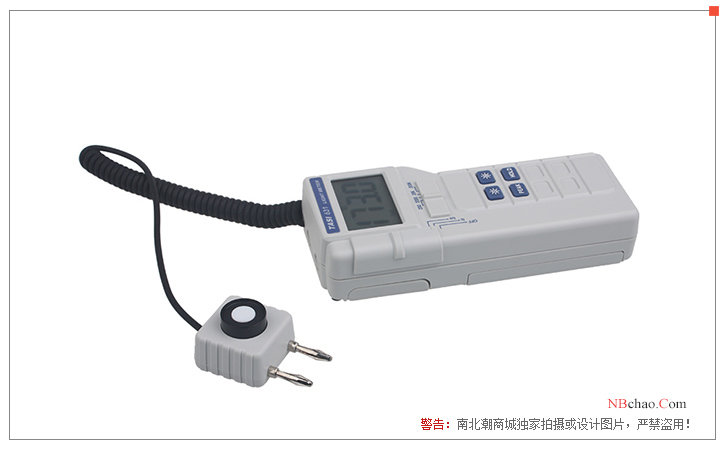
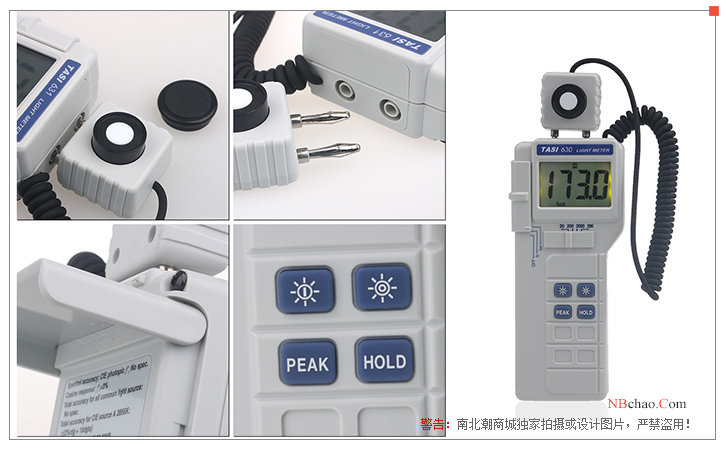
The digital lux meter is a handheld, easy-to-use, 31/2 digit (1999 maximum reading), solid design of digital temperature and humidity, specially designed for one-handed operation. The illuminance unit of this product is Lux (lux) and fc unit measurement, and it is equipped with the display backlight reading function and peak lock function.
Product display diagram
Operating Procedures
1. Select the function switch to the desired lux and fc gear (use the RANGE switch to select 20lux (fc), 200lux (fc), 2000lux (fc), 20000lux (fc) gear).
2. Take off the protective cover of the illuminance sensor head and put it away
3. Hold the illuminance sensor head firmly and make sure that the light source can completely cover the cosine correction diffusion plate
4. Avoid shadows covering the diffuser, and the illuminance sensor head has a test line length of 1.5 meters, which can be used for the distance between the observer and the test object.
5. The reading value on the monitor is the illuminance value to be measured. If you don't know the size of the measured illumination, you can press the "RANGE" gear button to the highest gear, and then gradually lower the gear to the gear that can get the maximum effective digits, and you can get a good reading
6. After the measurement, please protect the cover on the illuminance sensor head to prolong the life of the sensor and reduce the aging phenomenon.
Description
Always keep the cosine correction diffusion plate on the illuminance sensor head clean and avoid being scratched, and use a soft cloth dipped in disinfectant alcohol to clean it
When the light source is received from many different directions and directly applied to the sensor head at the same time, special care should be taken to ensure that there is no reflected light from the body or a figure from the sensor head
For good accuracy, the test needs to be repeated several times to ensure that the light source is continuously stable
Avoid excessive twisting of the fiber roots at both ends of the test lead.
- 1Determination of fineness of ground by micrometry
- 2Determination of Pigment light fastness under natural light
- 3Optical inspection of ultraviolet curing coatings for PET film - Lv Jianbo
- 4Difference between luminometer and luminance meter
- 5Summary of film distinctness of image detection
- 6Film orange peel determination
- 7Teans TASI630 Digital Illuminometer Operating Instructions
- 8Application of luminometer in customs clearance of eye tissue
- 9Illuminance measurement of LED lighting
邓隐北; 张慧敏 - 《中国照明电器》
- 10Uncertainty evaluation of luminometer measurements in testing laboratories
朱爱菊 - 《计量与测试技术》