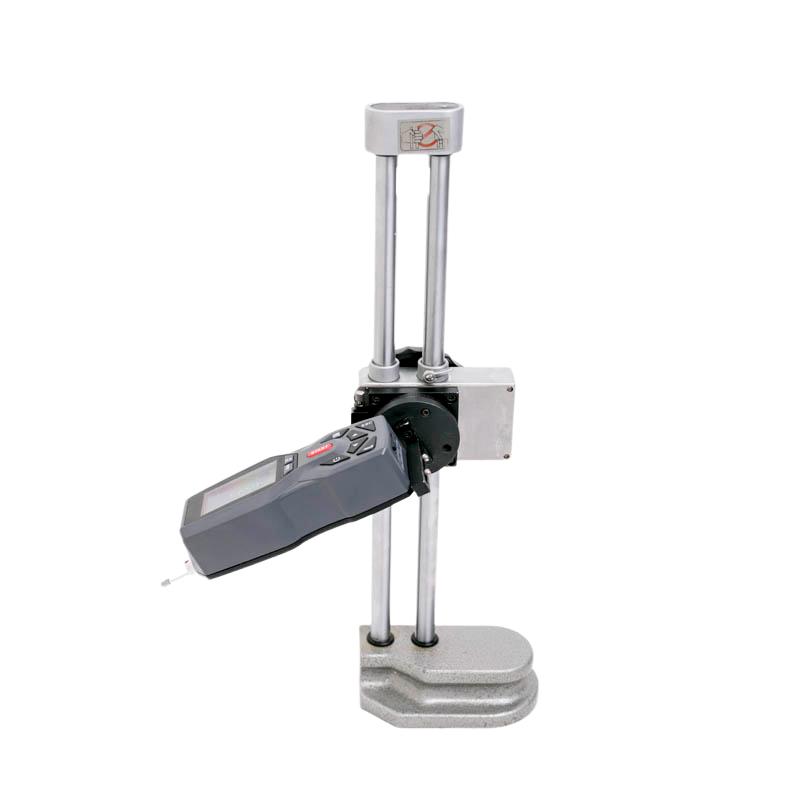
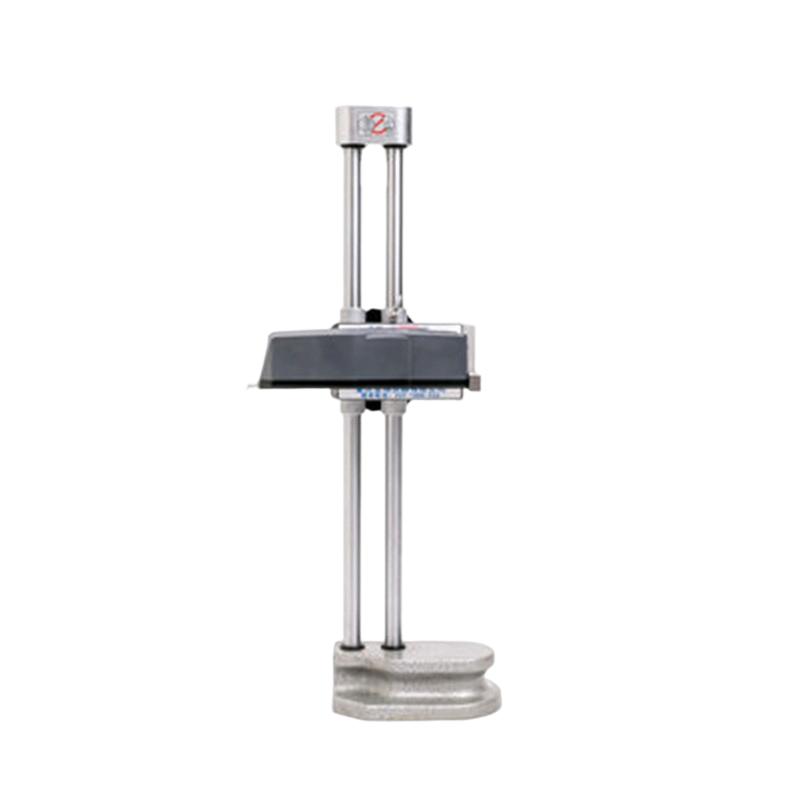
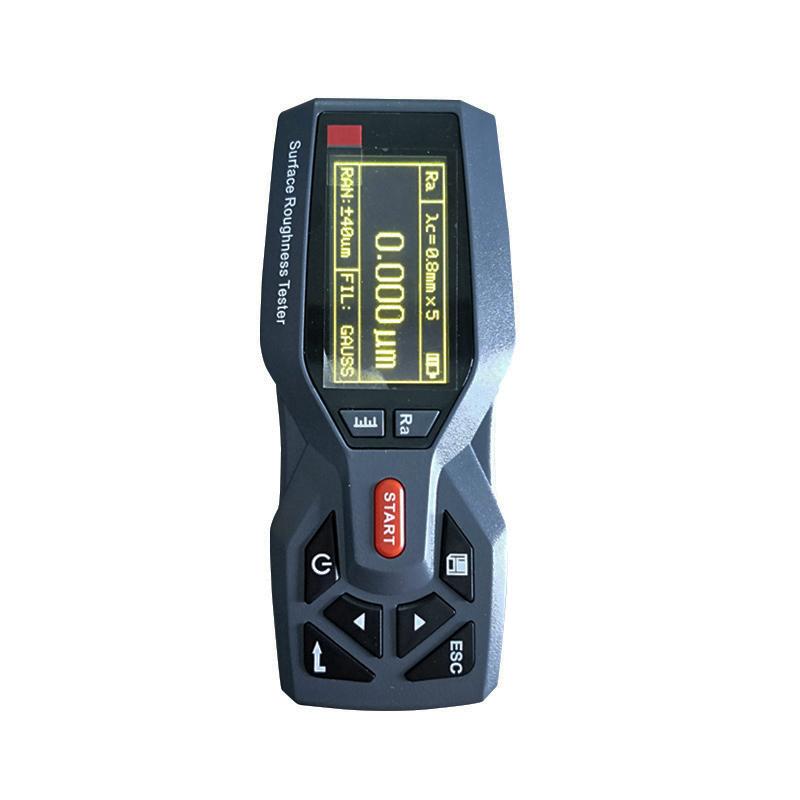

LEEB432 Surface Roughness Tester multiparameter measurement Measurement range 160μm
SE leeb432

-
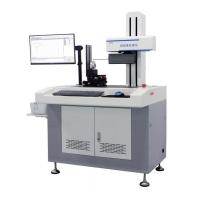 IPRE RA150 asperity Profile Gauge resolution 0.02μm$ 11826.00SE
 -
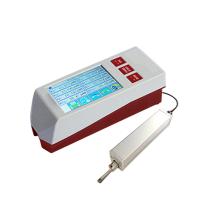 LEEB462 surface roughness multiparameter measurement supports bluetooth printing and mobile app$ 1324.00SE
 -
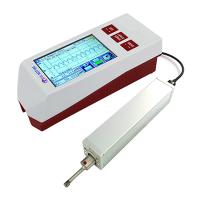 KAIRDA NDT160 Roughness Gauge split surface roughness Tester
 -
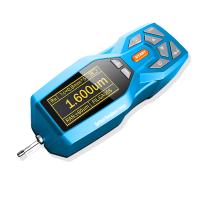 High-precision Roughness Gauge KAIRDA NDT150 surface roughness testing instrument




Leeb leeb432 Roughness GaugeSPEC
Leeb leeb432 Roughness GaugeDetails
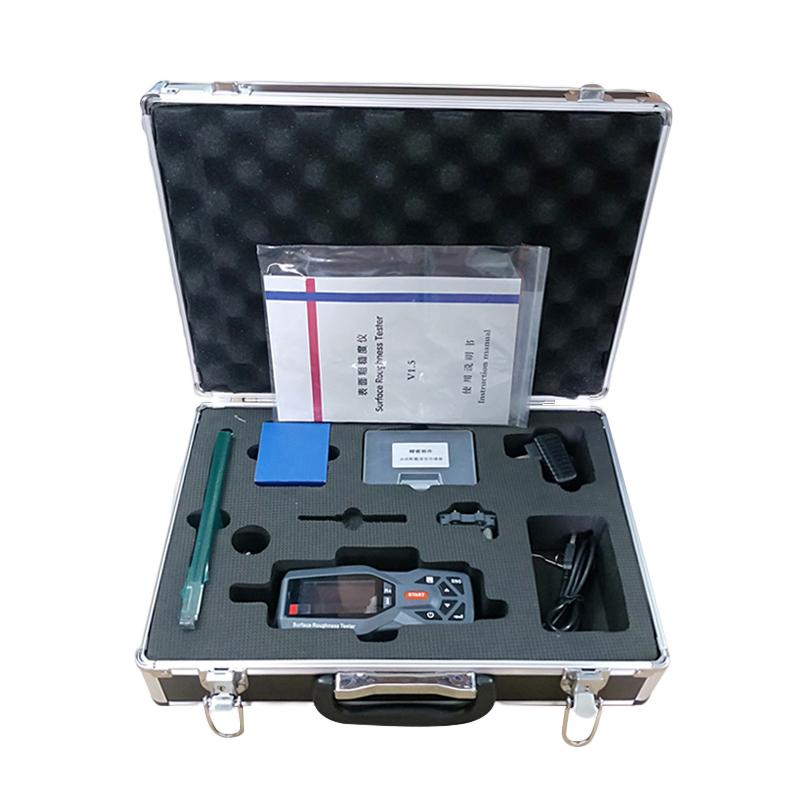
Leeb leeb432 Roughness GaugePacking list

- SKU
- NB043826
- Maximum driving stroke
- 17.5mm/0.7inch
- Error of indication
- Not more than +/- 10%
- Indication variability
- Not more than 6%
- Measurement profile
- Asperity, ripple, original contour
- parameter
- Ra(0.025μm ~ 12.5μm),Rz(0.02μm ~ 160μm),Rq,Rt,Rp,Rv,R3z,R3y,RzJIS,Rsk,Rku,Rsm,Rmr
- filter
- RC,PCRC,Gauss,ISO13565
- Sampling length l
- 0.25mm,0.8mm,2.5mm
- Evaluation length L
- (1-5)l
- Internal storage Capacity
- 100 original data sources
- External input/output interface
- USB
- Power Supply
- Built-in lithium-ion rechargeable battery/external power adapter
- exterior size
- 143 × 55 × 42Mm (host)
- Weight
- About 0.4kg (main unit)
- optional
- Surface, Groove, Minimal Hole Sensors, measurement platform, connecting rod, software
- Detection principle
- Inductance
- Measurement range
- 160μm
- tip radius
- 5μm
- needle tip material
- diamond
- stylus force measurement
- 4mN(0.4gf)
- stylus angle
- 90°
- Longitudinal radius of guide head
- 45mm
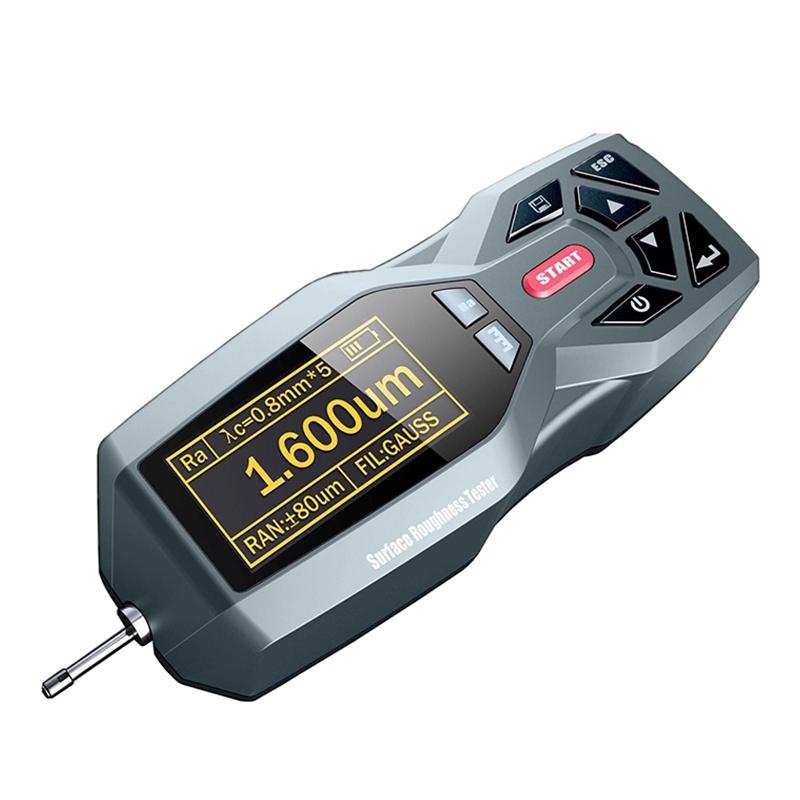
Overview
Portable roughness Tester is a portable stylus surface roughness shape measuring instrument, which is suitable for the detection of workshop verification stations, laboratories, measurement rooms and other environments. The measurement parameters are in line with international standards and compatible with the standards of some industrially developed countries such as the United States, Germany, Japan, and the United Kingdom. The measurement results can be displayed digitally and graphically on the LCD display or output to a printer.
Features
Mechatronics design, small size, light weight, easy to use;
DSP chip is used for control and data processing, with fast speed and low power consumption;
Large range, multi-parameter Ra, Rz, Rq, Rt, Rp, Rv, R3z, R3y, RzJIS, Rsk, Rsm, Rku, Rs, RPc, Rk, Rpk, Rvk, Ry, Mr1, Mr2, Rmax
128×64 OLED dot matrix display, digital/graphic display, bright without Viewing Angle;
The display is informative, intuitive, and can display parameters and graphics;
Compatible with ISO, DIN, ANSI, JIS national standards;
Built-in lithium-ion rechargeable battery and charging control circuit, high capacity, no memory effect;
There is a remaining power indicator icon to prompt the user to charge in time;
It can display the charging process indication, and the operator can understand the degree of charging;
The continuous working time is more than 20 hours;
Large-capacity data storage, which can store 100 sets of raw data and waveforms;
Real-time clock setting and display, convenient data recording and storage;
It has power-saving functions such as automatic sleep and automatic shutdown;
Anti-motor dead circuit and software design;
Display measurement information, menu prompt information, error information, power on and off and other prompt information;
Rugged, compact, portable, and highly stable;
Printer can be connected (optional).
Applicable Materials
It is suitable for processing industry, manufacturing, testing, commodity inspection and other departments, mainly suitable for on-site inspection of large workpieces and production lines, as well as out-of-office verification of testing, measurement, commodity inspection and other departments.
Principle
When measuring the surface roughness of the workpiece, the instrument first puts the sensor on the measured surface of the workpiece, and then starts the instrument to measure, the precision driving mechanism inside the instrument drives the sensor to do a straight line along the measured surface at equal velocity, the sensor feels the roughness of the measured surface through the built-in sharp contact pin, and the roughness of the measured surface of the workpiece will cause the displacement of the stylus, and the displacement changes the inductance of the sensor inductance coil, so as to generate an analog signal proportional to the measured surface roughness at the output end of the phase-sensitive Detector, and the signal enters the data acquisition system, DS after amplification and level conversionThe P-chip digitally filters and calculates the parameters of the acquired data, and the measurement results are given on a monitor, can also be output on a printer, and can also communicate with a PC.
sensor
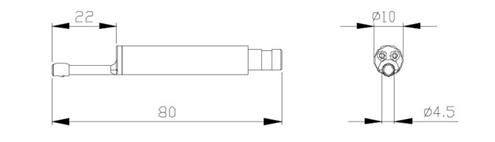
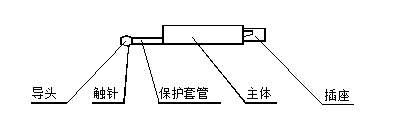
Sensor performance metrics | |
| Detection principle | Inductive |
| Measuring range | 160μm |
| Tip radius | 5μm |
| Needle tip material | diamond |
| Stylus force measurement | 4mN(0.4gf) |
| Stylus angle | 90° |
| Longitudinal radius of the guide | 45mm |
Optional
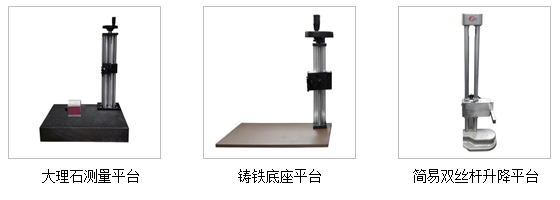
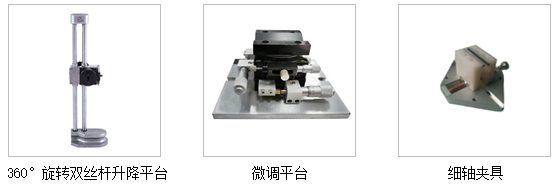
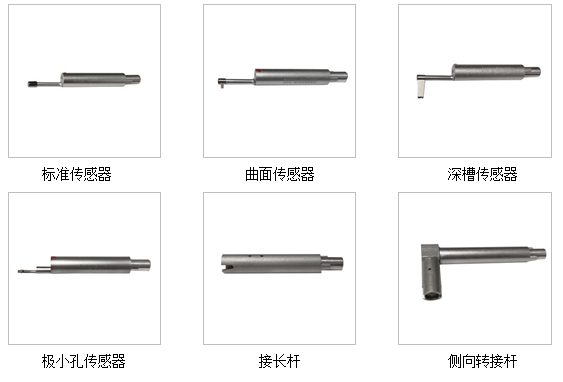
- 1On surface roughness Measuring method Optical inspection, Mechanical, Atomic Force Microscope (AFM)
- 1GB/T 45767-2025《Silicon nitride ceramic subtrates》
- 2GB/T 39077-2024《Test methods for detecting detrimental phase in austenitic-ferritic (duplex) stainless steels》
- 3JJF 1105-2018《Calibration Specification for Contact(Stylus)Instruments of Surface Roughness Measurement by Profile Method》
- 4JJG 2018-1989《Measuring Instruments for Surface Roughness》
- 5GB/T 28210-2024《Thermal-sensitive paper》
- 6HB 6172-1988《General surface roughness》
- 7GB/T 42671-2023《Test method for surface roughness of carbon materials》
- 8JJG (轻工) 52-2000《Verification Regulation of Roughness Tester for Paper and Board》
- 9JJG (轻工) 117-2000《Print-Surf Roughness Tester》