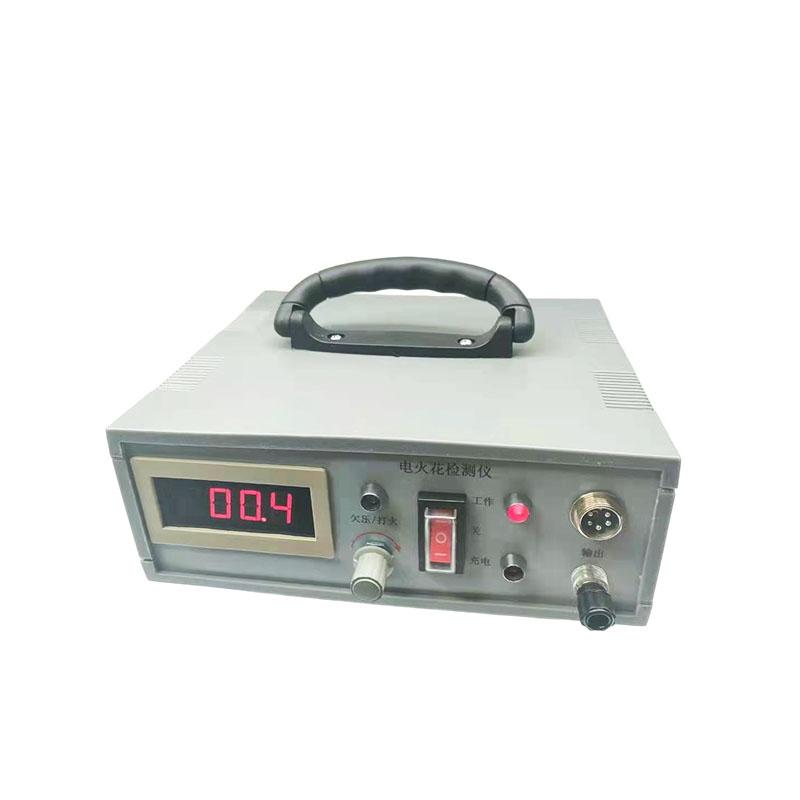
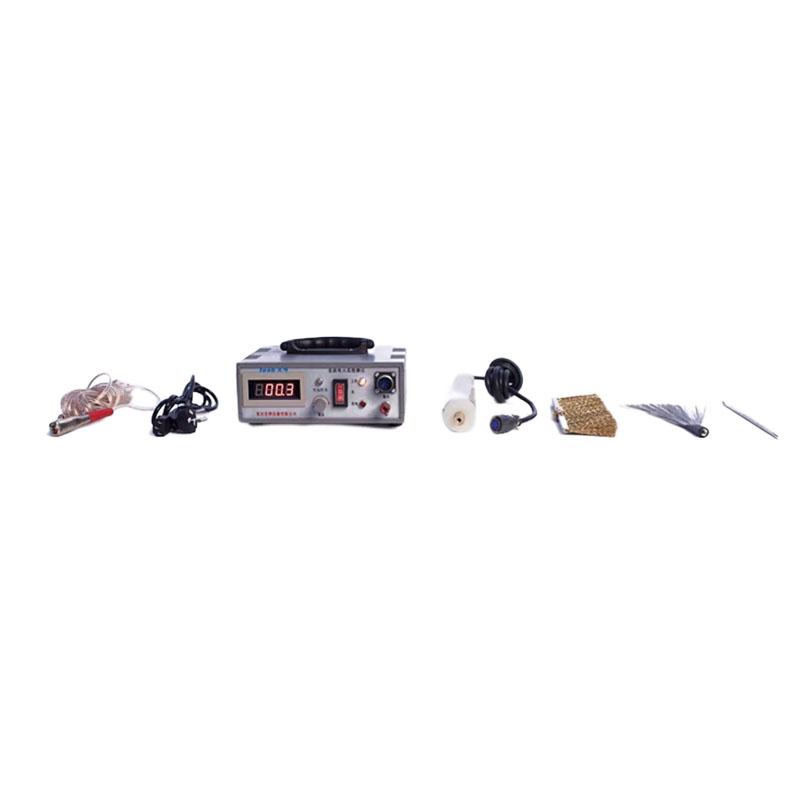

LEEB720 digital spark Detector high Voltage leak Detector
SE leeb720

Leeb leeb720 Spark DetectorSPEC
Leeb leeb720 Spark DetectorDetails
Leeb leeb720 Spark DetectorPacking list

- SKU
- NB043828
- Applicable detection thickness
- 0.05-15Mm epoxy, coal asphalt, petroleum asphalt.
- Output high Voltage
- 2~ 30KV (stepless continuous adjustable)
- Display mode
- digital display
- Voltage Control system
- Digital regulator
- Power
- DC 12V
- Power consumption
- ≤6W
- Host Volume
- 180×170×70mm
- Host Weight
- 1.8Kg (including battery)
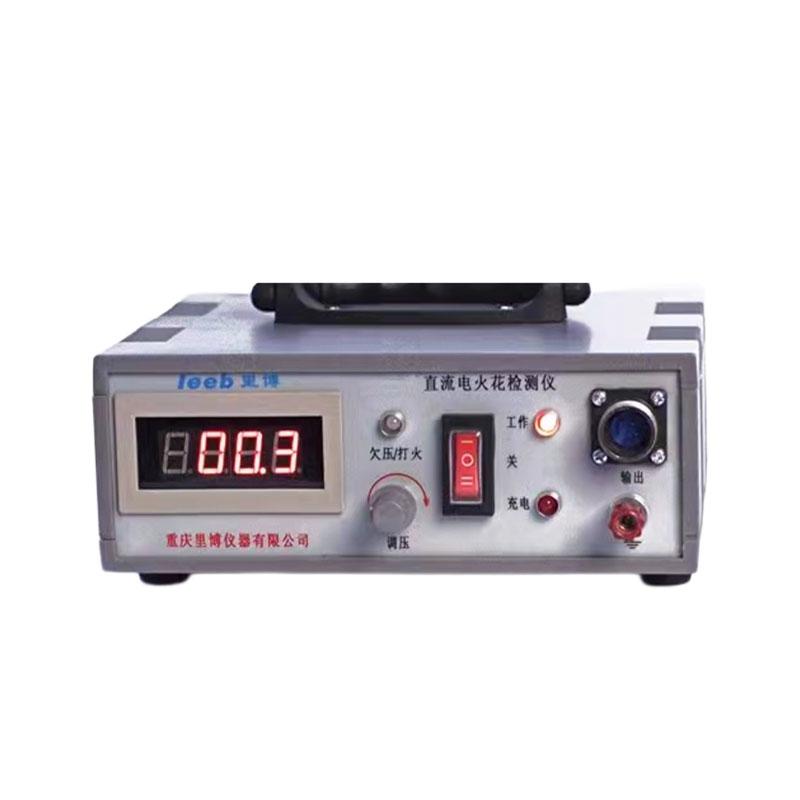
Overview
Digital display, more intuitive and convenient;
Adopt integrated high Voltage generator to overcome static electricity phenomenon;
Stable and reliable performance, widely used in the industry; sound and light alarm;
Especially suitable for field work.
Functional features
The electric spark Detector is an instrument used to detect the quality of metal anti-corrosion coatings. Using this instrument, the quality inspection of glass-lined, glass fiber reinforced plastic, epoxy coal pitch and rubber lining coatings of different thicknesses can be carried out. When the anti-corrosion layer has quality problems, such as pinholes, bubbles and cracks, the instrument will emit bright electric sparks and sound an alarm at the same time.
The electric spark Detector is powered by a nickel-metal hydride battery. The battery has the advantages of high capacity, long life, light weight, no pollution, no memory effect, and can be charged and discharged quickly. It is suitable for field operations.
The instrument has advanced design and stability, and can be widely used in chemical, petroleum, rubber, enamel and other industries. It is a tool used to detect the quality of metal anti-corrosion coatings.
Operating Principle
Electric spark Detector, also called electric spark leak Detector, electric spark leak Detector, etc.
This instrument is mainly used to detect whether there are pinholes, trachoma and other defects in thick non-conductive coatings on metal substrates.
The electric spark Detector adds a certain amount of pulsed high Voltage to the surface of the anti-corrosion layer of the conductive substrate. For example, due to the thin anti-corrosion layer, metal leakage or air leakage pinholes, when the pulsed high Voltage passes through, an air gap breakdown is formed to generate spark discharge. At the same time, the alarm circuit sends a pulse signal, so that the alarm sends an audible alarm, so as to achieve the purpose of detecting the anti-corrosion layer.
Use attention
1. Before use, the operator should read the instruction manual of the instrument carefully, use it strictly according to the operating specifications, pay attention to protecting the instrument, prevent falling, touching and high temperature, and do not place it near moisture and corrosive gases.
2. Select an appropriate ground point during testing to ensure the quality of testing.
(1) For the detection of the anti-corrosion layer on the surface of a small-volume metal object, the detected object should be supported by an insulator for more than 20cm, and then the ground wire should be well connected to the metal object for detection.
(2) For the detection of large-volume or flat objects, when the measured object has good contact with the earth, it is only necessary to connect the ground wire to the earth to test.
3. During the inspection process, the inspectors should wear high-Voltage insulating gloves, and no one should touch the probe and the measured object to prevent electric shock!!!
4. The surface of the tested anti-corrosion layer should be kept dry. If it is stained with conductive layer (dust) or water, it is not easy to determine the exact location of the leakage point.
5. When the instrument is not in use, the power switch must be in the "off" position!!!
6. When the underVoltage indicator light is on, please be sure to charge it in time!!!