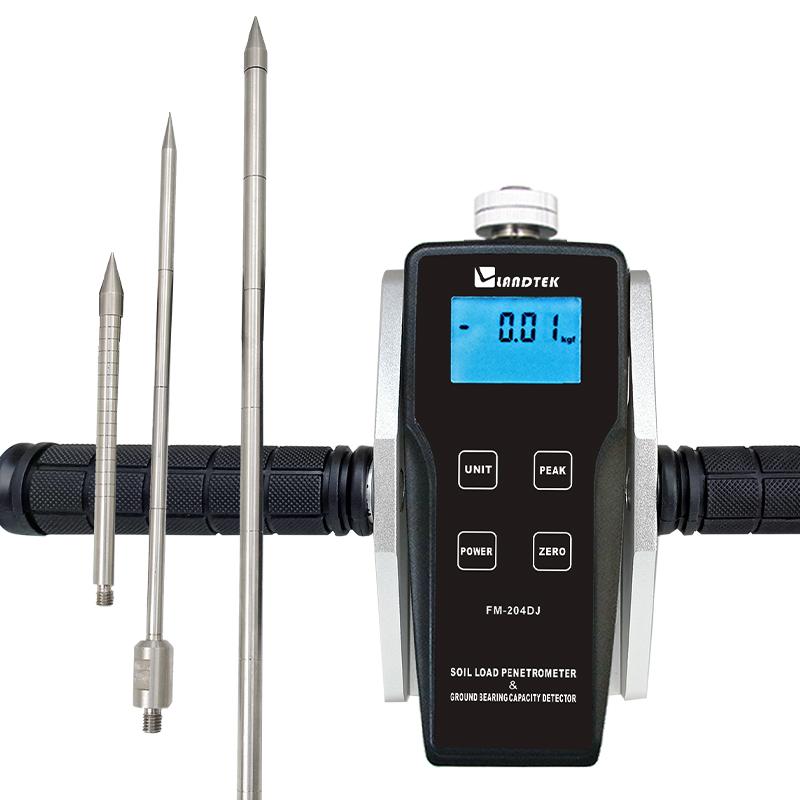

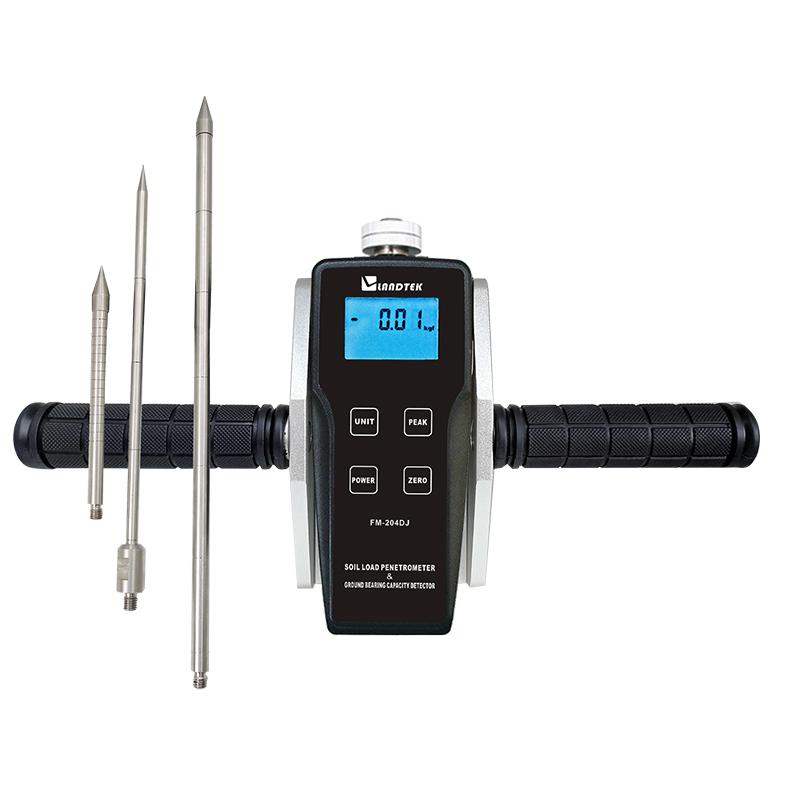
LANDTEK FM204-DJ Fill compactness/Platts penetratIon Meter
SE FM204-DJ

LANDTEK FM204-DJ Fill compactness/Platts penetratorSPEC
LANDTEK FM204-DJ Fill compactness/Platts penetratorDetails
LANDTEK FM204-DJ Fill compactness/Platts penetratorPacking list
- SKU
- NB044351
- Measurement range
- 0KG~100KG(0N-1000N)
- Depth of measurement
- 0cm~30cm
- material under test
- After rolling, various backfills, clays, sands and mixed soils, etc
- Application environment
- Highways, railways, reservoirs, dikes, dams, and civic buildings
- Test Result
- Filling Resistance, Relative Thousand Density, Compaction Coefficient and Ground Bearing Capacity
- Power
- 2 AA batteries (5V DC optional)
- Test Accuracy
- ≤0.25%
- shutdown mode
- 10 minutes automatic shutdown or manual shutdown
- Weight (without battery)
- Instrument 415 g, handle 295 g, probe 380 g
Applications
The universal penetrometer is based on geotechnical tests: the correlation between soil penetration and soil dry density, the relationship between soil penetration and moisture content, and the relationship between soil moisture content and compactness. Through a large number of parallel comparison tests between penetration and ring knife methods and establishing regression equations, the correlation data table between the unearthed penetration resistance and dry density was calibrated. By measuring the penetration resistance and looking up the table, the dry density can be quickly obtained, and then the compaction coefficient can be quickly calculated.
Features
There is no radioactive nuclear pollution, and it is cheap, small in size and easy to carry on site.
It is used in domestic (CN) industrial and civil buildings, highways, railways, roads and bridges, municipal drainage, oil pipelines, water conservancy, dam building, embankments, irrigation canals, reservoir construction, and airport runway projects.
A group of tests using the penetration method takes up to 15-20 minutes, which is effective, fast and frees up productivity.