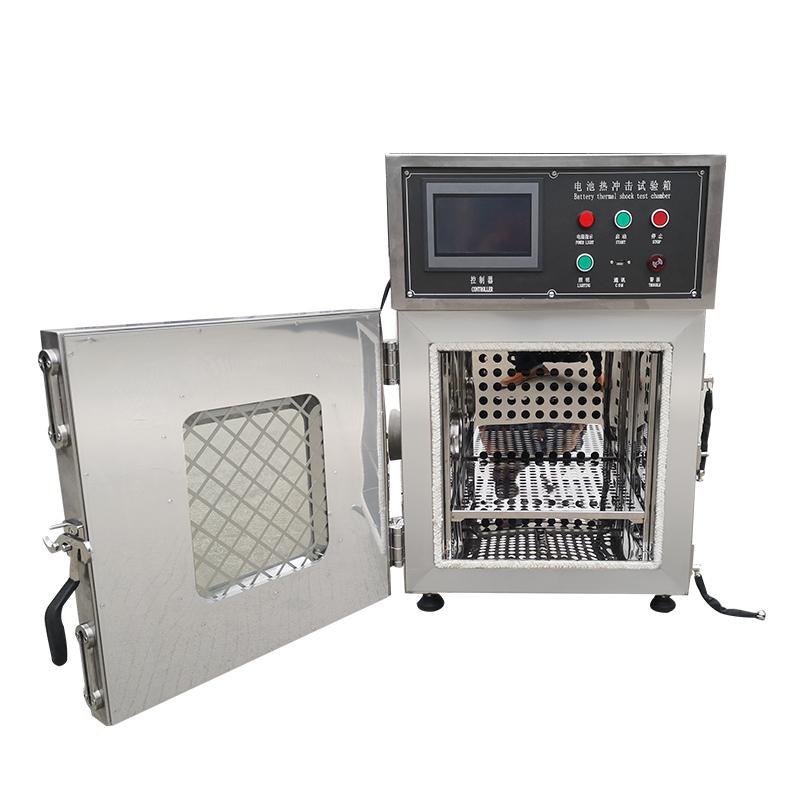
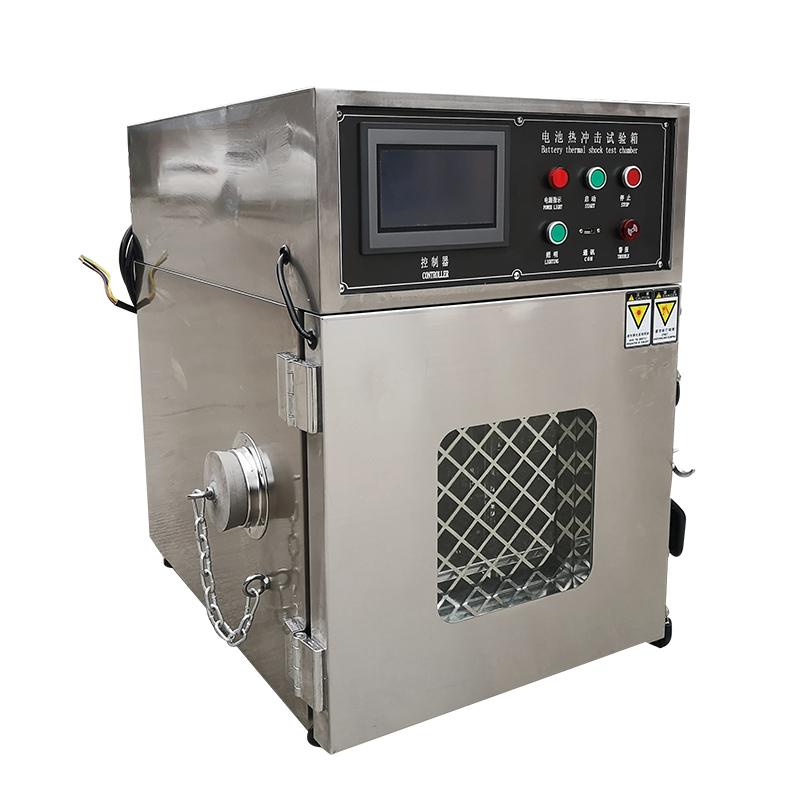
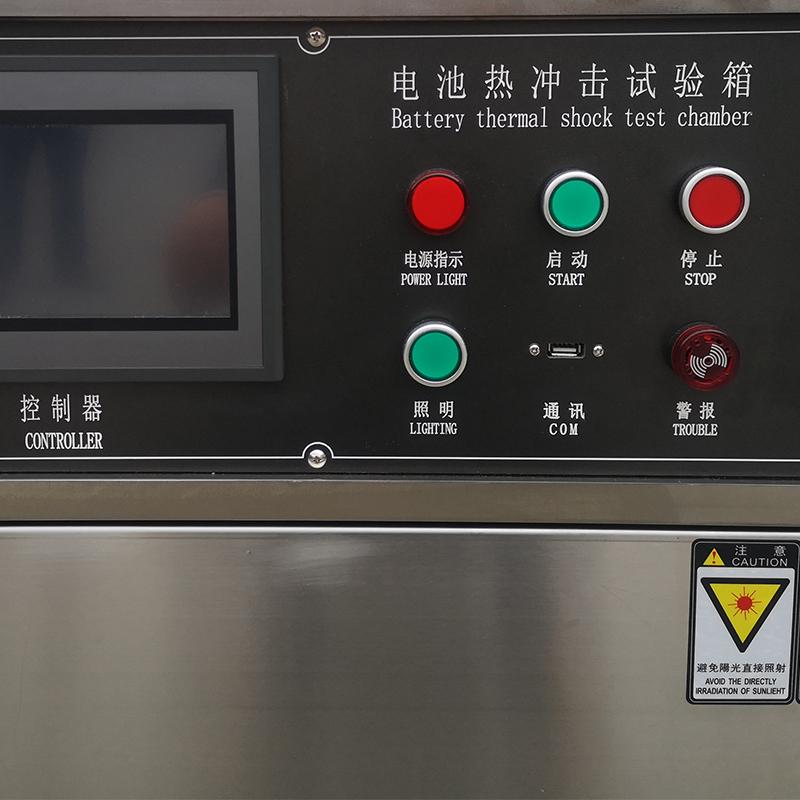

China NBC-9012 Battery Thermal Shock Test Chamber, Battery Thermal Shock test, capacity 64L
SE NBC-9012

Factory NBC-9012 Battery thermal impact test ChamberSPEC
Factory NBC-9012 Battery thermal impact test ChamberDetails
Factory NBC-9012 Battery thermal impact test ChamberPacking list
- SKU
- NB044774
- Temperature control mode
- Touchscreen control
- Temperature range
- Room temperature~ 150 ℃
- Temperature display accuracy
- ±0.1℃
- Inner box size
- 400*400*400mm
- Heating rate
- (5 +/- 2) ℃/min (non-linear no-load, average temperature rise)
- Inner box material
- 304 stainless steel
- thermal insulation device
- Effective compression thermal insulation cotton
- safety device
- First over-temperature alarm, MCCB overload protection, etc
- Control system
- temperature to time, time to time, beep to stop
- observation window
- Double-decked Tempered Glass Viewing Window, Size 250 * 250 * 5MM
- Exhaust flue
- Vane design can jump out of the air volume
- Explosion-proof port design
- Open on the side of the equipment, surrounded by high temperature sealant sealing, heat insulation layer using soft aluminum foil and Glass cotton
- explosion-proof door
- Stainless steel explosion-proof door lock, and equipped with chain lock for secondary protection
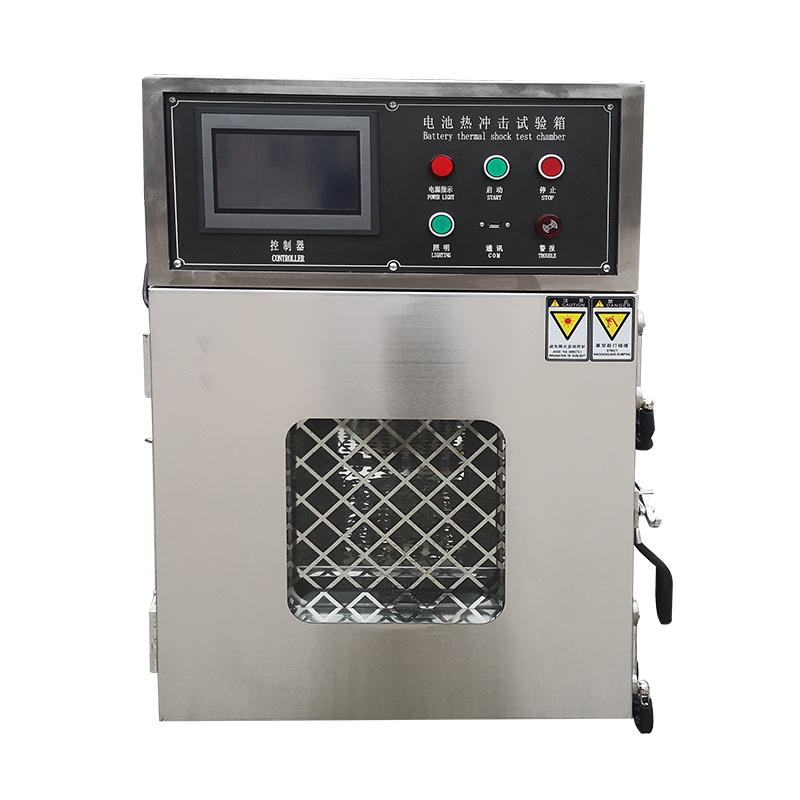
Introduction
The battery thermal shock Test Chamber is a professional testing equipment used to evaluate the performance and safety of batteries under extreme temperature changes. This device simulates the reaction of the battery in an environment with rapid temperature changes and is mainly used to test whether the battery can remain stable and safe under extreme temperature conditions. By conducting thermal shock tests on batteries, you can evaluate their structural stability, chemical stability under extreme temperature changes, and whether there are safety hazards, such as electrolyte leakage, casing rupture, etc. Suitable for various types of batteries, including but not limited to lithium-ion batteries, nickel-metal hydride batteries, etc., especially those used in harsh environments such as automotive, aerospace and military applications.
Applications
This machine can be used for stress testing of phantom shells at high temperatures, as well as thermal (shock) abuse testing and heating testing.
After the battery (pack) is charged, it is tested for 7 hours at an ambient temperature of 70±2℃, then removed from the oven and cooled to room temperature. The battery shell is deemed to be qualified if there is no physical deformation that causes the interior to be exposed.
Place each charged single cell in a natural convection or forced ventilation oven. The oven rises to 130±2℃ at an average temperature rise rate of 5±2℃. Before ending the test, the battery is kept at this temperature for 10 minutes. It is qualified if it does not explode or catch fire.