
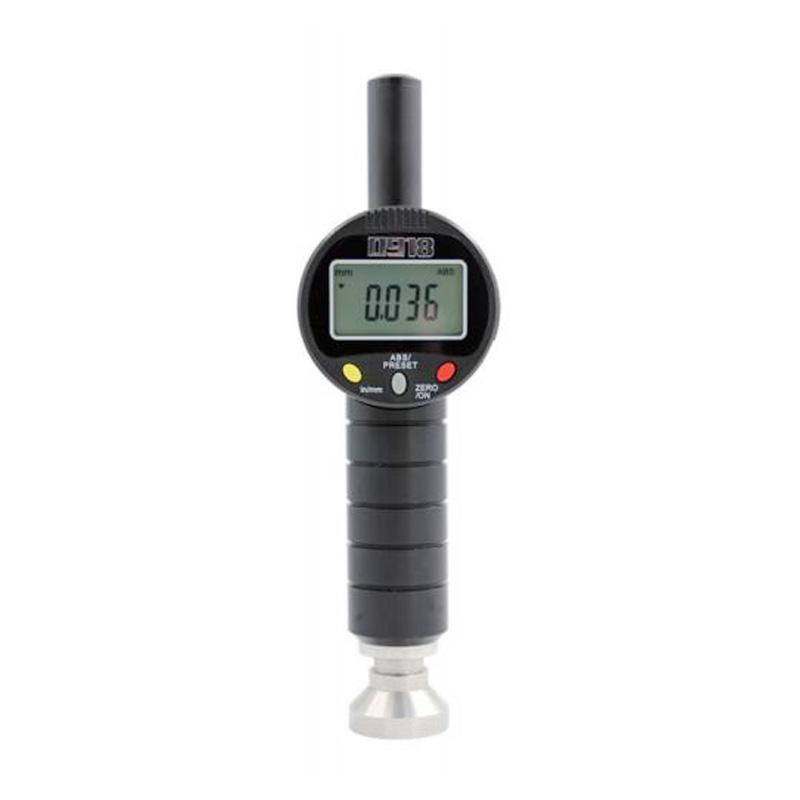
IPRE SR600 anchor pattern instrument shot peening sand blasting Roughness Gauge 0~2000a large range
SE SR600
SR600

-
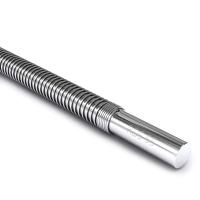 RDS 90G #3/8 "high viscosity Mayer Rods film thickness 205.7μm$ 173.00SE
 -
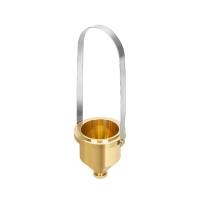 TRUIT TR 1010/2 Portable Coat - 4 cups, Coat 4 Viscometer$ 146.00SE
 -
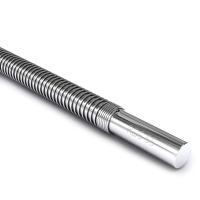 RDS 225G #3/8 "Experimental Spreader Rod, High viscosity Applicator rod 514.4μm$ 173.00SE
 -
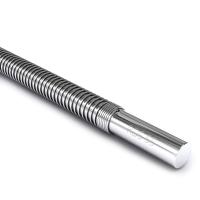 RDS 110G #3/8 "gap Spreader, high viscosity film 251.5μm$ 173.00SE
 -
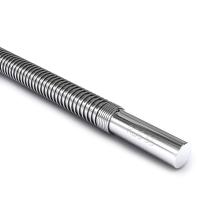 RDS 250G #3/8 "High viscosity Spreader, super thick film 571.5μm$ 173.00SE





Ipre SR600 AnchorageSPEC
Ipre SR600 AnchorageDetails
Ipre SR600 AnchoragePacking list
- SKU
- NB044861
- Measurement range
- Surface Profiles and Pits
- range
- 0~2000Um (maximum adjustable to 6500um)
- Accuracy
- ±2um
- tip diameter
- 0.2mm
- tip length
- 8.2mm
- Base diameter
- 30mm
- unit
- Male/Imperial Swap
Introduction
Anchor pattern analyzer is a device or tool usually used to analyze and measure the texture, pattern or anchor pattern on the surface of an object. An anchor pattern is a recognizable repeating pattern or texture on the surface of an object, often used to locate or identify the object. Anchors can be used in a variety of applications, including computer vision, image processing, automatic identification systems, quality control, and industrial automation.
The main purpose
Quality control: The anchor pattern meter can be used to check the anchor patterns on the surface of the product to ensure that its quality meets standards, such as print quality control, textile testing, etc.
Position positioning: In automation systems, anchors can be used to identify and locate objects, such as part positioning and robot navigation in machine vision systems.
Automatic identification and classification: Anchors can be used to automatically identify and classify different objects or products, such as automatic sorting and identification tasks in the logistics and packaging fields.
Image recognition: In computer vision and image processing applications, anchors can be used to detect and identify specific anchors, or textures, for object recognition and tracking.
Instructions
First use the glass zero plate to calibrate the zero, then place the feet on the surface to be measured, and the probe can measure the height from the peak to the trough. Finally, the average value is taken, which is the roughness value of the surface to be measured.
- 1How to measure orange peel on coated surface?
- 2Parker Printing Surface Roughness Meter Test Method
- 3How to test the surface roughness of paper by needle tracing method?
- 4Different Test Methods for Coating Surface Roughness
- 5On surface roughness Measuring method Optical inspection, Mechanical, Atomic Force Microscope (AFM)
- 6Bendtsen Instrument Rapid Determination Method for Surface Roughness of Test Paper and Cardboard
- 7Coating surface roughness testing
- 8What is a Surface Profiler?
- 9Roughness/Smoothness Test Method for Paper and Board
- 10Principle and method of Schopper air permeability meter test method
- 1GB/T 45767-2025《Silicon nitride ceramic subtrates》
- 2GB/T 44390-2024《Print display—Measuring method of film uniformity》
- 3JJF 1105-2018《Calibration Specification for Contact(Stylus)Instruments of Surface Roughness Measurement by Profile Method》
- 4JJG 2018-1989《Measuring Instruments for Surface Roughness》
- 5GB/T 28210-2024《Thermal-sensitive paper》
- 6HB 6172-1988《General surface roughness》
- 7JJG (轻工) 52-2000《Verification Regulation of Roughness Tester for Paper and Board》