
VARNISING BM-14DF Light and Dark Field of View Microscope Tricycle Tube
SE BM-14DF

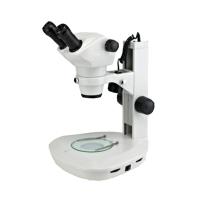


SHSGBM BM-14DF Chiaroscuro MicroscopeSPEC
SHSGBM BM-14DF Chiaroscuro MicroscopeDetails
SHSGBM BM-14DF Chiaroscuro MicroscopePacking list
- SKU
- NB044889
- Mechanical barrel length
- 160mm
- conjugate distance
- 195mm
- magnification
- 40X-1600X
- Stage size
- Mobile platform 125 × 120mm
- Movement range
- 70×30mm
- Cursor
- 0.1mm
- pupil distance
- 55-75 mm
- Focusing device
- 15 mm coarse fretting focusing coaxial mechanism, fine-tuning grid value 0.002mm
- Brightfield condenser
- N.A.1.25 Adjustable medium Abemin field condenser with variable light bar
- darkfield condenser
- N.A.1.25 Adjustable Middle Abbe Dark Field Condenser
- Color filter
- Blue, yellow, green
- Light source
- Halogen lamp 6V20W, AC85V-230V luminance can be continuously adjusted

Introduction
Dark field lighting is also called dark field lighting. Its characteristics are different from bright field. It does not directly observe the illumination light, but observes the light reflected or diffracted by the object being inspected. Therefore, the field of view becomes a dark background, while the inspected object appears as a bright image. A special accessory required for dark field observation is a dark field condenser. Its characteristic is that it does not allow the light beam to pass through the object being inspected from bottom to top, but changes the light to
Change the path so that it is directed obliquely towards the object being inspected, so that the illumination light does not directly enter the objective lens, and the light reflected or diffracted on the surface of the object being inspected is used to form a bright image.
The dark field observation microscope is suitable for tiny living bodies that cannot be seen under ordinary microscopes. It does not stain biological samples and observes their shape and outline. It is widely used in scientific research, teaching, medical treatment, epidemic prevention, agriculture and animal husbandry and other industries.
Features
The bright and dark field microscopes use electric light sources with continuously adjustable brightness. The hinged lens barrel is tilted at 30° and can rotate freely 360 degrees. ;
The hinged trinocular tube is tilted at 30°, with a split prism push-pull rod that can rotate 360 ââdegrees;
The CCD channel of the trinocular tube is equipped with a multi-head threaded image fine-tuning mechanism. The fine-tuning range is 10mm (including CCD interface).
Standard configuration
eyepiece:
| category | gain | Direct field of view |
| eyepiece | 10X | Ï18mm |
| 16X | Ï11mm |
Objective lens:
| category | gain | numerical aperture | working distance |
| objective lens | 4X | 0.1NA | 37.5mm |
| 10X | 0.25NA | 7.31mm | |
| 40X | 0.65NA | 0.63mm | |
| 100X (oil) | 1.25NA | 0.18mm |
- 1How Scanning Electron Microscopy Works
- 2Types of microscopes and common problems
- 3Microscope classification, operation and application
- 4How does a digital microscope work?
- 5Explanation of common terms for microscopes
- 6Characteristics of Electron Microscopes and Differences Between Several Microscopes
- 1GB/T 44268.2-2024《Microscopes—Definition and measurement of illumination properties—Part 2:Illumination properties related to the colour in bright field microscopy》
- 2GB/T 44268.1-2024《Microscopes—Definition and measurement of illumination properties—Part 1: Image brightness and uniformity in bright field microscopy》
- 3GB/T 44276.2-2024《Microscopes—Cover glasses—Part 2:Quality of materials, standards of finish and mode of packaging》
- 4GB/T 44276.1-2024《Microscopes—Cover glasses—Part 1:Dimensional tolerances, thickness and optical properties》
- 5GB/T 44293-2024《Image measurement method for numerical aperture of microscopic objective》
- 6GB/T 39077-2024《Test methods for detecting detrimental phase in austenitic-ferritic (duplex) stainless steels》
- 7GB/T 43846.1-2024《Microscopes—Designation of microscope objectives—Part 1: Flatness of field/Plan》
- 8GB/T 43846.2-2024《Microscopes—Designation of microscope objectives—Part 2: Chromatic correction》
- 9GB/T 43846.3-2024《Microscopes—Designation of microscope objectives—Part 3: Spectral transmittance》
- 10GB/T 13777-2024《Test method for maturity of cotton fibers—Microscopic method》