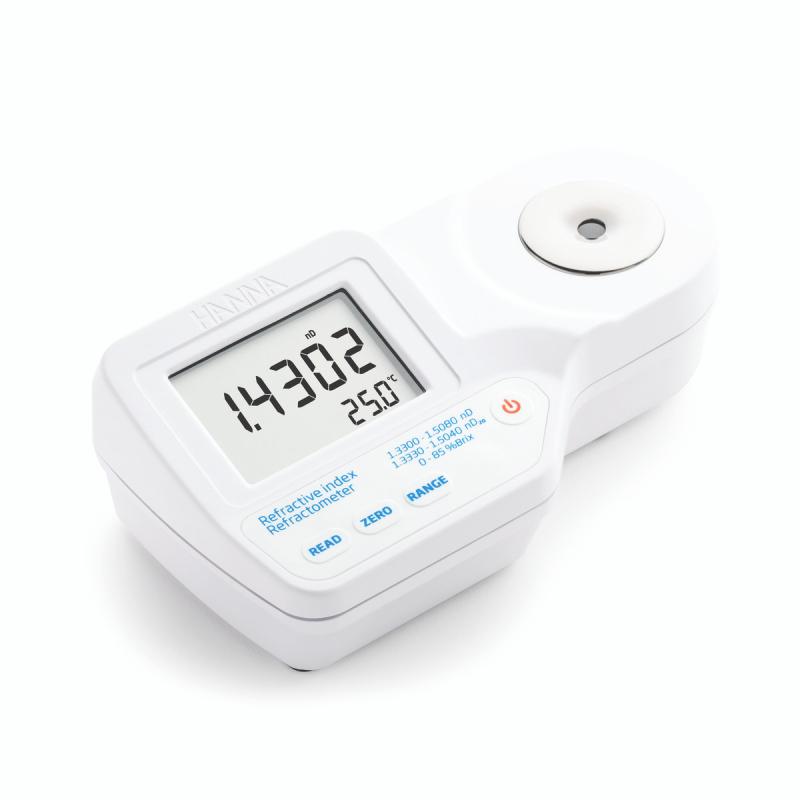
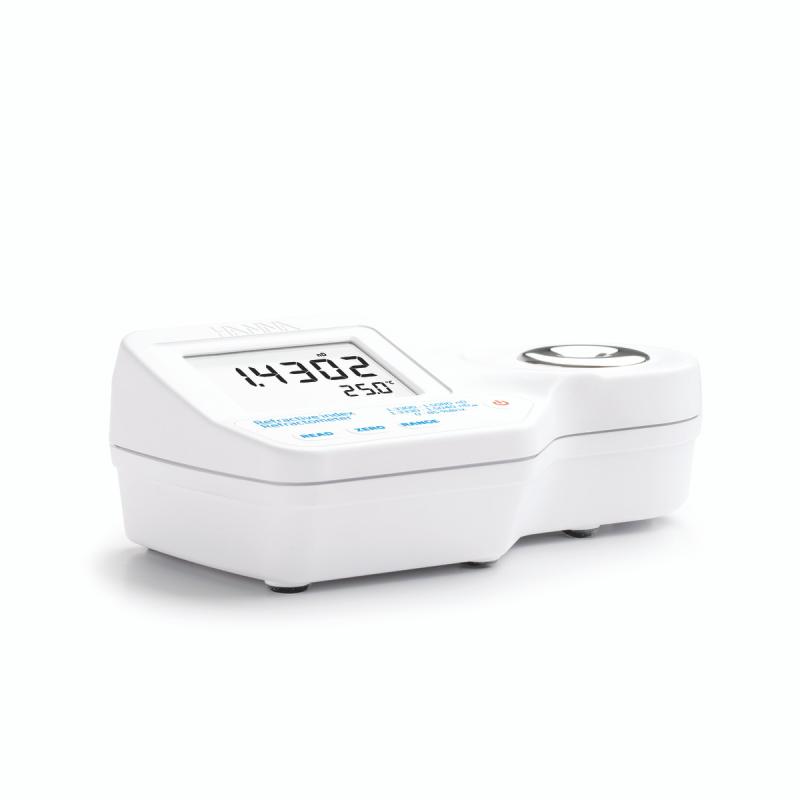
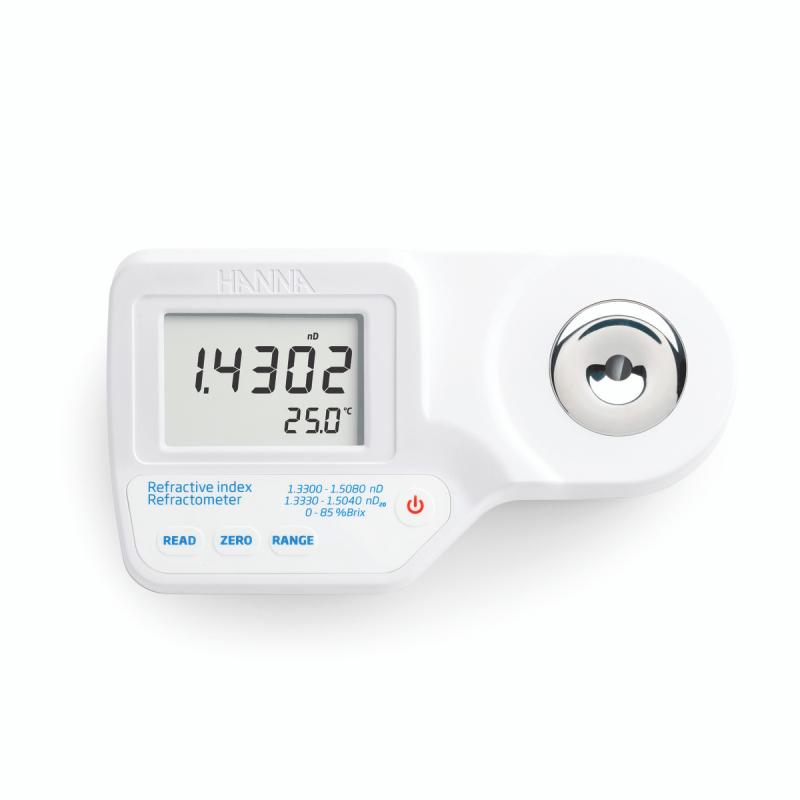

HANNA HI96813 Brix and Potential Alcohol Refractometer
SE HI96813
HANNA HI96813 Brix and potential alcohol refractive analyzerSPEC
HANNA HI96813 Brix and potential alcohol refractive analyzerDetails
HANNA HI96813 Brix and potential alcohol refractive analyzerPacking list
- SKU
- NB045670
- Measurement range of sugar content
- 0 to 50% Brix;
- sugar content resolution
- 0.1% Brix;
- Sugar content Accuracy (@25 ℃/77 ° F)
- ±0.2% Brix;
- Measurement range
- 0 to 80℃ (32 to 176 ℉)
- Temperature Resolution
- ±0.1 ℃(0.1℉)
- Temperature Accuracy (@25 ℃/77 ° F)
- ±0.3 ℃(0.5℉)
- Temperature compensation
- Automatic temperature compensation 10-40 ℃ (50 to 104 ° F)
- Measurement of reaction time
- Approximately 1.5 seconds
- Minimum sample size
- 100 μL (completely covering the prism)
- Light source
- Yellow LED
- Sample chamber
- Stainless steel tank, flint prism
- Automatic shutdown
- After three minutes of use
- Shell protection level
- IP65
- Power supply type/Battery life
- 9V/about 5000 sets of readings
- Size/Weight
- 192x102x67 mm (7.6x4.01x2.6”)/420g(14.8oz.)
- basic configuration
- Host, battery, manual

Introduction
The HI96813 Brix and Latent Alcohol Refractometer converts the refractive index into sucrose concentration in weight percent, or % Brix (also known as °Brix). The theoretical basis for this conversion is the sugar analysis method provided in the International Committee for the Unified Method of Analysis of Sugar. Since most of the sugars in grape juice are fructose and glucose but not sucrose, the sugar content reading of this refractometer when measuring wine is often called "apparent Brix".
working principle
The HI96813 Brix and Latent Alcohol Refractometer converts the refractive index of a sample to sucrose concentration in percent by weight, %Brix (also known as °Brix). The conversions used are based on the ICUMSA method manual (International Committee on Unified Methods for Sugar Analysis). Since most of the sugars in grape juice are fructose and glucose, rather than sucrose, the reading is sometimes called "apparent Brix."
Characteristics
Two-line LCD display with temperature reading below the measured value.
ATC, automatic temperature compensation.
BEPS, low battery reminder, ensures accurate and effective readings.
Waterproof, suitable for laboratory and field measurements.
Fast and accurate measurement, with measurement results quickly displayed in 1.5 seconds.
One-point calibration, use distilled or deionized water.
For micro-volume samples, only 2 drops of sample are needed.
Automatically shuts down if not used for three minutes.
Stainless steel sample chamber, easy to clean and anti-corrosion.
Easy to operate, just drop the sample and press the button to read, simple and fast.
ABS heat shrink plastic carrying case.
- 1GB/T 5527-2024《Animal and vegetable fats and oils—Determination of refractive index》
- 2GB/T 614-2021《Chemical reagent—General method for the determination of refractive index》
- 3GB/T 6488-2022《Liquid chemicals—Determination of refractive index》
- 4GB/T 614-2006《Chemical reagent - General method for the determination of refractive index》