
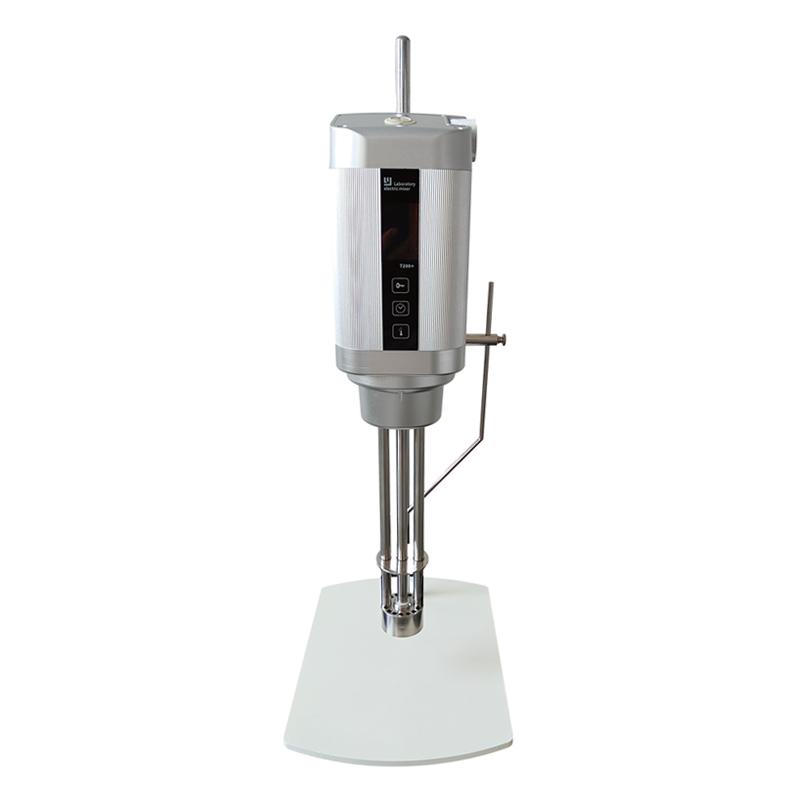
LANYU P500 Homogenizer 40L/100~12000rpm
SE P500
P500

LanYu P500 HomogenizerSPEC
LanYu P500 HomogenizerDetails
LanYu P500 HomogenizerPacking list
- SKU
- NB045692
What is a homogenizer
Homogenizer is a kind of laboratory equipment used to mix, evenly disperse, emulsify and pulverize samples. The sample is processed through high-speed movement and high pressure.
What are the applications of homogenizers?
In cytological research, it is used for cell disruption and cell lysis to extract DNA, RNA and other biomolecules. In food processing, homogenizers are widely used to prepare dairy products, sauces, jams, etc. to improve the texture and taste of food. In addition, homogenizers can also be used to mix solutions, disperse particles, and achieve uniform chemical reactions.
What are the characteristics of a homogenizer?
The homogenizer can make the sample fine and uniform through high-speed movement or high pressure, and is especially suitable for particle dissolution and material mixing. The homogenizer has multiple functions such as emulsification, dispersion, and crushing. It is suitable for experimental needs in different fields and provides efficient and multi-functional sample processing. Some homogenizers are equipped with a high-pressure homogenization function, which can be applied to samples that are difficult to homogenize and provide a more powerful homogenization effect. Equipped with a digital display screen to display operating parameters in real time, making it easy for users to monitor and adjust. In terms of safety and stability, some homogenizers are often equipped with safety functions such as overload protection and overheating protection to ensure the safe operation of the equipment.
How to choose the right homogenizer
When choosing a homogenizer, you need to select a homogenizer with appropriate capacity based on the volume of the experimental sample. Consider the sample hardness and select a homogenizer with appropriate pressure and speed. Depending on laboratory needs, choose a homogenizer with manual or automatic control. Consider the speed adjustment range to meet the needs of different experimental conditions. In terms of cleaning and maintenance, it is necessary to consider that the equipment is easy to clean and maintain to ensure the hygiene of the experiment and the reliability of the equipment. In addition, the power and configuration of the homogenizer need to be selected according to experimental needs to obtain the required homogenization effect.