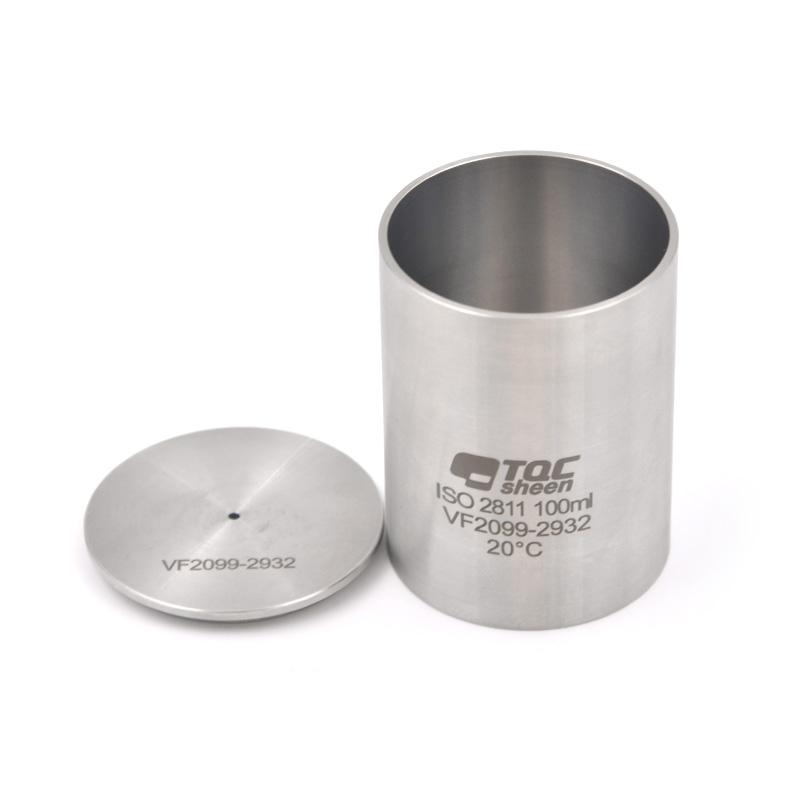
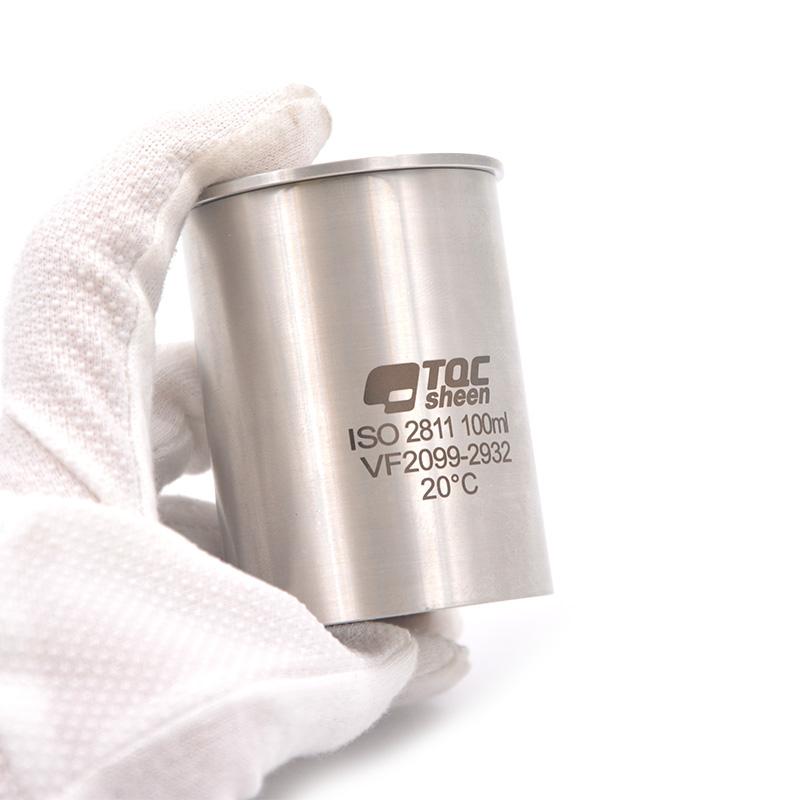
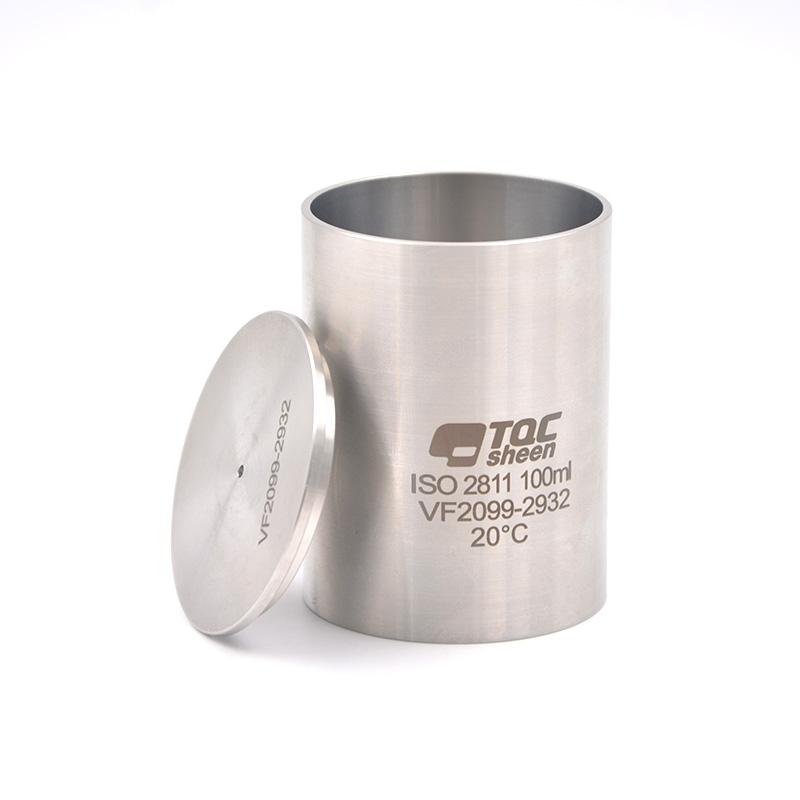
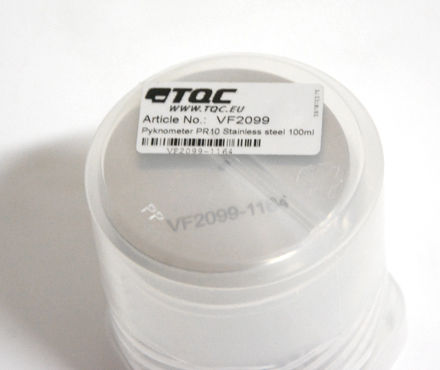

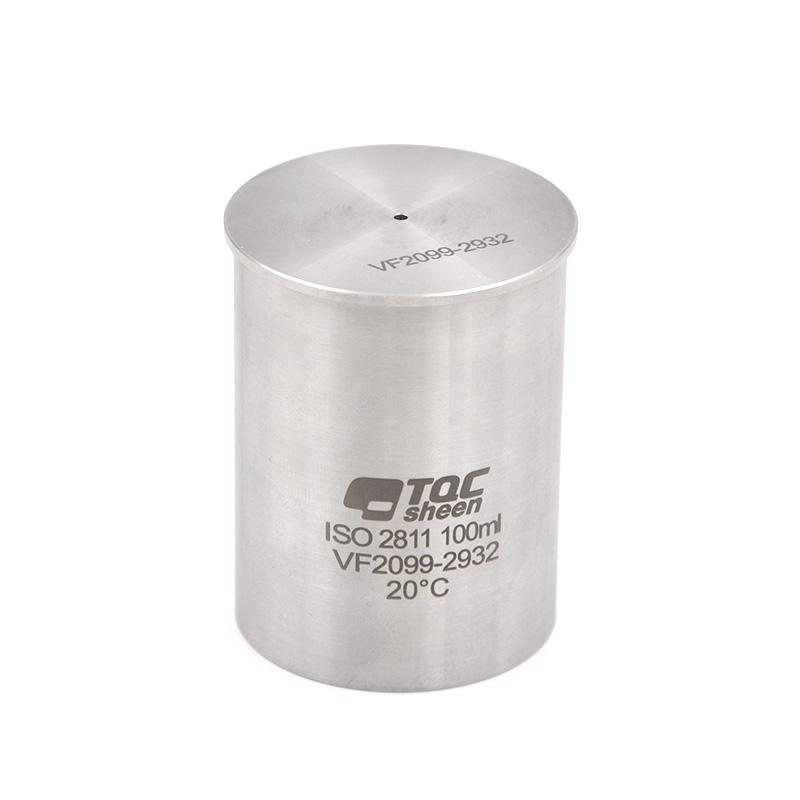
TQC VF2099 Specific Gravity Cup Stainless Steel Material 100ml
SE VF2099

-
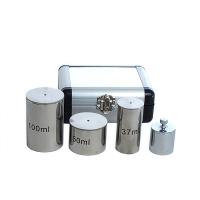 JINGKELIAN QBB-100 Coating Specific Gravity Cup 100ml, stainless steel$ 124.00SE
 -
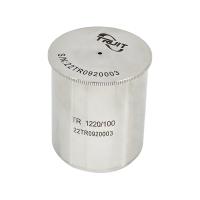 TRUIT TR 1220/100 Stainless Steel Specific Gravity Cup 100ml$ 124.00SE
 -
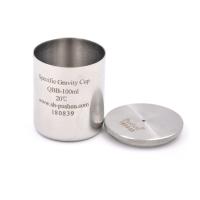 PUSHEN QBB-100 Coating Specific Gravity Cup Volume 100ml Stainless Steel$ 124.00SE
 -
 TQC VF2097 Specific Gravity Cup Aluminum Alloy Material 100ml$ 684.00SE
 -
 MODERNER QBB 100ml Stainless Steel Coating Density Cup





TQC sheen VF2099 Specific Gravity CupSPEC
TQC sheen VF2099 Specific Gravity CupDetails
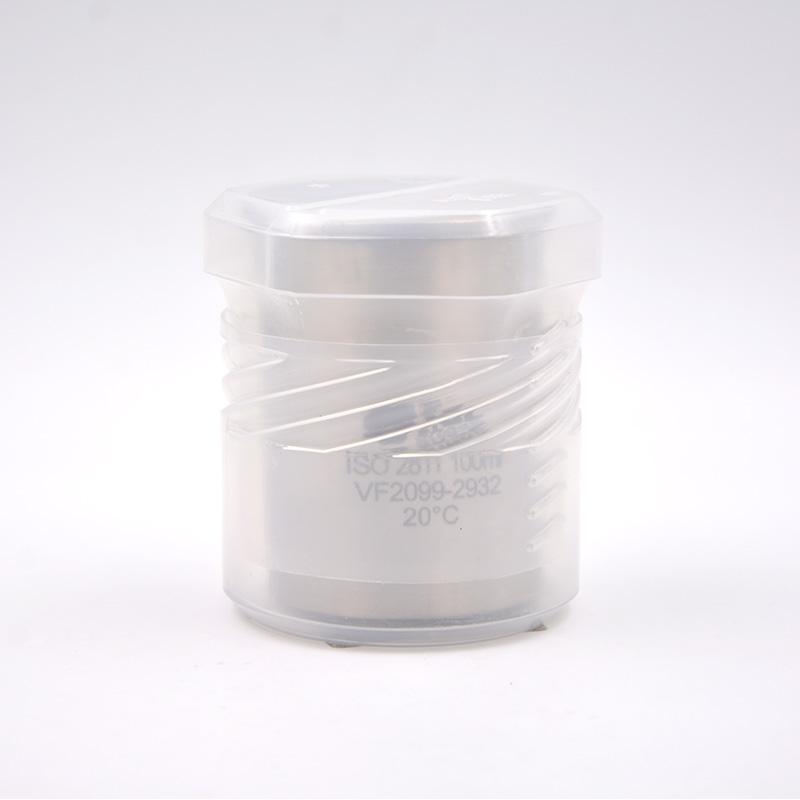
TQC sheen VF2099 Specific Gravity CupPacking list

- SKU
- NB004646
- Cup Volume
- 100ml
- material
- stainless steel
- Applicable standards
- ISO 2811, DIN 53 217, ASTM D 1475
- Measuring temperature
- 20±0.5℃
- size
- 64.2+2mm
- Weight
- 198g
- Bottle cap diameter
- Φ 52mm
- Cup body diameter
- Φ49mm
Introduction
The TQC Bibi Cup is available in four models: VF2097, VF2098, VF2099 and VF2100, which are used to determine the specific gravity of coatings and other similar substances, and are suitable for the density of uninflated specimens.
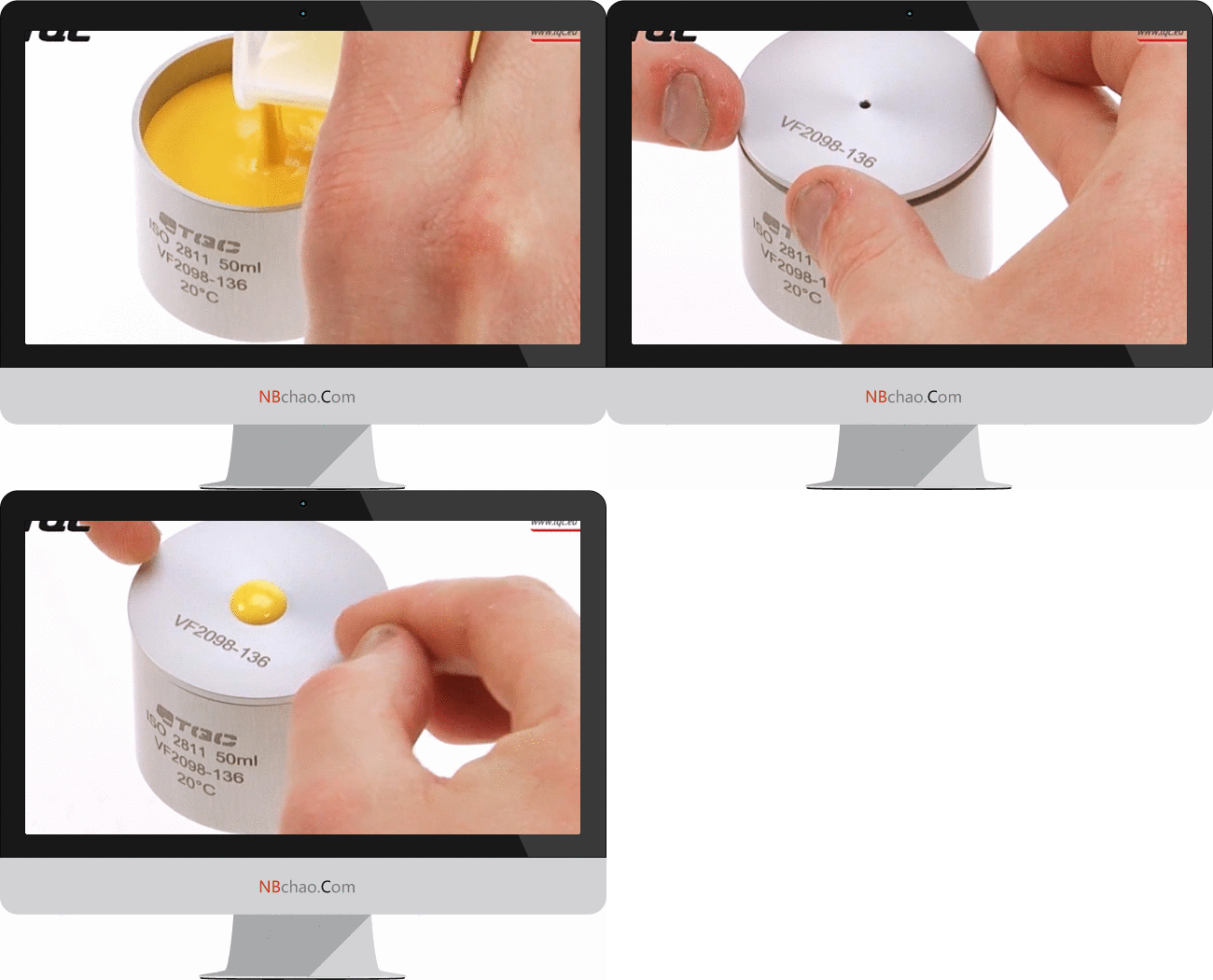
How-to animation video
Parameters
| Model | Material | volume | weight |
| VF2097 | Aluminum alloy | 100 ml | 70g / ± 1g |
| VF2098 | Aluminum alloy | 50 ml | 61g / ± 1g |
| VF2099 | stainless steel | 100 ml | 198g / ± 1g |
| VF2100 | stainless steel | 50 ml | 146g / ± 1g |
| Other parameters | |||
| Environmental requirements | Tests were performed at 20°C±0.5°C | ||
| Meets standards | ISO 2811, DIN 53 217, ASTM D 1475 | ||
Features
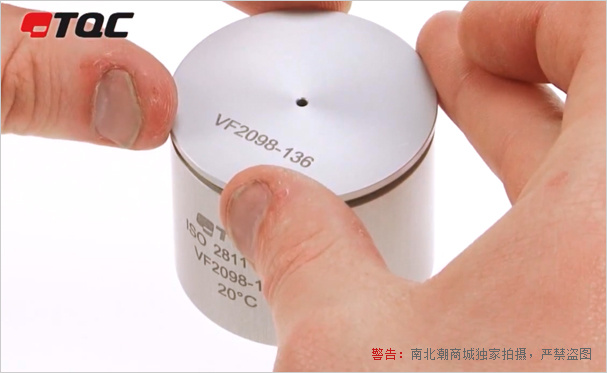
1. The upper lid has a small hole that slopes to the center of the top, so that excess sample material can spill out without bubbles, which can increase accuracy
2. There are 50ml, 100ml, stainless steel, aluminum and other models to choose from
3. Garden pillar type, large opening, suitable for plastic density test and paint ink coating specific gravity detection
4. All models are supplied with a calibration certificate;
Procedure
1. Weigh the clean and dry density cup and record it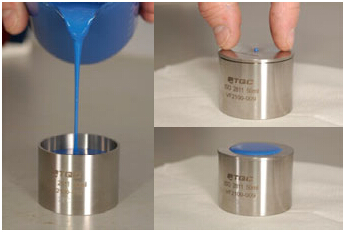
2. Keep the density cup and the liquid being tested within a specific temperature range (20°C + -0.5°C;68°F + -1.0°F)
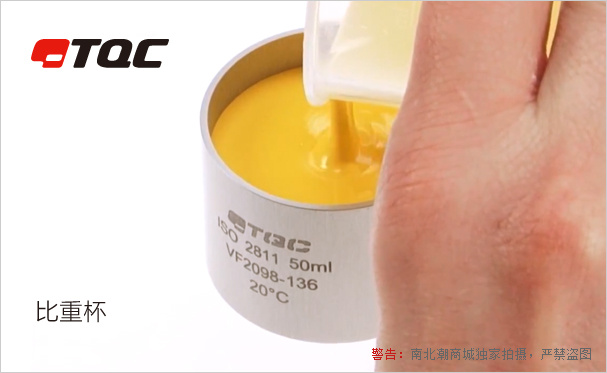
3. Pour the liquid into the gravity cup
4. Close the lid smoothly
5. Avoid air bubbles
6. Carefully wipe the spilled liquid clean with an absorbent cloth.
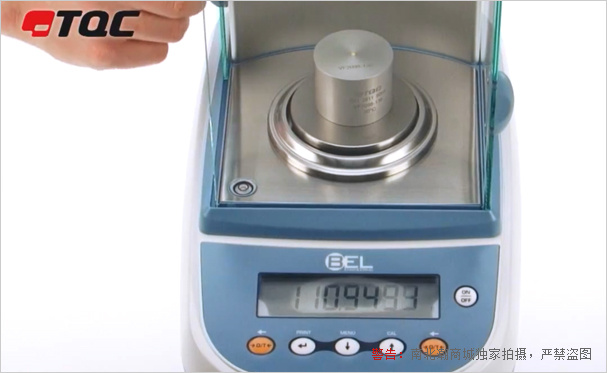
7. Weigh the weight of a filled gravity cup
8. Calculate density: density = (weight g of full cup - weight g of empty cup) / volume of specific gravity cup ml
Actual picture of the product
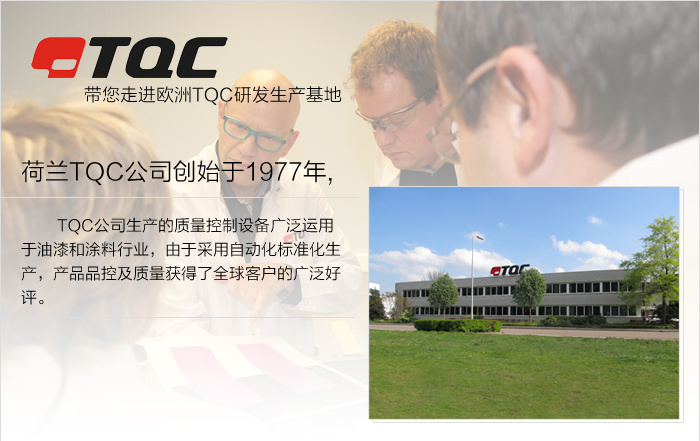
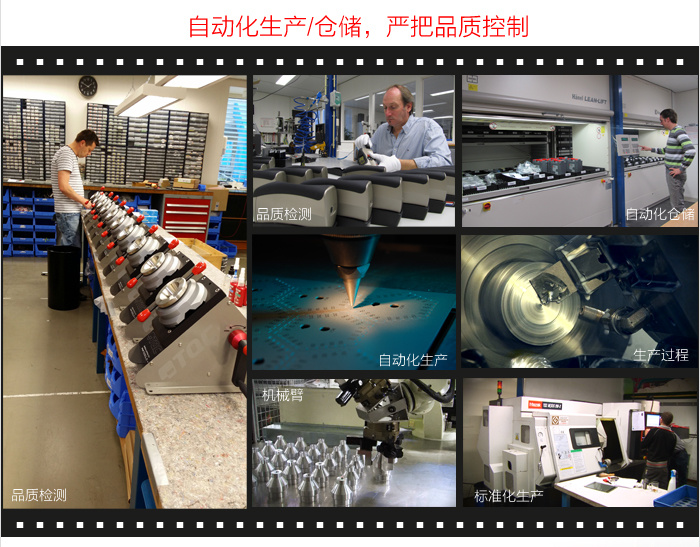
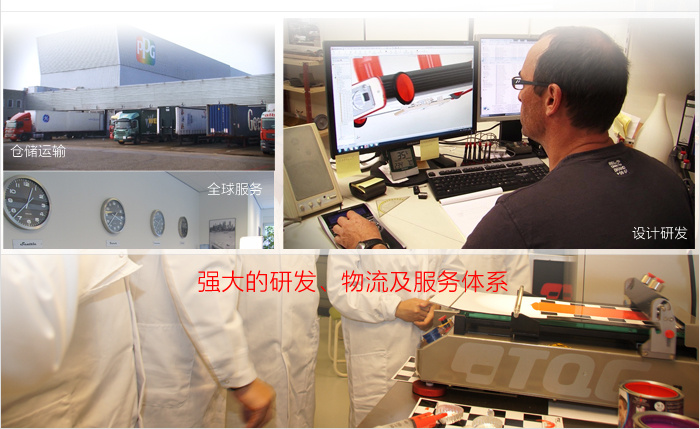
Take you to the Dutch TQC
- 1Frequently Asked Questions about the 2022 Gravity Cup
- 2Specific Gravity bottle Density Error
- 3How to measure Coating varnishes Density with Specific Gravity Bottles
- 4Coating Density Determination Principle and Method
- 1GB/T GB/T 13354-2025 《Determination for density of adhesives》
- 2GB/T 42541-2023《Coated steel pipes for gas piping》
- 3GB/T 1713-2008《Determination of density of pigments - Pyknometer method》
- 4ISO 1675-2022《Plastics - Liquid resins - Determination of density by the pycnometer method》
- 5QB/T 4289-2012《Acrylic colour》
- 6HG/T 20720-2020《Construction and acceptance specification of waterborne anti-corrosion coatings for steel structures in industrial buildings》
- 7HG/T 3951-2007《Water based colorants for architectural coatings》
- 8GB/T 15223-2008《Plastics - Liquid resins - Determination of density by the pyknometer method》
- 9GB/T 1033.1-2008《Plastics - Methods for determining the density of non-cellular plastics - Part 1: Immersion method, liquid pyknometer method and titration method》
- 10ISO 2811-1-2016《Paints And Varnishes - Determination Of Density - Part 1: Pycnometer Method》