
HANNA HI3148B ORP electrode Glass body
SE HI3148B

HANNA HI3148B ORP electrodeSPEC
HANNA HI3148B ORP electrodeDetails
HANNA HI3148B ORP electrodePacking list

- SKU
- NB048029
- material
- Glass
- Measurement range
- ±2000mV
- dialysis hole
- free diffusion
- temperature resistance
- minus 5-80 ℃
- withstand Voltage
- 0.1 Bar
- Filler
- KCl 3.5M
- Connector (model/meter)
- BNC/1m
- application
- wine
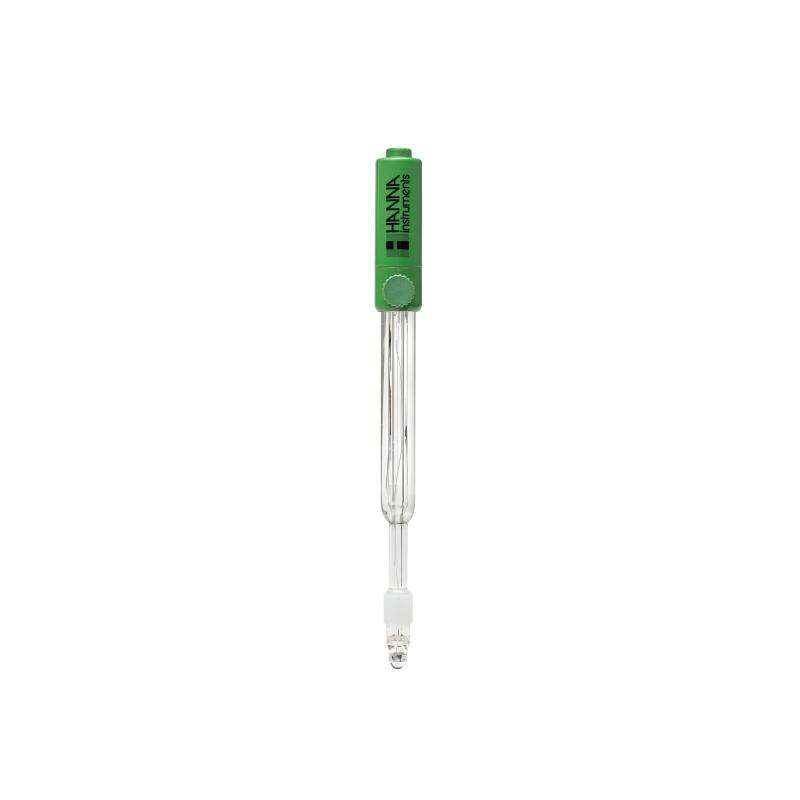
Hanna Instruments offers a wide range of ORP electrodes designed for many different applications. The type of material used for the sensing pins, the type of glass used for the body material, the type of connection, the type of reference, and the electrolyte used are just some of the design considerations.
HI3148B has a glass body, an open connection with CPS technology, and can be refilled with 3.5M KCl.
Platinum sensor
The HI3148 ORP sensor is made of platinum. ORP sensors must be chemically inert; It cannot be oxidized or reduced by itself. It must also have appropriate surface properties to facilitate fast electron exchange, a characteristic known as high exchange current density. Two precious metals have proven to be well used for this purpose: pure platinum and pure gold are both used in the construction of ORP sensors. Platinum sensors are often a good choice because they are mechanically simpler and safer to produce. Platinum can be welded to glass with the same thermal coefficient. The platinum sensor signal is carried through the electrode body and transmitted to the measuring instrument together with the reference signal.
CPS casing fittings
The Anti-Clogging System (CPS) technology is an innovation in electrode technology. Traditional ORP electrodes use ceramic junctions, which can clog quickly when used in wine. When the junction is clogged, the electrode does not work. CPS technology uses the porosity of frosted glass plus PTFE sleeves to prevent knot clogging. The frosted glass allows the liquid to flow properly, while the PTFE sleeve repels dirt. As a result, ORP electrodes with CPS stay fresh up to 20 times longer than conventional electrodes.
glassbody
The glass body is a reliable choice for laboratory use. Glass is resistant to many harsh chemicals and is easy to clean. The glass body also allows for rapid heat transfer to the internal reference electrolyte. Refer to the mVtemperature-dependent generated by the battery. The faster the electrode reaches equilibrium, the more stable the reference potential will be.
Double knot datum
The double-junction electrode has an internal compartment around a reference line. Silver ions are present in the electrolyte of the internal compartment, which houses the Ag/AgCl reference line; The electrolyte outside this compartment does not contain silver. The double-junction design means that almost no silver from the electrode enters the sample. This design allows for measurements in applications where silver ions in the sample are undesirable or where silver precipitation may form on the junction.
Refillable
HI3148B is a refillable probe. Since it is a single-junction ORP electrode, the filling solution is HI70823.5MKCl. If using a refillable ORP electrode, the filler cap should be removed prior to measurement. Removing the cap creates a positive head pressure in the reference cell, allowing a higher electrolyte flow rate to pass through the outer junction. Higher flow rates will result in faster, more stable readings.
BNC connectors
HI3148B use BNC connectors. This type of connector is universal as it can be used with any pH/mV meter with a female BNC probe input. Other types of connectors include DIN, spiral, T-type, and 3.5mm, among others. These types of connectors tend to be proprietary to specific types of meters and are not interchangeable.