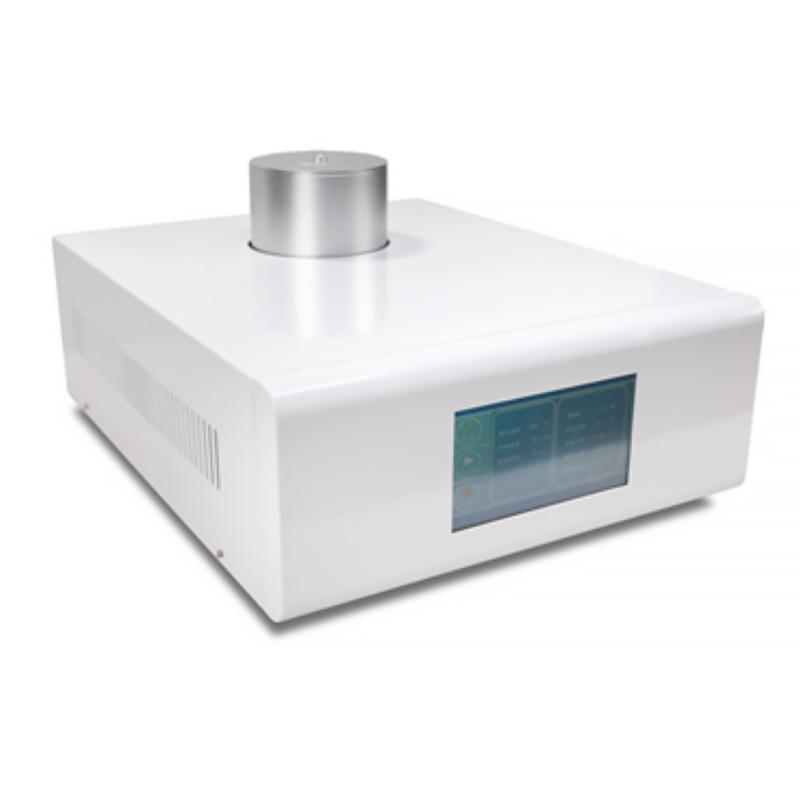

Huicheng DSC-600 Differential Scanning Calorimeter DSC 600 ℃
SE DSC-600

HuiCheng DSC-600 Differential Scanning CaloriMeterSPEC
HuiCheng DSC-600 Differential Scanning CaloriMeterDetails
HuiCheng DSC-600 Differential Scanning CaloriMeterPacking list

- SKU
- NB048374
- DSC range
- 0~±2000mW
- temperature range
- Room temperature~ 600 ℃
- Heating rate
- 0.1~100℃/min
- Temperature Resolution
- 0.001℃
- Temperature, repeability
- ±0.01℃
- DSC noise
- 0.01uW
- DSC resolution
- 0.01uW
- DSC Accuracy
- 0.001mW
- DSC sensitivity
- 0.001mW
- Temperature control method
- Heating, thermostatic, cooling (fully automatic program control)
- Linear dispersion scanning
- Heating scan, cooling scan
- atmosphere control
- Automatic instrument switching
- gas flow rate
- 0-200mL/min
- gas pressure
- 0.2MPa
- display mode
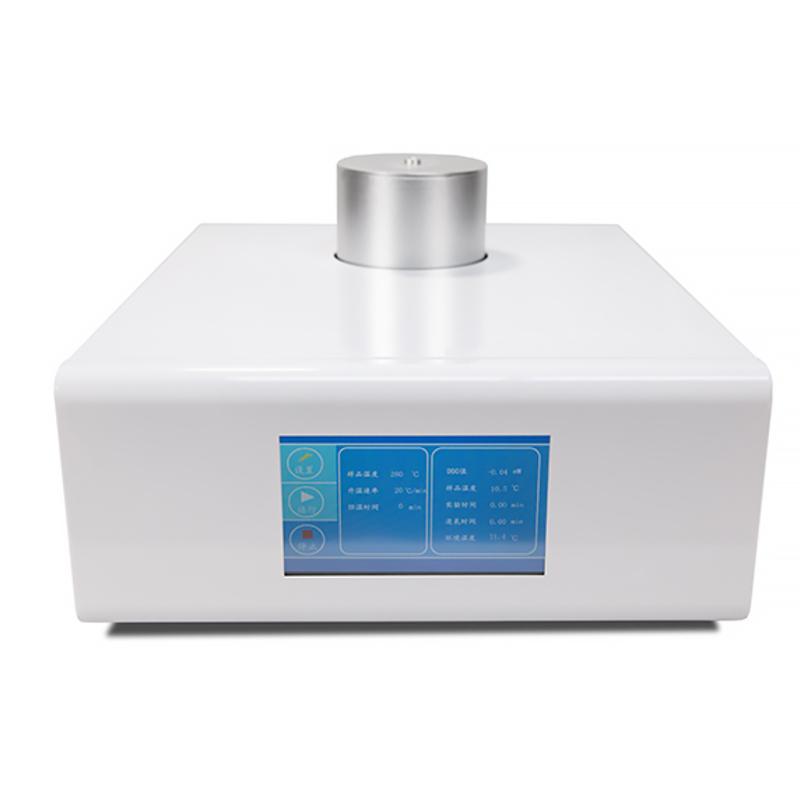
- 24Bit color 7-inch LCD touch screen display
- Data Interface
- Standard USB port
- parameter standard
- Equipped with reference materials, with one-button calibrating function, users can adjust the temperature and enthalpy by themselves
- Power Supply
- AC 220V 50Hz or custom
- power
- 600W
As a classical thermal analysis method that can control the thermal effect at program temperature, differential scanning calorimetry (DSC) has been widely used in various occasions such as research and development, process optimization, quality control and failure analysis in various fields of materials and chemistry. Using the DSC method, we are able to study the phase transition of inorganic materials, the melting and crystallization process of polymer materials, the polymorphism phenomenon of drugs, and the solid/liquid phase ratio of foods such as oils and fats.
Instrument Usage
Measure the physical and chemical changes related to heat, such as glass transition temperature, melting point, melting temperature, crystallization and crystallization heat, phase transition reaction heat, thermal stability of the product, curing/cross-linking, oxidation induction period, etc.
Features
The new fully enclosed metal furnace design structure greatly improves the sensitivity and resolution, as well as better baseline stability.
Imported alloy sensor is adopted, which is more corrosion-resistant, anti-oxidation, and has high sensor sensitivity.
The Cortex-M3 core ARM controller is used for faster computing and processing speed, and more accurate temperature control.
USB two-way communication is used to fully realize intelligent operation.
It adopts a 7-inch 24-bit color full-color LCD touch screen to display the status and data of the instrument in real time.
Intelligent software design, automatic drawing of the instrument throughout the process, and the software can realize various data processing, such as the calculation of enthalpy, glass transition temperature, oxidation induction period, melting point and crystallization of substances, etc.