
Huicheng DTA-1550 Difference Thermal Analyzer Automatic Drawing 1550 ℃
SE DTA-1550

HuiCheng DTA-1550 Differential Thermal AnalyzerSPEC
HuiCheng DTA-1550 Differential Thermal AnalyzerDetails
HuiCheng DTA-1550 Differential Thermal AnalyzerPacking list
- SKU
- NB048383
- temperature range
- Room Temperature~ 1550 ℃ Platinum Rhodium Alloy Sensors
- Range
- 0~±2000μV
- DTA Accuracy
- ±0.01μV
- Heating rate
- 0.1~80℃/min
- Temperature Resolution
- 0.01℃
- Temperature Accuracy
- ±0.1℃
- Temperature, repeability
- ±0.1℃
- temperature control
- Heating up: program control, parameter adjustment can be carried out according to needs Cooling: air cooling, program control thermostatic: program control thermostatic time can be set arbitrarily
- Furnace structure
- The furnace body adopts the upper open-lid structure, replacing the traditional lifting furnace body, with high Accuracy and easy operation
- atmosphere control
- Internal program automatic switching
- Data Interface
- Standard USB interface, supporting data cable and operating software
- display mode
- 24Bit color 7-inch LCD touch screen display
- parameter standard
- Equipped with standard, with a key to calibrate function, users can correct the temperature by themselves
- Baseline adjustment
- Users can adjust the Baseline by its slope and intercept
- Power Supply
- AC 220V 50Hz
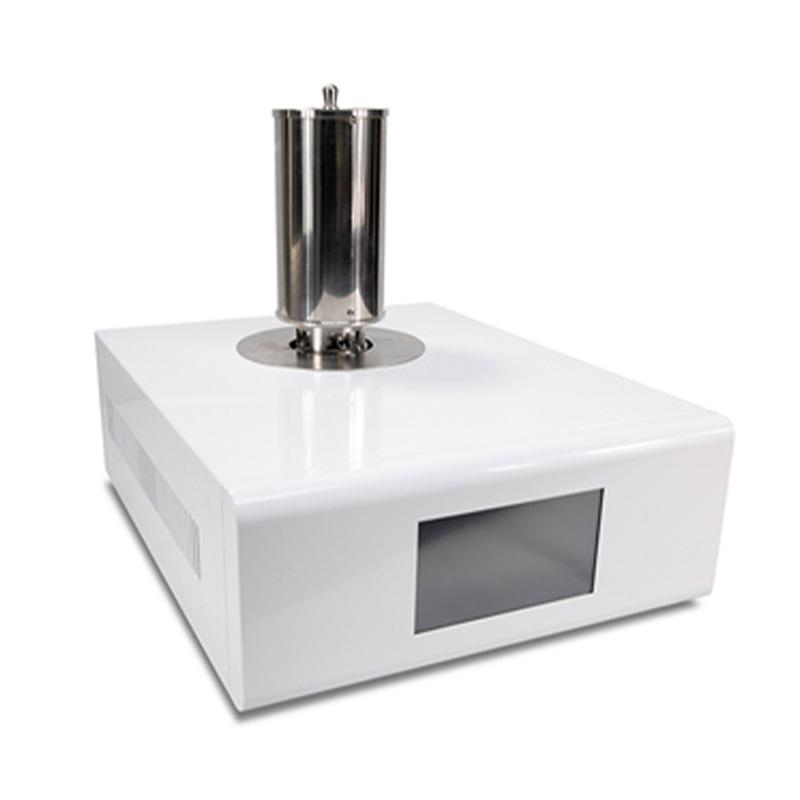
Differential thermal analysis is a technique that measures the temperature difference between a substance and a reference at a programmed temperature. The differential thermal analysis curve describes the temperature (△T) between the sample and the reference material as a function of temperature or time. In DTA tests, changes in sample temperature are due to phase transitions or endothermic or exothermic effects of the reaction. Such as: phase transformation, melting, transformation of crystalline structure, boiling, sublimation, evaporation, dehydrogenation, fracture or decomposition reaction, oxidation or reduction reaction, destruction of crystal lattice structure and other chemical reactions.
Instrument Usage
Phase transitions, melting, transformation of crystalline structures, boiling, sublimation, evaporation, dehydrogenation, fracture or decomposition reactions, oxidation or reduction reactions, destruction of lattice structure and other chemical reactions.
Features
The new fully enclosed ceramic holding furnace body design structure has better temperature control effect and can continue to withstand high temperatures.
The platinum rhodium alloy sensor is more corrosion-resistant, oxidation-resistant, and the sensor has high sensitivity.
The Cortex-M3 core ARM controller is used for faster computing and processing speed, and more accurate temperature control.
USB two-way communication is used to fully realize intelligent operation.
It adopts a 7-inch 24-bit color full-color LCD touch screen to display the status and data of the instrument in real time.
Intelligent software design, automatic drawing of the instrument throughout the process, and the software can realize various data processing, such as the calculation of enthalpy, glass transition temperature, oxidation induction period, melting point and crystallization of substances, etc.