

Huicheng STA-1250 Synchronous Thermal Analyzer TG/DTA/DSC Differential Thermal Analysis 1250 ℃
SE STA-1250

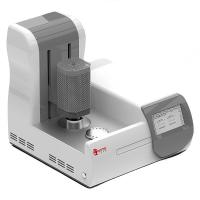

HuiCheng STA-1250 Synchronous Thermal AnalyzerSPEC
HuiCheng STA-1250 Synchronous Thermal AnalyzerDetails
HuiCheng STA-1250 Synchronous Thermal AnalyzerPacking list

- SKU
- NB048386
- Temperature Resolution
- 0.01℃
- Temperature Fluctuation
- ±0.1℃
- Heating rate
- 0.1~100℃/min
- Cooling rate
- 1~20℃/min
- Temperature control method
- Heating, thermostatic, cooling
- cool down
- 15min (1000℃…100℃)
- Balance Measurement Range
- 1mg-2g
- resolution
- 0.1μg
- DSC range
- 0~±500 mW
- DSC resolution
- 0.01 mW
- Thermostatic time
- 0~300Min (arbitrary setting)
- display mode
- Large LCD display of Chinese characters
- atmosphere
- Inert, oxidation, reducing, static, dynamic
- Atmosphere device
- Built-in gas flow meter, including two-way gas switching and flow size control
- software
- Intelligent software can automatically record TG Linear dispersion for data processing and print experimental reports
- Data Interface
- Standard USB interface, dedicated software (free software upgrades from time to time)
- Power Supply
- AC220V/50Hz

Simultaneous thermal analysis combines thermogravimetric analysis (TG) with differential thermal analysis (DTA) or differential scanning calorimetry (DSC) to obtain information from TG and DTA or DSC simultaneously from the same sample in the same measurement. Thermogravimetric analysis (TG, TGA) is the observation of the mass of a sample as a function of temperature or time during the process of heating, constant temperature or cooling, with the purpose of studying the thermal stability and composition of the material. It is widely used in research and development, process optimization and quality control in various fields such as plastics, rubber, coatings, pharmaceuticals, catalysts, inorganic materials, metal materials and composite materials. Simultaneous thermal analysis combines thermogravimetric analysis (TG) with differential thermal analysis (DTA) or differential scanning calorimetry (DSC) to obtain information from TG and DTA or DSC simultaneously from the same sample in the same measurement.
Instrument Usage
Measure and study the following properties of materials:
DSC: Melting, Crystallization, Phase Transformation, Reaction Temperature and Heat of Reaction, Heat of Combustion, Specific Heat......
TG: thermal stability, decomposition, redox, adsorption and desorption, free water and crystal water content, composition ratio calculation, etc.
Features
Balances come with an internal calibration function for better accuracy and repeatability;
Imported alloy sensor, more corrosion-resistant, anti-oxidation, high sensor sensitivity;
The furnace body is heated by precious metal alloy wire, which reduces interference and is more resistant to high temperature;
Perfect atmosphere control system, automatic switching of software settings, data directly recorded in the database;
The Cortex-M3 core ARM controller is adopted, which has faster computing and processing speed and more accurate temperature control;
USB two-way communication is used to fully realize intelligent operation;
7-inch 24bit color full-color LCD touch screen to display the status and data of the instrument in real time;
It adopts the upper opening lid structure, which is easy to operate. It is difficult to move the furnace body up to put the sample, and it is easy to cause damage to the sample bar;
Test reports are automatically generated and printed. The software has built-in test records, data processing and report formats, and automatically issues experimental reports.
- 1GB/T 45939-2025《Co-extrusion encapsulant film for photovoltaic module》
- 2GB/T 19469-2004《Determination of ignition temperature of pyrotechnic composition--DTA-TG analysis》
- 3GB/T 27762-2011《Standard test method for mass scale calibration of thermogravimetric analyzers》
- 4GB/T 27761-2011《Standard test method of mass loss and residue measurement validation of thermogravimetric analyzers》
- 5GB/T 14837.1-2014《Rubber and rubber products―Determination of the composition of vulcanizates and uncured compounds by thermogravimetry―Part 1:Butadiene, ethylene-propylene copolymer and terpolymer, isobutene-isoprene, isoprene and styrene-butadiene rubbers》
- 6GB/T 33047.1-2016《Plastics—Thermogravimetry (TG) of polymers—Part 1: General principles》
- 7GB/T 34916-2017《Nanotechnologies—Multi-walled carbon nanotubes—Determination of amorphous carbon content by thermogravimetric analysis》
- 8GB/T 35930-2018《Determination of vapor pressure of chemical products—Thermogravimetry method》
- 9GB/T 14837.3-2018《Rubber and rubber products—Determination of the composition of vulcanizates and uncured compounds by thermogravimetry—Part 3:Hydrocarbon rubbers,halogenated rubbers and polysiloxane rubbers after extraction》
- 10GB/T 33047.3-2021《Plastics—Thermogravimetry (TG) of polymers—Part 3: Determination of the activation energy using the Ozawa-Friedman plot and analysis of the reaction kinetics》