
HuiNuo C84-III reflectivity meter inks hiding power Tester
 C84-III

-
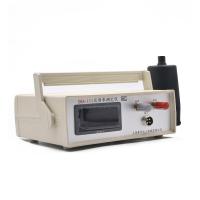 PUSHEN Pushen C84-III reflectivity meter$ 616.00SE
 -
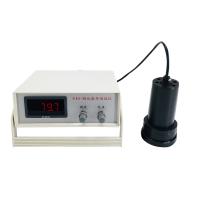 YONGLIDA C84-III desktop reflectivity meter 0~100$ 475.00SE
 -
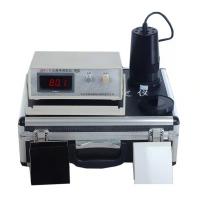 JINGKELIAN C84-III reflectivity meter film hiding power measuring instrument$ 358.00SE
 -
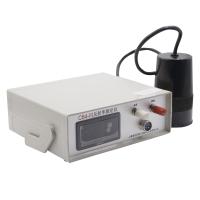 MODERNER C84-III reflectivity meter for white and shallow Paints hiding power measurement and comparison of Coating and Paints




HuiNuo C84-III reflectivity MeterSPEC
HuiNuo C84-III reflectivity MeterDetails
HuiNuo C84-III reflectivity MeterPacking list

- SKU
- NB048557
- indication interval
- 0~100
- Repeatability
- 0.3%
- Environmental temperature
- 20°±5°
- Allowable Relative Humidity
- <85%
- Power supply Voltage
- 220V±10% 50Hz
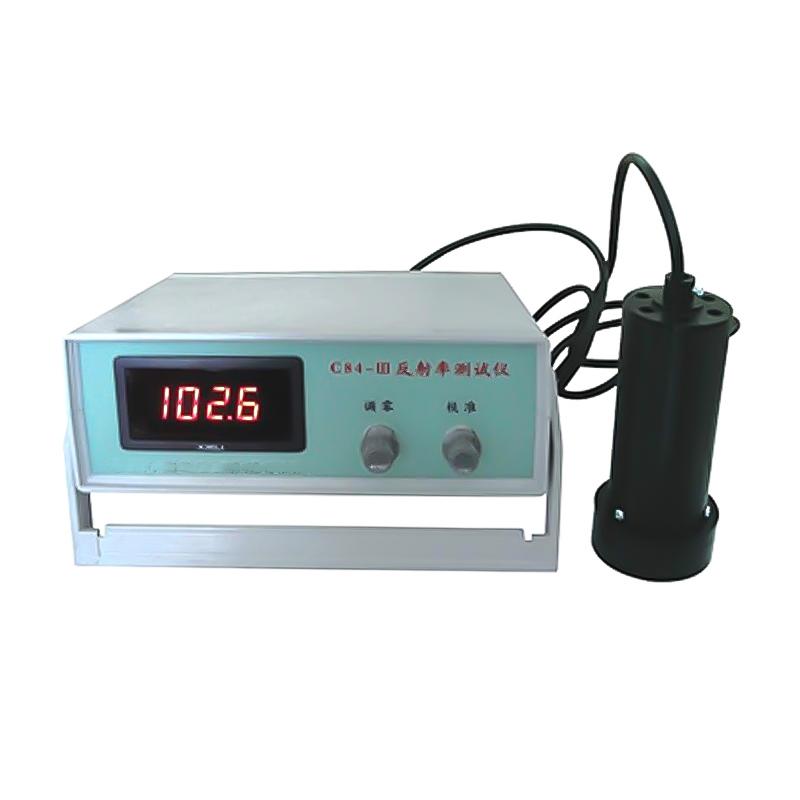
C84-III. reflectance Tester is a special instrument developed for the implementation of international standards and national standards in the chemical industry such as coatings, pigments and inks. It can be used to determine the hiding power of paint films. The instrument fully complies with the requirements of the international standard ISO3906-1980 (E), the national standard GB/T13452.3-92, GB9270-88 and GB5211.17-88.
Operating Principle
This instrument is composed of a probe, a main body, a standard plate (one in black and white), and a working ceramic plate (two in black and white).
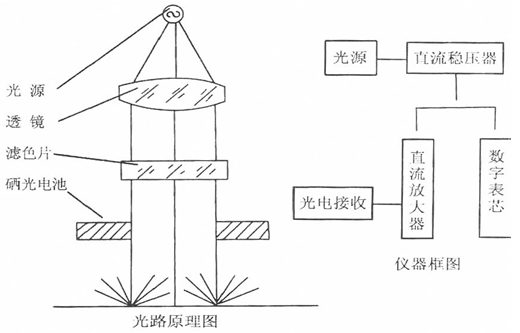
The probe adopts the principle of 0° irradiation and diffuse reflex reception. When the reflected light of the sample acts on the surface of the silicon photocell, it generates a telecommunication signal input to the DC amplifier for amplification, and the reading is displayed (see the optical path schematic diagram and instrument block diagram for details).
How to use:
1. Connect the probe to the electric control box, connect the power supply at the same time, and turn on the machine to warm up for 10-15 minutes. In this case, it is best to place the probe on a black standard plate.
2. Calibration: Put the probe on the black standard board, adjust the zeroing knob on the host, so that the number of the host is displayed as 000.0, and the allowable change ± 0.1.
3. Calibration standard value: Put the probe on the white standard plate, adjust the calibration knob of the host, so that the value displayed by the host is consistent with the calibration of the white standard plate. It is allowed to change ±0.1 and adjust it repeatedly once (calibration, calibration).
4. Measure the RB value: move the probe to the black working ceramic plate where the sample is placed, and the value displayed by the display is the RB value.
5. Measure the RW value: move the probe to the white working ceramic plate where the sample is placed, and the value displayed by the display is the RW value.
6. Calculate the ratio of the ratio (coverage rate) = RB/RW ×100%