
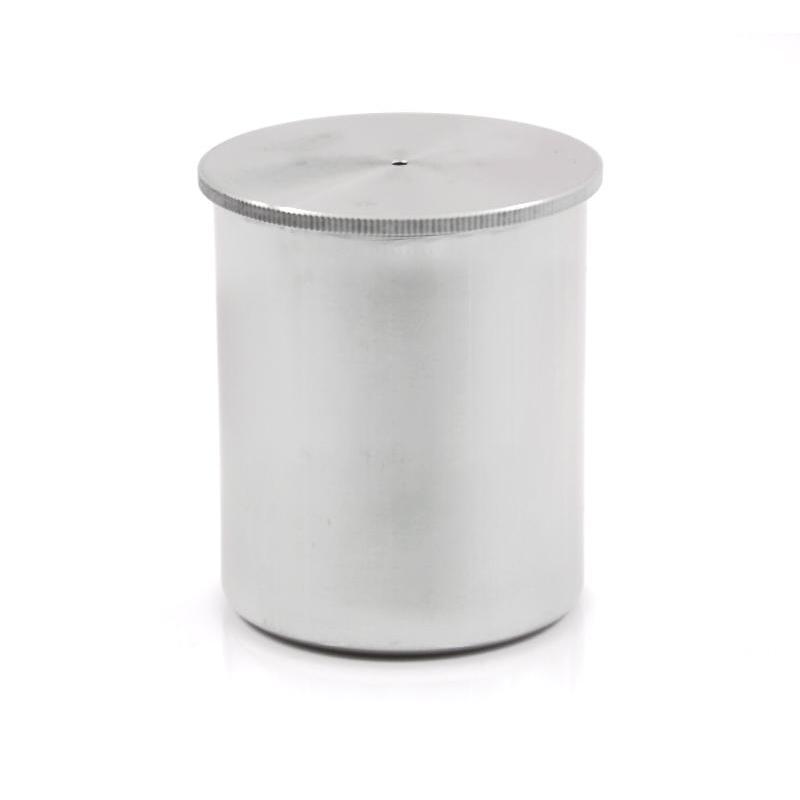
HuiNuo QBB-37ml varnish Specific Gravity Cup Aluminum alloy specific gravity test cup
 QBB-37

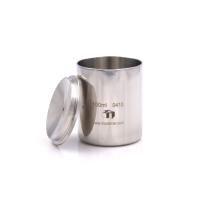
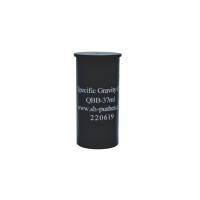
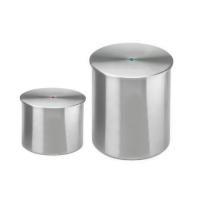
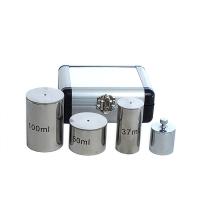
HuiNuo QBB-37 Coating Specific Gravity CupSPEC
HuiNuo QBB-37 Coating Specific Gravity CupDetails
HuiNuo QBB-37 Coating Specific Gravity CupPacking list
- SKU
- NB048558
- Cup Volume
- 37ml
- material
- aluminum alloy
- Applicable standard
- GB3186-82
- Measuring temperature
- 23℃
1. Use
QBB-(37, 50, 100) coating bicombs are designed and manufactured according to GB6750-86 "Determination of Density of Color Paint and Varnish". It is used to determine the density (or determination of specific gravity) of liquid paints, varnishes and related products at a specified temperature.
2. Instruments for testing
1. Proportional cup: QBB-50 and 100 type coating proportional cup (mass/volume cup) made of alloy aluminum (or stainless steel or copper) material with a volume of 50ml or 100ml.
2. Thermometer: the index is 0.1 °C, and the accuracy is 0.2 °C.
3. Water bath or constant temperature requirements:
If the test accuracy is high, it should be kept within the range of ±0.5 of the test temperature, and the production control should be kept within the range of ±2 °C of the test temperature.
4. Analytical balance (or electronic scale) with an accuracy of 0.2 milligrams (mg).
3. Sampling:
According to the provisions of the national standard GB3186-82.
Fourth, the test steps:
1. Clean the gravity cup with a flux that leaves no residue after evaporation and dry it.
2. Weigh the specific gravity cup at room temperature (weigh the lid of the specific gravity cup together). The difference between the two weighings shall not be greater than 0.5 milligrams (mg).
3. Fill the cup with distilled water when it is lower than the test temperature and not more than 1°C. (Strictly prevent the formation of bubbles) and place it at a constant temperature until the temperature of the specific gravity cup and its contents is constant. And use absorbent material to wipe off the spilled material and the outside of the gravity cup.
4. Immediately weigh the specific gravity cup filled with distilled water to an accurate point of 0.001% of its mass.
5. Determination of test density: replace distilled water with a sample and repeat the above operation steps.
6. Density calculation:
The density p1 of the specimen at the test temperature is calculated as follows:
p1=(m2-m0) / V
where: p1 - density g/m1
m2 – the mass g of the specific gravity cup and the specimen
m0 – the mass g of the empty gravity cup
V – Gravity cup volume m1
t——Test temperature °C
5. Proportional cup volume accounting:
Due to changes in ambient temperature, humidity, pressure and other conditions, the physical and chemical properties of the metal specific gravity cup itself may cause very small changes in the volume of the specific gravity cup. If the measurement accuracy is very high, the volume of the gravity cup should be calculated in stages, and the method is as follows:
V=(m1-m0)/ p
where: V – volume m1
m1 – the mass g of the gravity cup and water
m0 – empty bibi cup mass g
p – density of water at 23°C or other temperature (see table) g/m1
The density of the water
Temperature °C | Density g/m | Temperature °C | Density 1g/m1 |
15 | 0.9991 | 23 | 0.9975 |
16 | 0.9989 | 24 | 0.9973 |
17 | 0.9987 | 25 | 0.9970 |
18 | 0.9986 | 26 | 0.9968 |
19 | 0.9984 | 27 | 0.9965 |
20 | 0.9982 | 28 | 0.9962 |
21 | 0.9980 | 29 | 0.9960 |
22 | 0.9978 | 30 | 0.9957 |
6. Precautions
After use, clean the gravity cup and put it in the box and store it at room temperature.