
DZ-DSC300L Differential Scanning Calorimeter -170 ℃~ 600 ℃
SE DZ-DSC300L

DaZhan equipment DZ-DSC300L Differential Scanning CaloriMeterSPEC
DaZhan equipment DZ-DSC300L Differential Scanning CaloriMeterDetails
DaZhan equipment DZ-DSC300L Differential Scanning CaloriMeterPacking list

- SKU
- NB049695
- temperature range
- -170~600℃
- Temperature Resolution
- 0.001℃
- Temperature Accuracy
- ±0.01℃
- Heating rate
- 0.1~100℃/min
- Cooling rate
- 0.1~60℃/min
- Thermostatic time
- arbitrary setting
- Linear dispersion scanning
- Heating scan, cooling scan, thermostatic scan
- DSC range
- 0~ +/- 600mW, can be expanded to different ranges
- DSC resolution
- 0.01uw
- DSC sensitivity
- 0.001mW
- Power Supply
- AC220V/50Hz or custom
- Temperature control method
- Electronic temperature control, PID control combined with PWM pulse width modulation, adjust output through dynamic algorithm, adaptive control, adapt to different Operating Environments, better linear control
- Atmosphere control gas
- Three ways intake, one way purge gas, two ways reaction gas
- gas flow rate
- 0-200mL/min (other ranges can be expanded)
- gas pressure
- ≤ 1MPa (other ranges can be expanded)
- display mode
- 24Bit color, 7-inch LCD touch screen display
- Data Interface
- Standard USB interface
- parameter standard
- Equipped with reference materials (indium, tin), users can adjust the temperature by themselves
- furnace body
- Anticorrosive coating
- Miscellaneous function
- With fault self-check function, parameter input error promotion function, overload protection function
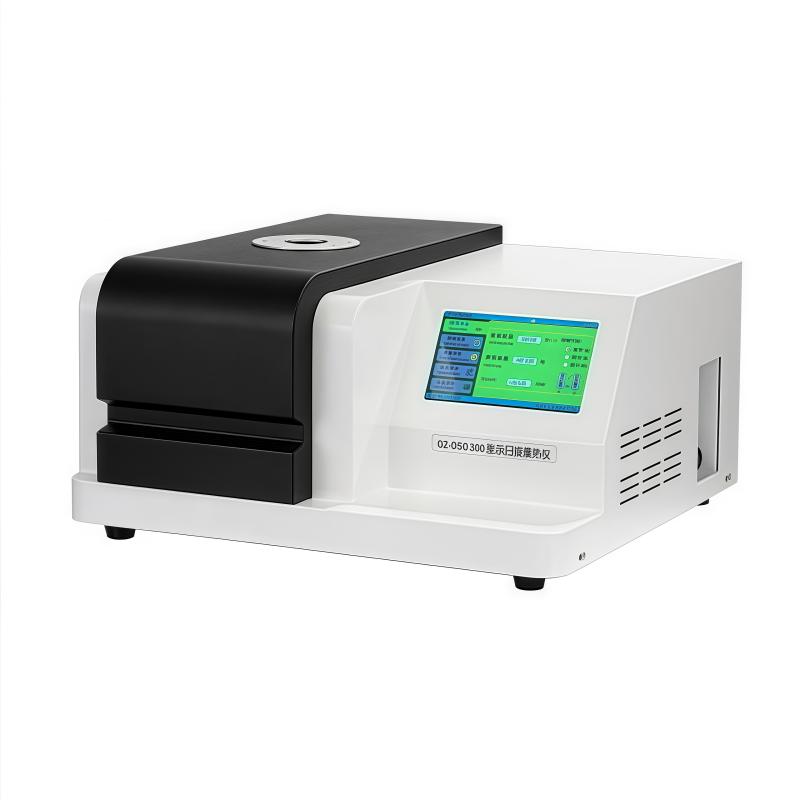
Product Introduction
The differential scanning calorimeter is a touch screen type, which can be used for glass transition temperature test, phase transition test, melting and enthalpy value test, product stability, oxidation induction period test, specific heat and other tests. It is mainly used in chemical, energy, metallurgy, minerals, polymer materials, metal materials and other industries
Technical features:
1. Industrial-grade 7-inch touch screen, display rich information.
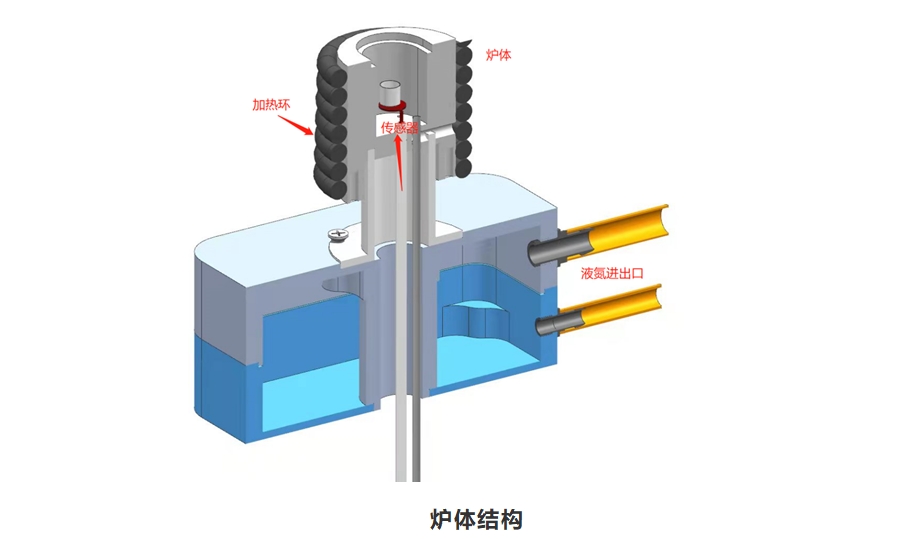
2. New furnace structure, which can be matched with a variety of refrigeration devices.
3. USB communication interface, strong versatility, reliable and uninterrupted communication, support self-recovery connection function.
4. Automatically switch between two channels of atmosphere flow, fast switching speed and short stability time. At the same time, a shielding gas input is added.
5. The software is simple and easy to operate.
Meets standards
GB/T 33466.1-2016 Rigid polyvinyl chloride pipes -- Differential scanning calorimetry (DSC) Part 1: Measurement of processing temperature
GB/T 40271-2021 Test methods for textile fiber identification -- Differential scanning calorimetry
GB/T 41928-2022 GB/T 41928-2022 Plastics -- Epoxy resins -- Differential scanning calorimetry (DSC) determination
GB/T 19466.1-2004 Plastics – General principles for differential scanning calorimetry (DSC).
GB/T 19466.4-2016 Plastics – Differential scanning calorimetry (DSC) – Part 4 - Determination of specific heat capacity
GB/T 19466.5-2022 Plastics – Differential scanning calorimetry (DSC) – Part 5: Determination of characteristic reaction curves temperature, time, reaction enthalpy and conversion rate
GB/T 19466.6-2009 Plastics – Differential scanning calorimetry (DSC) – Part 6: Determination of oxidation induction time (isothermal OIT) and oxidation induction temperature (dynamic OIT).
GB/T 19466.2-2004 Plastics – Differential scanning calorimetry (DSC) – Part 2: Determination of glass transition temperature
GB/T 19466.3-2004 Plastics – Differential scanning calorimetry (DSC) – Part 3: Determination of melting and crystallization temperature and enthalpy
GB/T 29611-2013 Raw rubber -- Determination of glass transition temperature