
JINGKELIAN NDJ-79 Rotational Viscometer inspection of oils, paints, inks, Coatings, plastics, and isoviscosity
 NDJ-79

JingKeLian NDJ-79 Rotational viscoMeterSPEC
JingKeLian NDJ-79 Rotational viscoMeterDetails
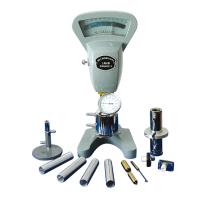
JingKeLian NDJ-79 Rotational viscoMeterPacking list

- SKU
- NB000600
- Display mode
- Pointer
- Measurement range
- 2~1000000mPa·s
- Rotor specification
- Divide into two measuring rotor groups and containers II and III
- Rotor speed
- 7.5/75/750rpm
- Measurement Accuracy
- ±5%F.S
- Power
- 200±10%,50Hz
- Allowable operating temperature
- Room temperature environment
- Dimensions
- 185*165*450mm
- Weight
- 12kg
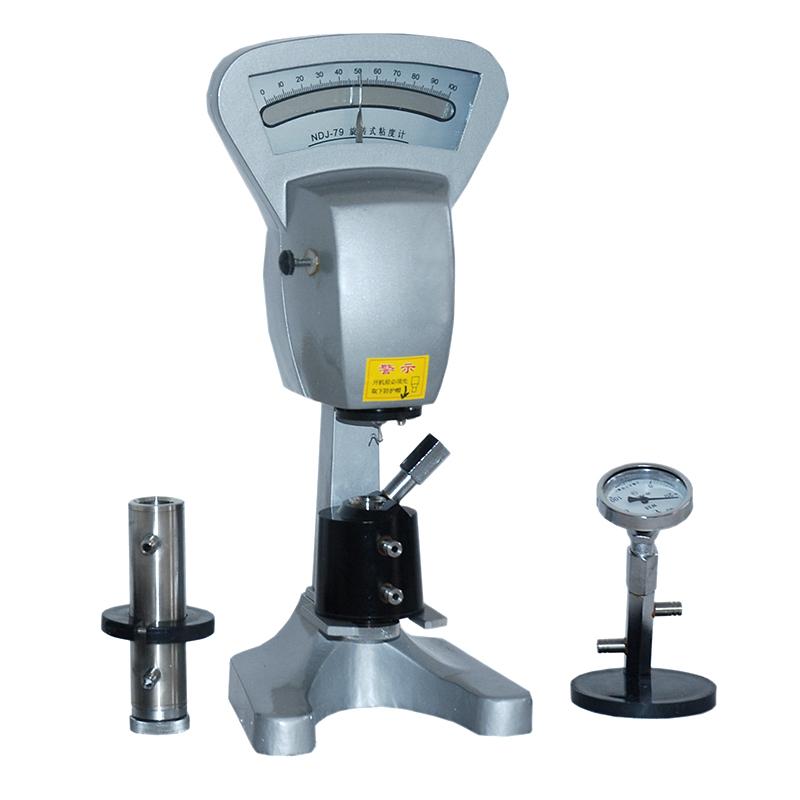
NDJ-79 Rotational Viscometer overview
NDJ-79 Rotational Viscometer is a precision instrument for measuring the absolute viscosity of various Newtonian liquids and the apparent viscosity of non-Newtonian liquids. It has the advantages of easy use, stable performance, and simple maintenance.
Considering that the No. 1 measurement group has a loose structure and no temperature control, the measurement results of the NDJ-79 Rotational Viscometer can only provide approximate values, not precise values, which is inconsistent with the requirements of measuring instruments. It is easy to cause disputes when used by colleagues and has little practical value. Therefore, this Rotational Viscometer cancels the No. 1 measurement group and its accessories.
NDJ-79 Rotational Viscometer details
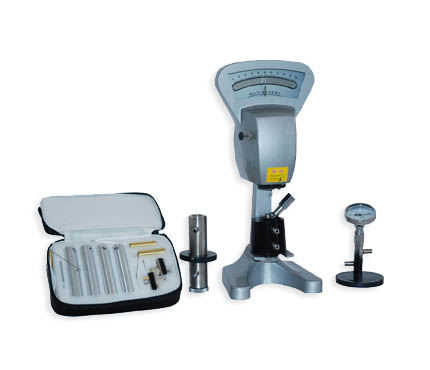
NDJ-79 Rotational Viscometer application fields
NDJ-79 Rotational Viscometer is suitable for measuring the viscosity of various greases, paints, inks, coatings, plastics, slurries, rubber, latex, detergents, resins, torch emulsions, creams, and cosmetics. It is an instrument required for laboratories in textile, chemical, petroleum, electromechanical, food, light industry, construction and other industries as well as scientific research units and lathe departments of colleges and universities.
Precautions for Rotational Viscometer
1 This NDJ-79 Rotational Viscometer is suitable for use in normal temperature environments.
2 The NDJ-79 Rotational Viscometer needs to be measured within the specified frequency, Voltage and tolerance range, otherwise it will affect the measurement accuracy. If necessary, it must be corrected according to the correction formula.
3 Turn on the motor start switch. If the motor fails to start in time, turn off the switch immediately and turn it on again.
4 The motor must not be used continuously for a long time (generally no more than 4 hours)
5 The NDJ-79 Rotational Viscometer has been precisely calibrated before leaving the factory and must not be disassembled or assembled at will.
6. The measuring container and rotor should be cleaned in time after use and kept clean and dry. The U-shaped spring hanging ring of the second and third measuring group rotors can be pulled out to clean the inside and outside of the rotor. The spring can be inserted and reinstalled for use.
7. Do not use excessive force when disassembling the coupling. First insert the insertion rod, and then install and remove the knurled nut (reverse thread).
8. If you are not using the NDJ-79 rotational viscometer , please unplug the power socket to avoid damage to the transformer caused by being powered on for a long time.
Rotary viscometer operation and use
Assays in Group II Assay Group:
The third measurement group is used to measure liquids with higher viscosity. It is equipped with three standard rotors (cylindrical shape, with factors of 1, 10 and 100). When the viscosity is greater than 10000mpa.s, it can be equipped with a reducer to measure Higher viscosity. The speed of the 1:10 reducer is 75 rpm, the speed of the 1:100 reducer is 7.5 rpm, and the maximum range is 100000mpa. s and 1000000mpa. s respectively.
Determination steps:
Slowly pour the liquid to be measured into the second test container, so that the liquid level is flush with the lower edge of the tapered surface of the test container, immerse the rotating drum in the liquid, and place the test container on the NDJ-79 Rotational Viscometer bracket. At the same time, hang the rotating drum on the coupling of the NDJ-79 Rotational Viscometer . At this time, the rotor should be completely immersed in the liquid. Turn on the motor. At this time, the rotor may be accompanied by shaking when rotating. You can move the test on the bracket back and forth, left and right. The container is concentric with the rotor (cylinder) so that the pointer is stable and can be read.
Use of reducer:
Put the input shaft hole of the reducer onto the motor shaft, rotate the knurled bolt to fix the reducer on the end of the thin rod behind the motor shaft. When tightening the bolt, the reducer should be in a horizontal position. The rubber on the knurled bolt The gasket needs to be replaced immediately when it is found to be damaged. Tighten the coupling to the output shaft of the reducer, check and adjust the zero point. If you find that the pointer shakes during zero adjustment, add a small amount of clock oil to the rotating shaft of the reducer.
Assays in Assay Group III:
The third measurement group is used to measure low-viscosity liquids. The measuring range is 1 ~ 50mp α. s. There are four rotors (cylindrical shape) for selection when measuring various viscosities. The factors of the four rotors are 0.1 and 0.2 respectively. , 0.4 and 0.5.
Determination steps:
Same as measurement group II, but cannot be used with reducer
- 1ISO 12634-2017《Graphic technology Determination of tack of paste inks and vehicles by a rotary tackmeter》
- 2JJG 1002-2005《Rotational Viscometers》
- 3GB/T 22427.7-2008《Starch - Determination of viscosity》
- 4GB/T 12004.4-2003《Polyvinyl chloride paste--Determination of apparent viscosity by the Brookfield test method》
- 5SN/T 2903-2011《Dangerous goods Viscosity of flammable liquids Capillary method, rotational viscometer method, force ball Viscometer method》
- 6HG/T 3323-1982《Rubber viscosity determination method (rotational viscometer method)》
- 7SY/T 0522-2008《Determination of wax evolution point of crude oil rotational viscometer method》
- 8HG/T 3660-1999《Testing Methods for Melt Viscosity of Hot-melt Adhesives》
- 9GB/T 15357-2014《Surface active agents and detergents―Determination of viscosity and flow properties of liquid products using a rotational viscometer》
- 10SY/T 5377-2007《Electric rotational viscometer》