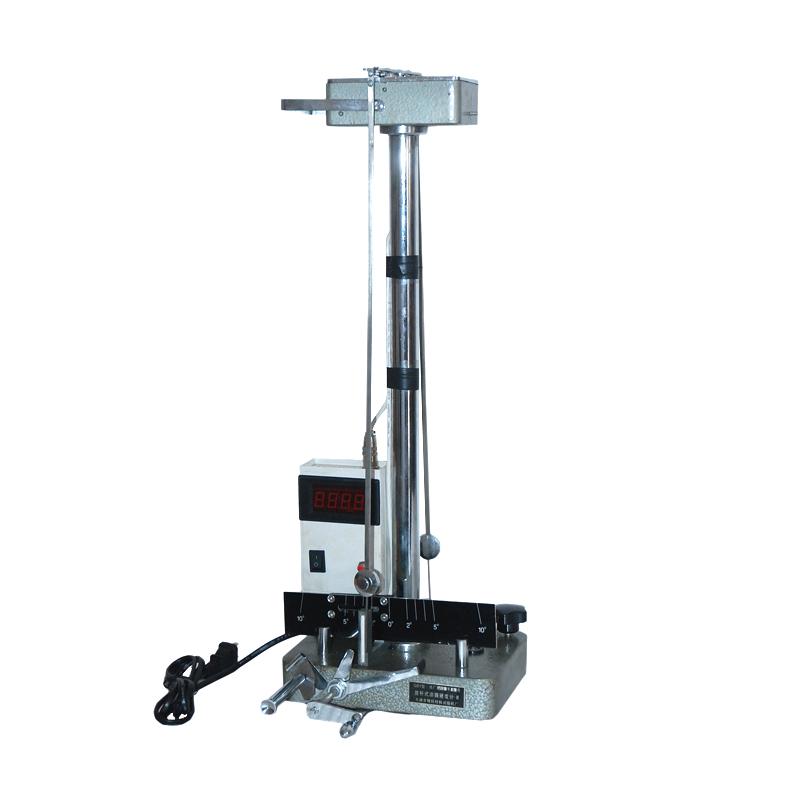
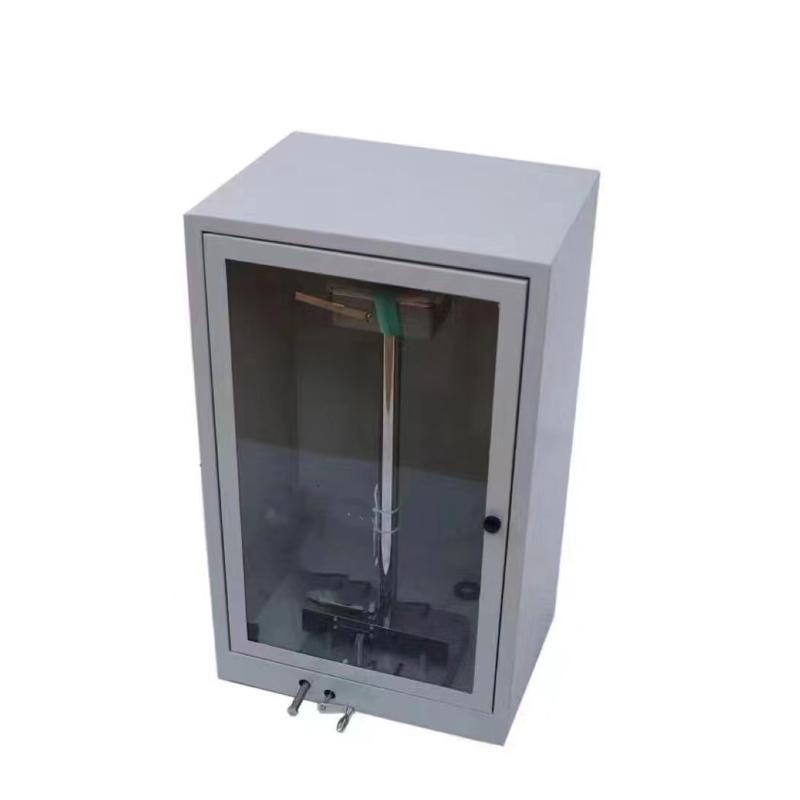

JINGKELIAN QBY-II Pendulum Pole Film Hardness Tester GB/T1730 (B Method) M-3 Double Pendulum
SE QBY-II

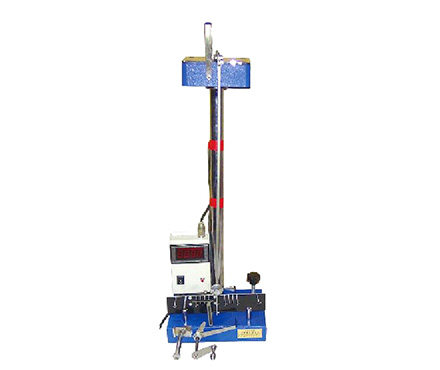
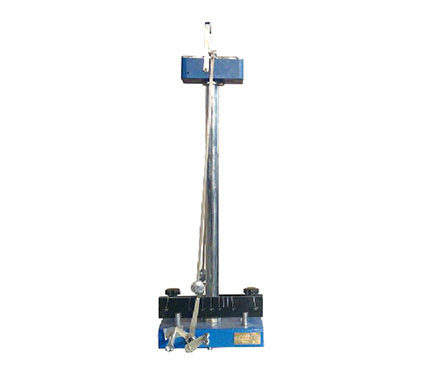
JingKeLian QBY-II Pendulum Pole Film Hardness TesterSPEC
JingKeLian QBY-II Pendulum Pole Film Hardness TesterDetails
JingKeLian QBY-II Pendulum Pole Film Hardness TesterPacking list

- SKU
- NB000620
- Swing bar type
- M-3 pendulum
- M-3 swing rod Mass
- 120±1g
- M-3 swing rod cycle
- 0.625s
- M-3 swing rod length
- 500±1mm
- M-3 steel ball diameter
- 5mm
- M-3 Swing Time on Flat Glass
- 440±6s
- M-3 Number of Swings on Flat Glass
- 352 +/- 4 times
- M-3 start and end swing angle
- 5°~2°
- Counting method
- Electronic automatic counting
- Power supply Voltage
- 220V/50Hz
- power consumption
- 4W
- Count range
- 0~999
- Experimental environment
- 25±1℃ 60~70%RH
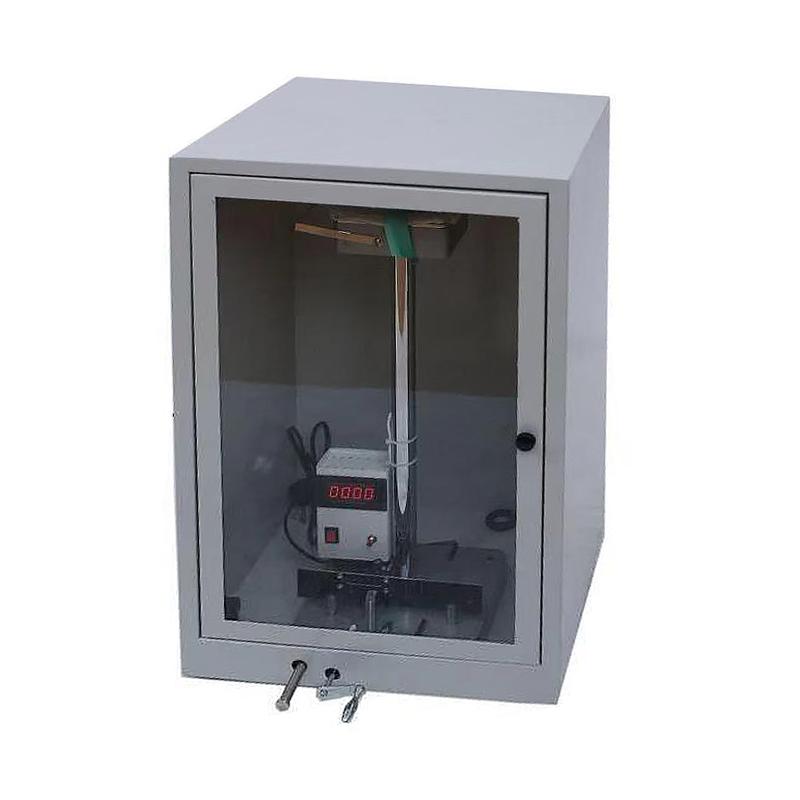
Overview
QBY-Ⅱ pendulum type paint film Hardness Tester is a modified version of QBY type pendulum type Hardness Tester. Its main feature is the improvement of the horizontal mechanism; the scale scale can move horizontally, which is convenient for zero point adjustment; coupled with the photoelectric counter, it is fast, accurate and saves manpower.
The design of this instrument is based on GB/T1730-2007. Therefore, it is suitable for sampling tests of paints, varnishes and their related products to determine the film hardness of paints, varnishes and their related products.
Principle and structure
1. Principle
A pendulum with a certain weight and shape is in contact with the surface of the film to be tested. Since the interaction between the gravity pendulum and the coating is a complex property of elasticity and viscoelasticity, and due to the weight, shape, geography and environment of the pendulum Therefore, the softer the surface is, the faster the swing amplitude of the gravity pendulum touching this surface will decay.
The hardness of the film is expressed by placing a pendulum of a certain weight on the standard glass, the amplitude time or number of swings within the specified angle range and the amplitude time of the pendulum placed on the measured film within the specified angle range. Or expressed as a ratio of times, namely:
H=n/n0
In the formula: n: the amplitude time or number of times the pendulum swings on the membrane within a specified angle range.
n0: Placed on a glass plate, the amplitude time or number of times it oscillates within a specified angle range.
2. Structure:
QBY-Ⅱ pendulum rod type paint film Hardness Tester is composed of five parts, namely a, base part; b, workbench part; c, pendulum; d, counter part; e, instrument cover part.
Operation and use
1. Take out the ground angle adjustment screw gasket from the accessory box, put it into the instrument cover, place the main unit on it, adjust the ground angle screw, watch the level bubble, adjust the main unit and place it in a horizontal position.
2. Insert the wires of the power plug box and the photoelectric head into the respective sockets behind the counter. Put the U-shaped bracket at the other end of the photoelectric head wire in the U-shaped bracket fixing groove behind the scale, and fasten it with corresponding screws. The position of the photoelectric head should be at the tangent position inside 2° of the scale line.
3. Take the pendulum out of the accessory box, place it on the workbench and the standard glass plate, pull up the positioning handle, and align the notch on the beam of the pendulum with the knife edge of the positioning handle. After the pendulum is stationary, align the scale with the scale If it is not at another point, the scale should be moved horizontally, and then fastened with the screws on the pillar.
4. Start the pendulum bar pushing mechanism and stop mechanism, place the pendulum bar on the front line of sight at 5°, and pull down the positioning handle.
5. Turn on the power of the calculator, start the power switch of the counter, push the stop device to make the pendulum bar swing freely (note that the fulcrum of the pendulum bar does not move). The time for the pendulum bar to swing on the standard glass is 440S±6S, and the number of times is 352±4 times . If it is not within this time or times, adjust the fine-tuning hammer on the pendulum and repeat the fine-tuning to make it reach the above-mentioned standard value.
6. Apply the tested paint evenly on the test glass plate with a Film Applicator or other methods.
7. The drying (self-drying or drying) of the coating film should reach the time specified in the product requirements.
8. The thickness of the paint film should meet the standard specified by the product.
9. Place the prepared paint film test board on the workbench, observe the time and times it takes for the pendulum to swing from 2° to 5°, and record the number of seconds or times.
10. Calculate it with the formula provided in the Principle section, and the obtained number is the measured paint film hardness value. Generally, three tests are performed on a test piece (different positions), and the arithmetic mean value of the obtained results is The final result, but the difference between the two measurements shall not be greater than 3% (seconds) and the degree shall not be greater than 5%.
11. Before each test, use ether, ethanol or gasoline to wipe off the steel balls on the standard glass plate or pendulum bar. The rag used for wiping should be clean and do not scratch the standard glass plate.
12. The fulcrum steel ball should be checked regularly. When the surface of the steel ball is found to be damaged, the steel ball can be moved slightly to change its contact point. If the surface of the steel ball does not meet the requirements, it should be replaced with a new steel ball.
13. It should be pointed out that this instrument reflects the sensitivity of the paint to its environment, so the test should be carried out at 25±1°C, Relative Humidity 60%~70%, no vibration around, and no airflow Of. Therefore, it is necessary to add an outer cover and close all small doors during the test.
- 1ISO 《Paints and Varnishes - Pendulum Damping Test》
- 2NF 《Paints and varnishes - Pendulum damping test》
- 3EN ISO 1522-2006《Paints and varnishes - Pendulum damping test (ISO 1522:2006)》
- 4NF EN ISO 1522-2007《Paints and varnishes - Pendulum damping test.》
- 5JB/T 9386-2017《Pendulum damping testers》
- 6ASTM D4366-2021《Standard Test Methods for Hardness of Organic Coatings by Pendulum Damping Tests》
- 7ISO 1522-2022《Paints And Varnishes - Pendulum Damping Test》
- 8GB/T 1730-2007《Paints and varnishes—Pendulum damping test》
- 9JB/T 9386-1999《Pendulum damping tester, technical conditions》
- 10GB/T 1730-1993《Paint film hardness determination method Pendulum damping test》