
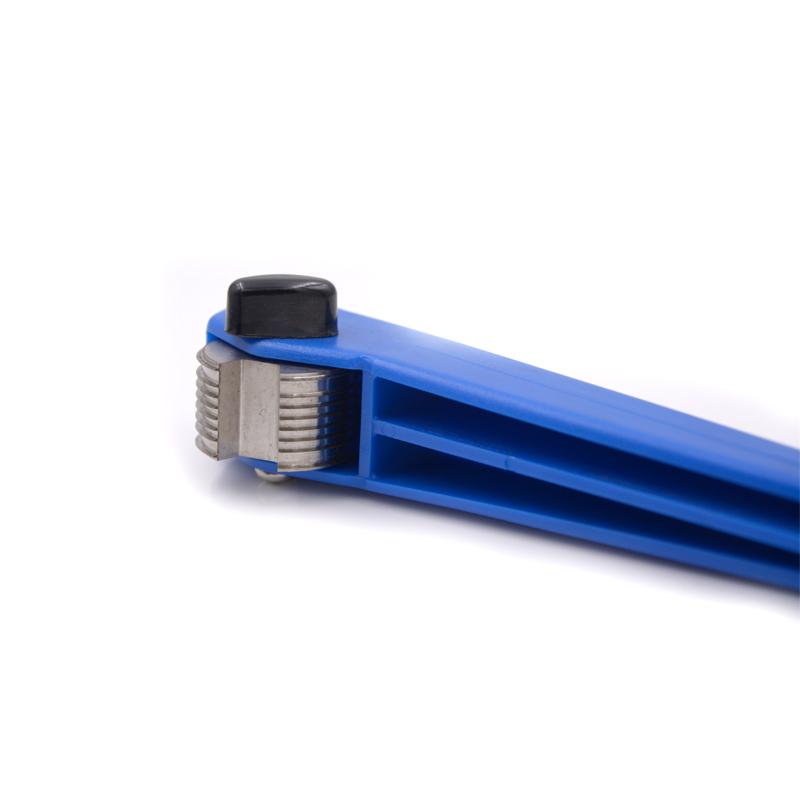
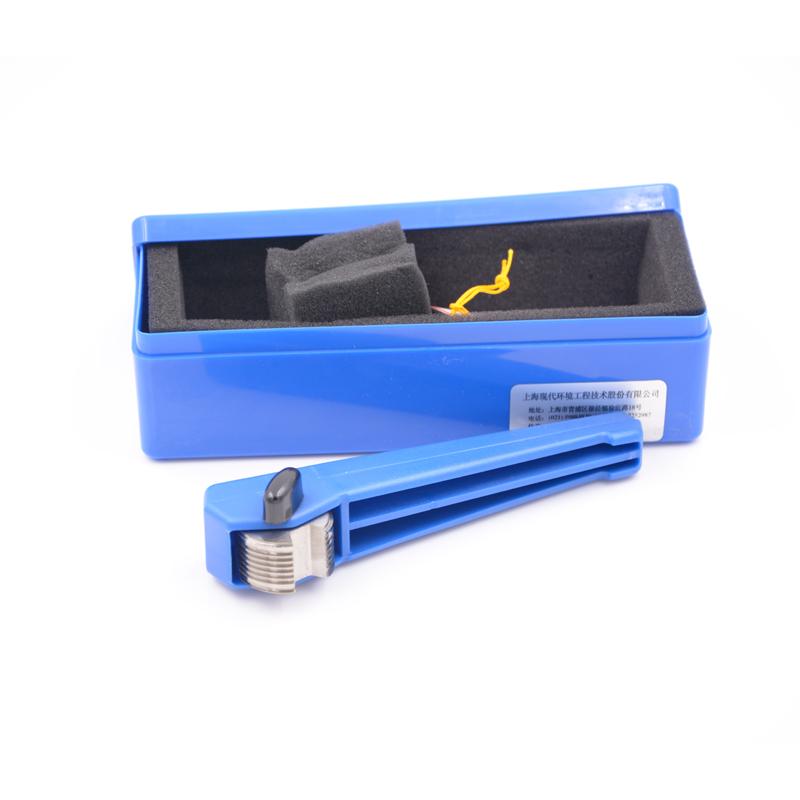
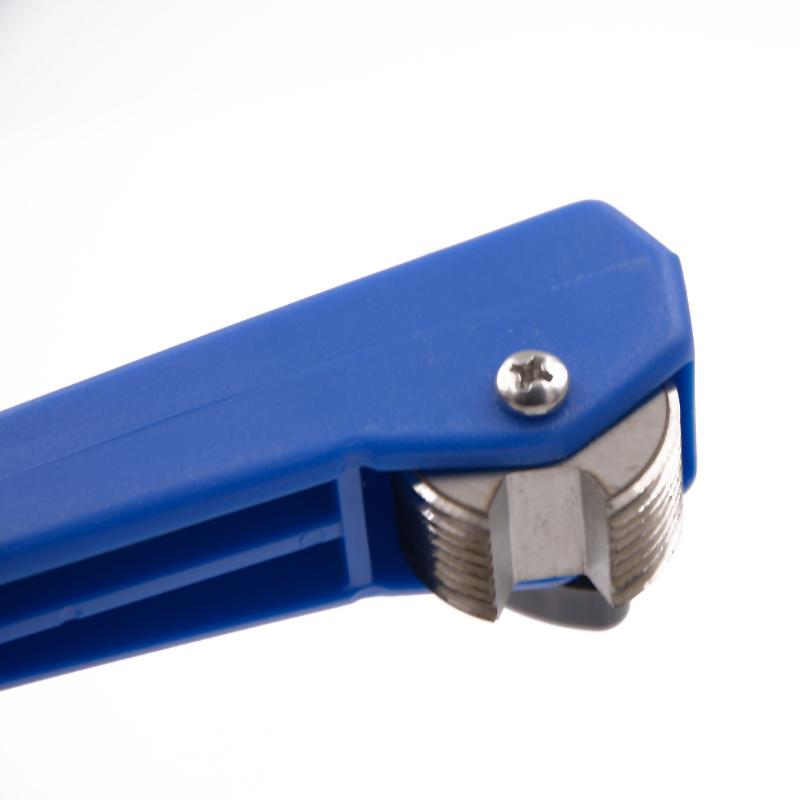
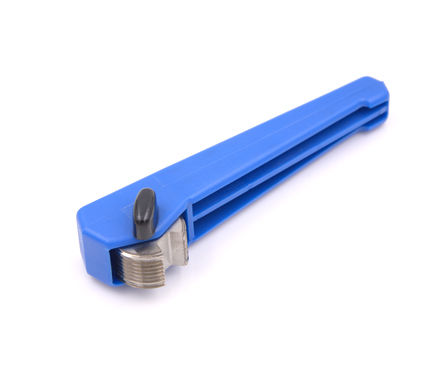

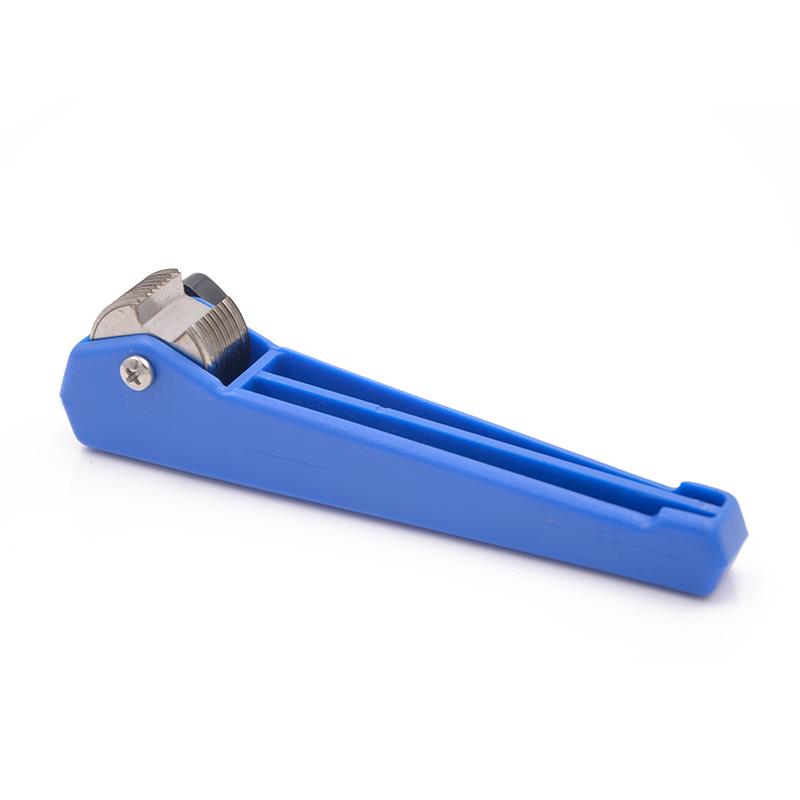
MODERNER QFH 2mm (5-slot) Cross Hatch Cutter for organic coatings cross-cut adhesion determination
SE QFH 2mm (5 slots)

-
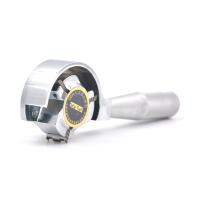 QFH Cross Hatch Cutter 1/2/3 mm Tooth QFH Cross Hatch Cutter 6 Tooth$ 188.00SE
 -
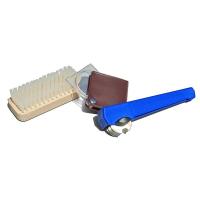 Erichsen 295/II Cross Hatch Cutter Set 6 teeth/2mm$ 980.00SE
 -
 TRUIT TR 5001/4 Single Sided Cross Hatch Cutter 2mm/6 Tooth$ 146.00SE
 -
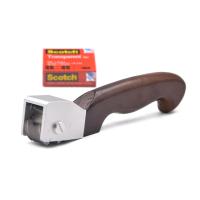 PUSHEN HGQ 2 * 5 multi-edge cross-cut Tester number of teeth 6 teeth, spacing 2mm$ 181.00SE




Moderner QFH 2mm (5 slots) Cross Hatch CutterSPEC
Moderner QFH 2mm (5 slots) Cross Hatch CutterDetails
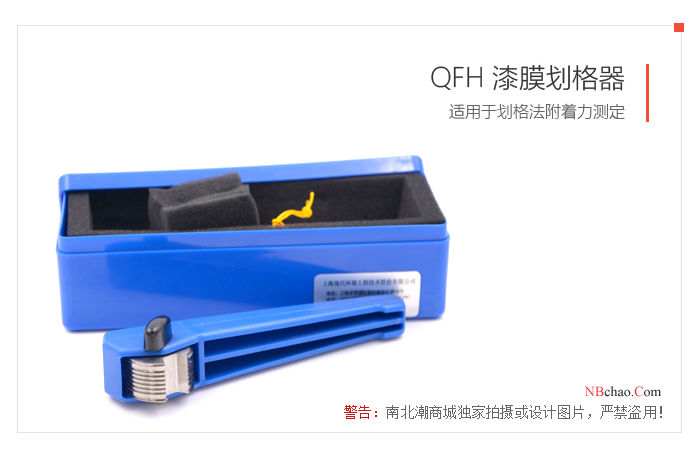
Moderner QFH 2mm (5 slots) Cross Hatch CutterPacking list

- SKU
- NB000724
- Number of teeth
- 6 teeth
- Tooth spacing
- 2mm
- Instrument material
- plastic
- Application standard
- ISO 2409
- Number of blades
- 3
Introduction
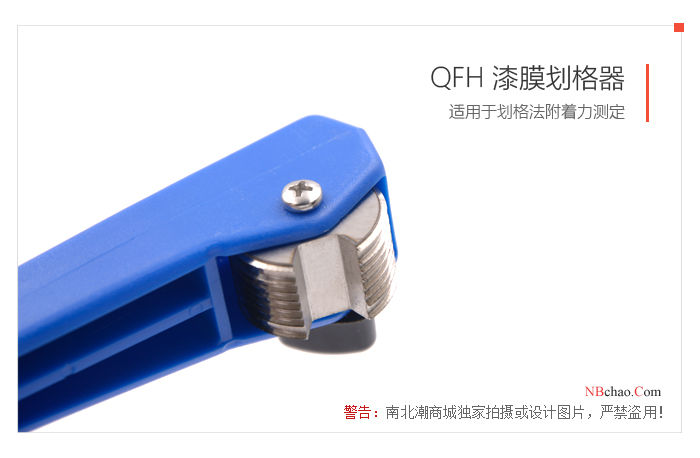
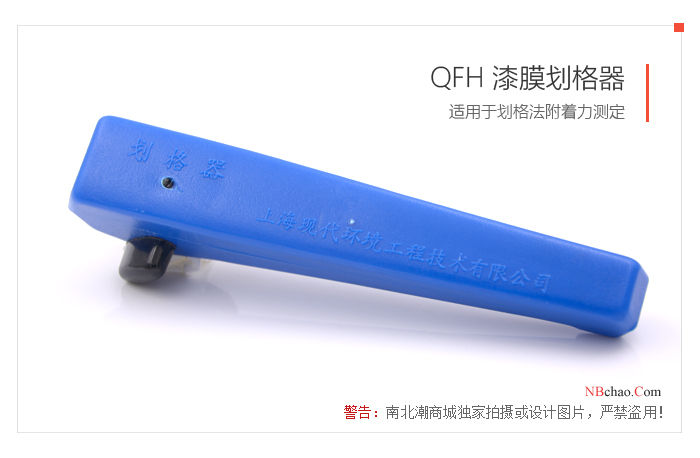
QFH paint film scratcher is designed and manufactured according to ISO2409 standard. It is mainly suitable for the determination of the cross-hatch adhesion of organic coatings, not only for laboratories, but also for construction sites under various conditions.
Principle and Application
The paint film scratcher cuts and penetrates the coating according to the lattice pattern, and the completed pattern is classified into six grades to evaluate the resistance of the coating to separation from the substrate.
The paint film scratcher has multi-blade cutting knives (1mm, 2mm, 3mm) with three specifications of spacing, which can be selected according to different test conditions. The multi-blade cutting knife with 1mm spacing is suitable for test pieces with coating film thickness <60m, the cutting knife with 2mm spacing is suitable for test pieces with coating film thickness of 60~100μm, and the cutting knife with 3mm spacing is suitable for coating film thickness 60 ~150 μm test piece. The test piece should be made of glass, tinplate, aluminum, etc. as the substrate.
real shot
test equipment
1. Soft brush (self-provided)
2. Magnifying glass (self-provided)
operation method
1) The test piece needs to be prepared according to the provisions of ISO R1514 and ISO 2808.
2) Place the test piece on a flat plate with sufficient hardness.
3) Hold the handle of the scratcher so that the multi-edged cutting knife is perpendicular to the plane of the test plate.
4) Use uniform pressure, steady and non-vibrating technique to cut at a cutting speed of 20-50mm/s.
5) Rotate the test piece by 90°, and repeat the above operation on the incision made to form a lattice pattern.
6) Use a soft brush to gently reciprocate 5 times along the two diagonal directions of the grid pattern.
7) The test is to be completed on at least three different positions of the test piece. If the test results of the three positions are different, the test shall be repeated on more than three positions, and all the results shall be recorded at the same time.
Precautions
1. All cuts should penetrate the coating, but the cut into the substrate should not be too deep.
2. If the coating is too thick and too hard to penetrate the substrate, the test is invalid, but it should be stated in the test report.
3. In special cases, it must be determined with the adhesive tape method. The adhesive tape is generally 25mm wide and translucent adhesive tape is pasted on the entire scribing board, and then torn off at the smallest angle. The result can be obtained according to the ratio of the peeling area of the paint film surface.
4. The test should be carried out at a temperature of 23°C±2°C and a Relative Humidity of 50±5%.
Determination of level
grading illustrate
0The edges of the cut are perfectly smooth with not a single square falling off.
1There is a little flake separation in the coating at the cut intersection, and the cross-hatched area is obviously affected by no more than 5%.
2Mouth edges or intersections were markedly more than 5% off, but not more than 15% affected.
3Part or all of the coating peels off in large fragments along the cutting edge, or partially or completely peels off on different parts of the grid, obviously greater than 15%, but the impact is obviously not greater than 35%.
4Large pieces of coating peel off along the cut edge, or some squares partly or completely fall off, obviously greater than 35%, but obviously not more than 65% affected.
5Severe flaking greater than category 4.
Note: A magnifying glass can be used for visual inspection.
Maintenance and Storage
1. After the test, the paint film crosser should be wiped clean and put into the paint film crosser box, and placed in a dry place.
2. The paint film scratcher has four blades for use. When the blade is not sharp, the boat nut can be unscrewed, the bolt can be pulled out, and the blade can be replaced.
3. If the blades on all sides are not sharp, the paint film scratcher can be repaired.
- 1JJF 2163-2024《Calibration Specification for Paint Film Scribers》
- 2SJ 20910A-2018《General specification for powder spraying coating》
- 3HG/T 5173-2017《Waterborne primer for application on rusty substrates》
- 4GB/T 13217.7-2023《Test method for adhesion to substrate of ink with tape》
- 5GB/T 4893.4-2023《Test of surface coating of furniture—Part 4:Determination of adhesion by cross-cut》
- 6GB/T 42541-2023《Coated steel pipes for gas piping》
- 7GB/T 13448-2019《Test methods for prepainted steel sheet and strip》
- 8HG/T 2006-2006《Thermosetting powder coatings》
- 9GB/T 9286-2021《Paints and varnishes—Cross-cut test》
- 10GB/T 23997-2009《Solvent-thinned polyurethane wood coatings for indoor decorating and refurbishing》