Solid content analyzer
Solid content analyzer is an instrument dedicated to the rapid measurement of percent solids in liquid samples. It usually uses automated or high-throughput technology to rapidly analyze the solid composition in liquids for efficient production process control or mass detection, and is widely used in industrial production and laboratory analysis.
Solid content analyzer Testing instrument
-
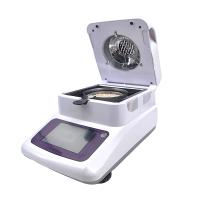 $ 649.00
 -
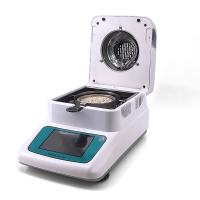 $ 469.00
 -
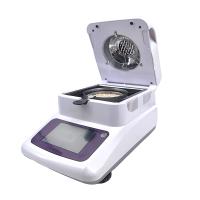 $ 408.00
 -
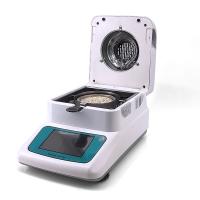 $ 320.00
 -
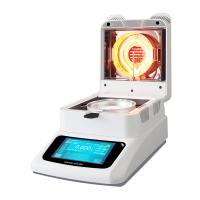 $ 384.00
 -
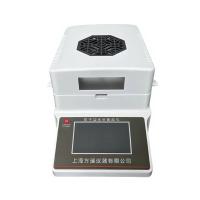 $ 602.00
Solid content Testers are used for rapid measurement of solid particle content in liquid samples, mainly used in production line monitoring, quality control, food industry and chemical production. When selecting models, factors such as measurement range, liquid type, analytical method (such as laser scattering or ultrasonic method), and the rapidity and accuracy of the instrument need to be considered to meet the needs of specific applications.
Solid content analyzer Application Articles
Emulsion Solid content determination
Solid content of emulsion is an important indicator to evaluate its performance. It directly affects the performance and application effect of emulsion, such as viscosity, Stability and Spreader. By understanding Solid content, you can optimize the production process, improve raw material utilization and reduce costs.
Three methods for determination of Solid content of concrete admixture
Solid content of concrete admixtures plays an important role in modern concrete technology. Solid content determination is the key to ensure the stability of its performance. In this paper, three commonly used methods for determination of Solid content are introduced in detail: drying method, dilute drying method and vacuum drying method.
Solid content determination method
Solid content refers to the percentage or mass fraction of solid matter contained in a liquid. It is an indicator that describes the concentration or content of solid matter in a liquid. Solid content is often used to describe the content of solid matter in various solutions, suspensions, emulsions, colloids and other liquid systems.
How to measure solid content?
The solid content is measured by GB/T 1725. After drying the clean surface dish, weigh the mass m0, accurately weigh about 1g of the sample in the surface dish, the total mass m1, and place it in the oven at 150 ± 2 ° C. After drying for 2h, the total mass m2, and carry out 3 parallel experiments at the same time to ensure that the error before and after does not exceed 0.01g.
Pressure sensitive adhesive performance test overview
Pressure sensitive adhesive testing includes two aspects, one is the determination of the physical and chemical properties of the Pressure sensitive adhesive itself, such as Appearance, Solid content, Viscosity, etc., which is very important for controlling the mass of the product in the production process of the Pressure sensitive adhesive. It is very important to ensure the stability of the production process and the stability and reliability of the bonding strength.
Solid content analyzer Relevant standards
IncomingGB/T 32983-2025
Thermal insulating products for building applications—Determination of compressive creep
IncomingGB/T 30807-2025
Thermal insulating products for building applications—Determination of long-term water absorption by immersion
IncomingGB/T 21931.2-2025
Ferronickels—Determination of sulfur content—Infrared absorption method after induction furnace combustion
IncomingGB/T 45764-2025
Fine ceramics—Determination of photocatalytic activity of surfaces in an aqueous medium—Degradation of methylene blue
IncomingGB/T 45774.1-2025
Quantitative determination of antibacterial activity of ceramic tile surfaces—Test methods—Part 1:Ceramic tile surfaces with incorporated antibacterial agents
IncomingGB/T 45774.2-2025
Quantitative determination of antibacterial activity of ceramic tile surfaces—Test methods—Part 2:Ceramic tille surfaces with incorporated photocatalytic antibacterial agents
IncomingGB/T 45875-2025
Fine ceramics—Determination of densification properties of ceramic powders on natural sintering
IncomingGB/T 20899.10-2025
Methods for chemical analysis of gold ores—Part 10: Determination of antimony content
IncomingGB/T 20899.9-2025
Methods for chemical analysis of gold ores—Part 9: Determination of carbon content
IncomingGB/T 7739.10-2025
Methods for chemical analysis of gold concentrates—Part 10: Determination of antimony content
IncomingGB/T 7739.9-2025
Methods for chemical analysis of gold concentrates—Part 9: Determination of carbon content
IncomingGB/T 29509.1-2025
Methods for chemical analysis of gold-loaded carbon—Part 1: Determination of gold and silver contents
IncomingGB/T 9754-2025
Paints and varnishes—Determination of gloss value at 20°、60°and 85°
IncomingGB/T 10421-2025
Sintered metal friction materials—Determination of density
IncomingGB/T 10422-2025
Sintered metal friction materials—Determination of transverse rupture strength
Solid content analyzer Instrument terminology
Solid content analyzer Testing FAQ
- Color and Appearance of Automotive coatings
- Paint circling method how to do performance testing?
- What Viscometer is used to measure dynamic viscosity?
- How to test the durability of coatings in acidic environments?
- How is the thixotropic index (TI) in additives rheological agents determined?
- How to measure mass loss when powder coatings stoving?
- Which materials need to be tested for salt fog corrosion resistance performance?
- How to determine the drying time of solvent colorants?
- What is Halogen Moisture Analyzer?
- How to test the formation of architectural coatings emulsion film?