Pulp viscosity determination
Pulp viscosity measurement is a method used to analyze the flow performance of pulp. Usually by using a Viscometer, the measurement of the flow resistance of the pulp sample under certain conditions is used to evaluate the viscosity of the pulp. Pulp viscosity measurement plays an important role in pulp control and process optimization in the paper manufacturing process.
Pulp viscosity determination Testing instrument
-
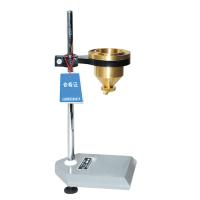 $ 121.00
 -
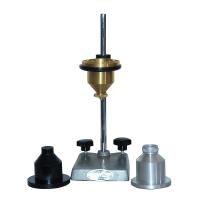 $ 118.00
 -
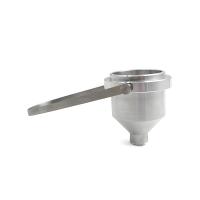 $ 129.00
 -
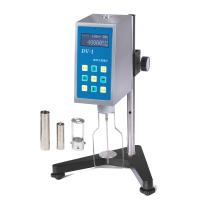 $ 1578.00
 -
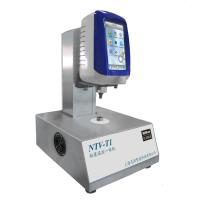 $ 4875.00
 -
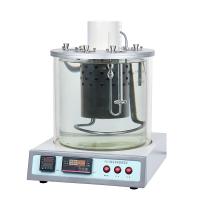 $ 1199.00
 -
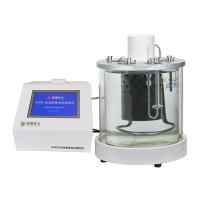 $ 1951.00
 -
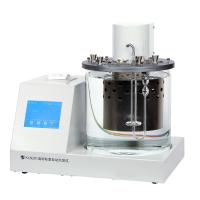 $ 1794.00
 -
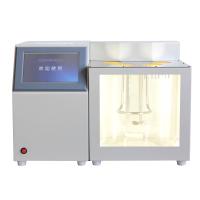 $ 2483.00
 -
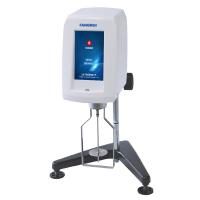 $ 1598.00
 -
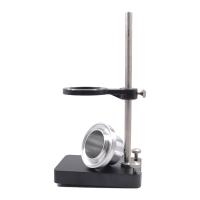
-
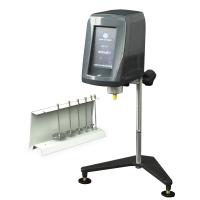
-
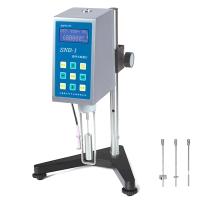 $ 886.00
Pulp viscosity measurement is used to evaluate the flowability and viscosity of pulp and is mainly used in the pulp and paper industry. Selection points include pulp type, temperature requirements and viscosity range to ensure that the appropriate viscosity measurement method is selected to meet the specific pulp production requirements.
Pulp viscosity determination Application Articles
Coating viscosity determination by Zain Viscometer method
Coating viscosity measurement by Zain Viscometer method is introduced in this paper. The instrument has simple structure, operation needs to pay attention to liquid state and temperature, and can be corrected by temperature Linear dispersion and standard oil.
Application of HBDV-1H swirl/spin High Temperature Viscometer in Viscosity Determination of Plastic Particles
The HBDV-1H swirl/spin High Temperature Viscometer offers significant advantages in the field of plastic particle viscosity determination with its high-precision, wide-range measurement and intelligent operation functions. Measurement accuracy of +/- 1% FS ensures the accuracy of test results.
Coating viscosity determination and application of Flow Cup method
The flow cup method is a simple and practical test method commonly used for Coating viscosity determination. Coating-4 Viscometer and ISO flow cup are common flow cup models suitable for different types of Coating. By measuring the time the liquid flows out of the cup, the kinematic viscosity of the Coating can be calculated in combination with the standard formula, and then its flow performance can be evaluated.
Determination of starch viscosity by swirl/spin Viscosity meter
The swirl/spin Viscosity meter is a precision instrument for measuring the viscosity of liquids, which is widely used in food science, chemical engineering and materials research. In the determination of starch viscosity, the swirl/spin Viscosity meter can provide detailed viscosity data by measuring the resistance of the rotor in the sample.
Coating viscosity determination - viscosity cup Yiwen
This article introduces in detail how to choose a suitable viscosity cup, including key factors such as type, shape, material, maximum viscosity value, flow hole diameter, etc. According to different testing requirements and liquid characteristics, professional suggestions for selection are provided to help users accurately measure the viscosity of liquids.
Spinning & weaving dyeing and finishing auxiliary viscosity determination technology
Detailed explanation of the viscosity measurement technology of Spinning & weaving dyeing and finishing aids. This paper introduces in detail how to measure the flow characteristics of dyestuff and auxiliary solution with rotational viscometer, the method of measuring the viscosity of Spinning & weaving dyeing and finishing aids with rotational viscometer and related technical points.
Analysis of the Importance of Coating Viscosity Measurement in Coating Production and Application
Coating viscosity is one of the physical and chemical properties of liquid and colloidal systems. It is a key parameter in the production and application of Coatings, and has an important impact on the performance and application of Coatings.
Coating viscosity determination by Flow Cup method
The flow cup method is an economical and practical viscosity measurement method widely used in the Coating industry. It is based on the time when the liquid flows out of a specific container under the action of gravity to determine the viscosity, and is suitable for Newtonian or near-Newtonian low viscosity Coatings.
Determination of viscosity of architectural coatings: application of the Stormer Viscometer method
The viscosity of architectural coatings is one of the important indexes that affect its flowability, construction performance and coating effect. Accurate determination of viscosity is of great significance to the production, quality control and application of Coatings. This article will introduce a commonly used viscosity determination method: Stormer Viscometer method.
GB/T 22427.7 "Determination of Starch Viscosity" Viscosity Testing Equipment Scheme
GB/T 22427.7 starch viscosity measurement standard specifies the viscosity test method of starch, and NBchao technology proposes the corresponding viscosity detection equipment scheme according to the standard conditions.
Coating viscosity determination and viscosity influencing factors
The viscosity of the coating, also known as the consistency of the coating, refers to the existence of the adhesive surface of the fluid itself, which produces a characteristic of the internal flow of the fluid that hinders its relative flow. There are many factors affecting the viscosity of the coating. To sum up, there are mainly the following points
Comparison of 3 viscosity measurement methods: capillary method, rotation method, falling ball method
In this paper, three viscosity determination methods, capillary method, rotation method and falling ball method, are compared, and the applicable conditions and principles of different methods are introduced.
Determination of Viscosity of Modified Starch Paste by Rotational Viscometer
Using rotational viscometer to determine the viscosity of modified starch paste, this article excerpts Huang Qiang, Luo Faxing, Fu Xiong, scholars from the School of Light Industry and Food, South China University of Technology, to illustrate one of the methods for determining the viscosity of modified starch paste, rotational viscometer.
How to automate the determination of Viscosity in dilute solutions?
Automation increases productivity, reduces manual input and eliminates safety, health and environment (SHE) issues associated with solvent exposure.
Pulp viscosity determination Relevant standards
ActiveSH/T 0018-2007
Standard test method for apparent viscosity of petroleum waxes compounded with additives (hot melts)
ActiveSH/T 0099.1-2005
Determination of Engle viscosity of emulsified asphalt
ActiveEN 16896-2016
Petroleum products and related products - Determination of kinematic viscosity - Method by Stabinger type viscosimeter
ActiveNB/SH/T 0978-2019
Standard test method for determining the viscosity of emulsified asphalts using a rotational paddle viscometer
ActiveHG/T 3323-2008
Rubber latex bord-determination of viscosity(Rotating viscometer method)
ActiveEN 12092-2001
Adhesives - Determination of viscosity
ActiveNF T76-102-2002
Adhesives - Determination of viscosity
ActiveNF EN 12092-2002
Adhesives - Determination of viscosity.
ActiveKS A0531-1993
Viscosity of Liquid - Methods of Measurement
ActiveSY/T 5651-1993(1998)
Specifications for Kinematic Viscosity Tester for Petroleum Products
ActiveSH/T 0557-1993
Viscosity determination of petroleum asphalt (vacuum capillary method)
ActiveBS EN 12092-2001
Adhesives. Determination of viscosity
ActiveSH/T 0048-1991
Lubricating Grease Similar Viscosity Determination Method
ActiveDIN 51562-2-1988
Viscometry; determination of kinematic viscosity using the Ubbelohde microviscometer
ActiveGB/T 266-1988
Petroleum products--Determination of Engler viscosity
Pulp viscosity determination Instrument terminology
- What is an edible oil viscometer?
- What is slurry viscosity determination?
- What is starch viscosity determination?
- What is crude oil viscosity determination?
- What is a digital display beating degree tester?
- What is a bubble Viscometer?
- What is Pulp viscosity testing?
- What are paints Viscosity measurement Cups?
- What is petroleum viscosity determination?
- What is a flour viscometer?