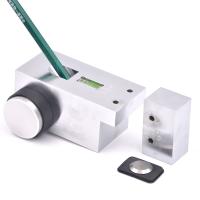
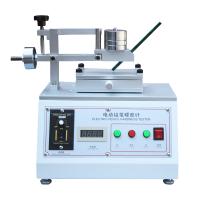
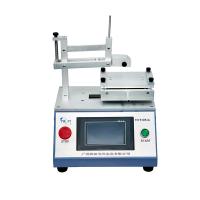
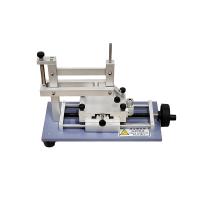
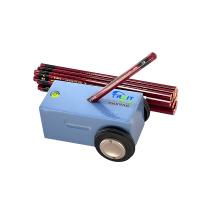
Pencil Hardness Tester test procedure, application and different Hardness Pencil introduction
Overview
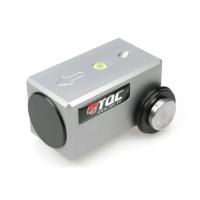
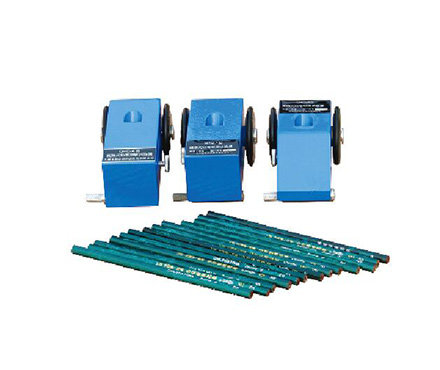
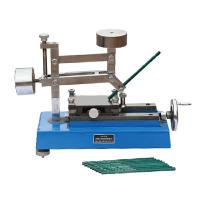
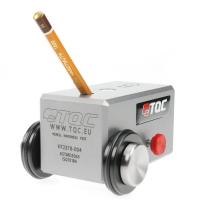
A pencil Hardness Tester is a device used to determine the hardness of a coating or surface by measuring the resistance of the coating to being scratched by pencils with varying degrees of hardness. The test principle of a pencil Hardness Tester is based on the relative hardness of different pencils, which are standardized and graded according to a scale known as the "Mohs scale of mineral hardness".which have higher clay content and less graphite, will scratch softer coatings more easily, while softer pencils, which have less clay and more graphite, will scratch harder coatings more easily. The test provides a simple and quick assessment of the relative hardness of coatings and surfaces, making it widely used in industries such as automotive, aerospace, and furniture manufacturing, where coatings play a critical role in product performance and durability.

Test steps
The test is typically conducted as follows:
Preparation of the sample: The coating or surface to be tested is cleaned and prepared to remove any dirt, debris, or irregularities.
Selection of pencils: Pencils with different degrees of hardness, typically ranging from 9H (the hardest) to 9B (the softest), are selected. These pencils are made of graphite mixed with different amounts of clay, with higher clay content resulting in softer pencils.
Test procedure: The selected pencils are used to attempt to scratch the coating or surface in a systematic manner. The pencil is held at a 45-degree angle to the surface and is moved across the sample with a consistent pressure. The hardness of the pencil that just begins to scratch the coating is noted.
Evaluation of results: The hardness of the pencil that caused the first visible scratch on the coating is used to determine the coating's hardness. Generally, the higher the hardness of the pencil that scratches the coating, the harder the coating. The result is reported using the corresponding pencil hardness grade, based on the scale used in the test.
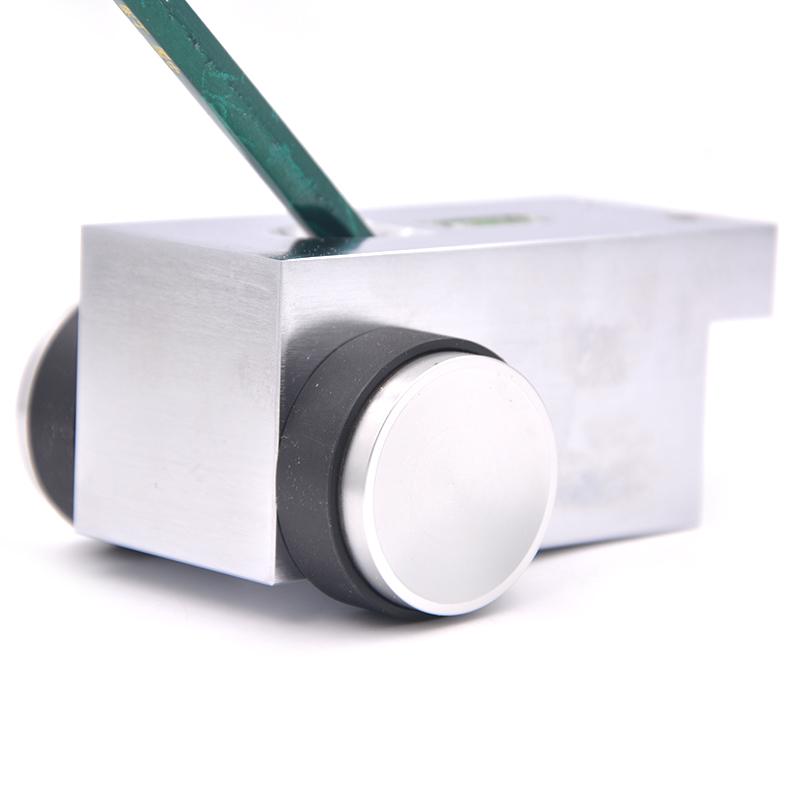
Application
Pencil Hardness Testers are typically used to test the hardness of coatings, films, and surfaces of various materials. These materials can include, but are not limited to:
Paints and varnishes
Wood and wood finishes
Metal coatings
Plastic films
Glass and ceramic coatings
Paper and cardboard coatings
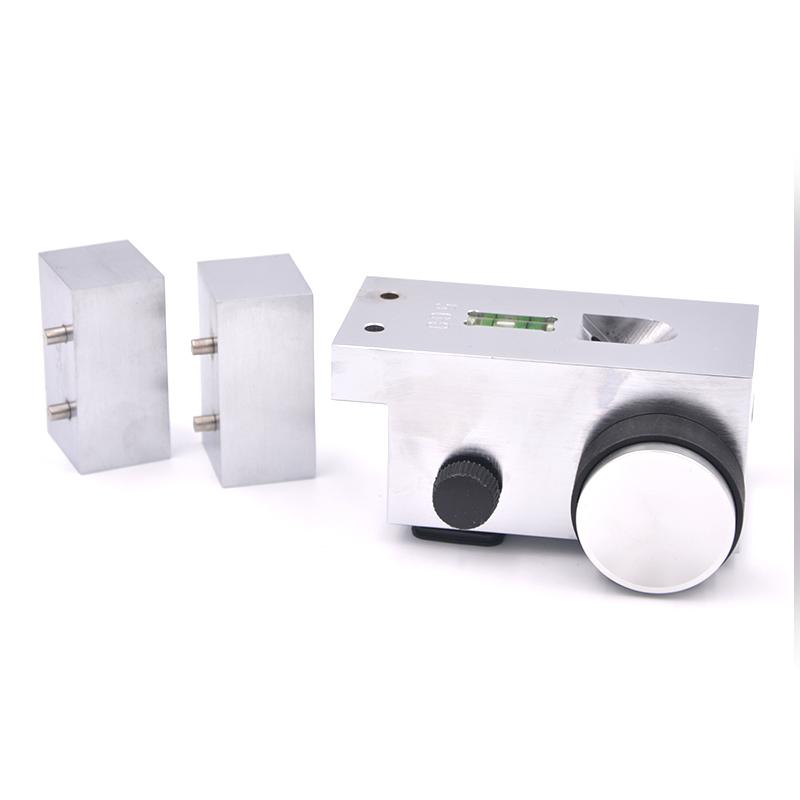
Pencils of different hardness
Pencils used in pencil hardness testing are typically standardized and graded according to the Mohs scale of mineral hardness, which ranges from 9H (the hardest) to 9B (the softest). Here's an introduction to pencils of different hardness:
9H: This is the hardest pencil available in pencil hardness testing, and it creates the lightest marks on a surface. It is made of graphite mixed with a high proportion of clay, resulting in a pencil that leaves minimal marks and has very high scratch resistance. 9H pencils are used for testing very hard coatings or surfaces.
8H: Slightly softer than 9H, 8H pencils are also made of graphite mixed with a high proportion of clay. They create slightly darker marks than 9H pencils but are still very hard and used for testing hard coatings or surfaces.
7H~2H: Pencils in this range are also used for testing hard coatings or surfaces, but they are slightly softer than 9H and 8H pencils. The proportion of clay in the graphite is gradually reduced, resulting in darker marks and slightly lower scratch resistance. 2H pencils are commonly used in pencil hardness testing.
H, F, HB: These pencils are considered medium-hard and are commonly used in pencil hardness testing. H pencils are harder than F pencils, which are harder than HB pencils. They create darker marks than harder pencils and are used for testing coatings or surfaces with medium hardness.
B~9B: Pencils in this range are softer and leave darker marks compared to harder pencils. They are used for testing softer coatings or surfaces. B pencils have increasing amounts of graphite and less clay, resulting in softer leads and lower scratch resistance. 9B pencils are the softest and create the darkest marks, but they have the lowest scratch resistance and are used for testing very soft coatings or surfaces.
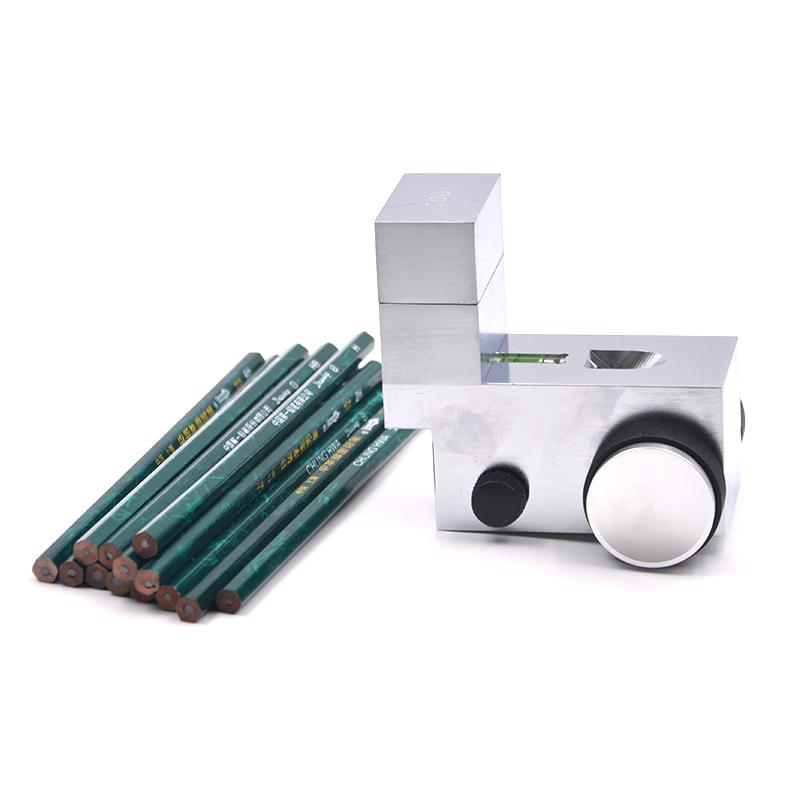
the suitability of a pencil hardness test for a particular material depends on factors such as the thickness and composition of the coating, the substrate material, and the specific requirements of the application. Other methods, such as instrumented indentation testing or standardized hardness tests, may be more appropriate for certain materials or applications where higher accuracy and precision are required. Anyway, different manufacturers may have slight variations in their pencil hardness grading, so it's essential to refer to the specific grading system used in the pencil Hardness Tester being used for accurate results.


- 1Film hardness testing method: pendulum hardness, pencil hardness, etc
- 2ISO 15184 Pencil method to measure the hardness of paint film
- 3Analysis of hardness measurement by ASTM D3363 pencil method
- 4Pencil hardness testing of film
- 5Ceramic Coated Pencil Hardness Test
- 6Relevant standards for pencil Hardness Testers
- 7What is a pencil hardness test?
- 8What performance subjects are tested for water-based floor coating materials and how do they meet the standards?
- 9Which performance subjects should be tested for water-based alkyd resin? How to judge the results?