Application of xenon arc aging Test Chamber in accelerated aging test of building materials
Building materials are often subjected to xenon arc aging tests to assess their resistance to ultraviolet radiation and simulate the effects of long-term exposure to sunlight. Xenon arc aging testing is a common method for evaluating the durability and performance of building materials in outdoor applications, as prolonged exposure to the sun's ultraviolet radiation can cause various types of degradation or damage to materials over time.
The influence of environment and climate
UV radiation from sunlight can have several adverse effects on building materials, such as:
Fade: UV radiation can cause fading or discoloration of materials, especially those exposed to direct sunlight for extended periods of time. This affects the aesthetics of the material and reduces its visual appeal.
Chalking: UV radiation can cause the surface of a material to break down and form a powdery residue called "chalking." Chalking can cause a dull or discolored appearance and reduce a material's performance and durability.
Surface Degradation: UV radiation can cause surface degradation of materials, resulting in cracking, peeling or delamination. This weakens the integrity of the material and compromises its performance.
Loss of mechanical properties: UV radiation can also reduce the mechanical properties of a material, such as reducing its strength, toughness or flexibility. This affects the performance and lifetime of the material, especially in outdoor applications where there is constant sunlight exposure.
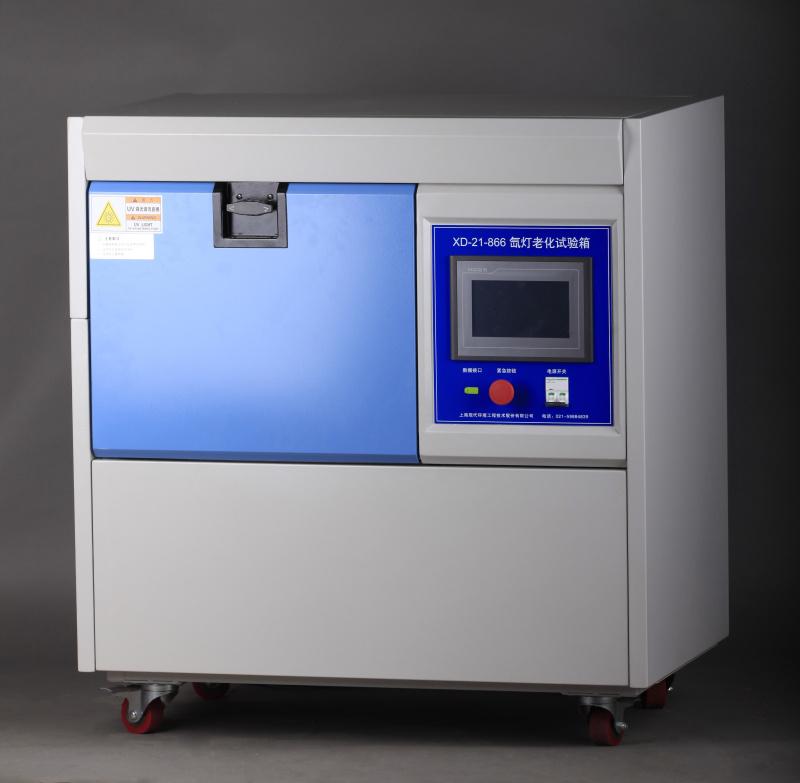
The effects of long-term exposure to sunlight can be simulated in a controlled laboratory environment by performing xenon arc aging tests on building materials. This allows accelerated testing of a material's resistance to UV radiation and helps assess its durability and performance over time. Xenon arc aging testing typically involves exposing materials to the intense ultraviolet radiation of a xenon arc for extended periods of time while also controlling temperature, humidity, and other environmental factors to simulate outdoor conditions. Material properties such as color change, chalking, surface degradation and changes in mechanical properties can be evaluated before and after exposure to assess its resistance to UV radiation and its suitability for outdoor applications.
Detection method
Weathering testing of building materials using xenon lamps typically involves the following steps:
Identify Materials to Test: Identify specific building materials that need to be tested for their resistance to UV radiation and the effects of long-term sun exposure. These may include, but are not limited to, paints, coatings, sealants, plastics, composites, and other materials commonly used in outdoor applications.
Choose the right xenon arc aging test equipment: choose the xenon arc aging test equipment suitable for the type of material to be tested and the required test conditions. Xenon arc aging test equipment usually consists of a xenon arc chamber that emits intense ultraviolet radiation and a control system to regulate temperature, humidity, and other environmental factors.
Prepare test specimens: Prepare construction material specimens according to the requirements of xenon arc aging test equipment. This may involve cutting or forming the material to the appropriate size or shape and, if necessary, conditioning the specimen to standard environmental conditions.
Conduct xenon arc aging test: put the prepared sample into the xenon arc aging chamber and start the test. Follow the test parameters specified in the test standard or guideline, including exposure time, UV radiation intensity, temperature, humidity and other environmental conditions.
Monitoring and Evaluation of Test Samples: Monitor test samples during xenon arc aging testing for any changes in appearance, color, chalking, surface degradation, or changes in mechanical properties. Periodically record observations and measurements throughout the test period.
Analyzing test data: After the test is complete, collect and analyze the data obtained from the test, including measurements, observations, and any other relevant information. Results are compared to performance requirements or specifications to assess a material's resistance to UV radiation and the effects of long-term sun exposure.
Interpret and report results: Interpret xenon arc weathering test results and prepare comprehensive reports summarizing findings. Include information about test parameters, exposure conditions, results, and any observations or conclusions. Test reports can be used for internal quality control purposes, regulatory compliance or communication with stakeholders.
Take necessary actions based on the results: Based on the test results, take appropriate actions such as making design or material modifications, selecting alternative materials, or implementing maintenance or protection measures to ensure that building materials meet the required performance in terms of UV resistance and durability standard.
Beichao reminds you: Xenon arc aging testing should be conducted by qualified personnel using appropriate equipment and facilities, following established testing procedures, and complying with relevant industry standards or regulations. Consulting with a specialist or accredited laboratory can help ensure accurate and reliable results.
- 1Basic Principle, Functional Characteristics and Application of xenon arc aging Test Chamber
- 2Introduction of working principle and application scope of water-cooled xenon arc weathering Test Chamber
- 3The difference between fluorescent UV Lamp and xenon arc: Two Light sources in artificial accelerated aging
- 4Xenon arc weathering vs UV weathering: differences in ray of light simulation
- 5Rubber aging talk: xenon arc aging, ultraviolet light aging, ozone aging
- 6The relationship between natural aging and accelerated aging
- 7Artificial climate accelerated weathering test and natural aging conversion
- 8Application of accelerated weathering Test Chamber in respirator
- 9UV accelerated weathering Test Chamber for weathering resistance of epoxy resin