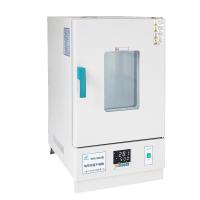
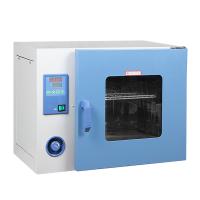
Temperature uniformity verification method of thermostatic Drying Oven
In the material processing, sample preparation and performance testing of many industries, the reliability of the performance of the constant temperature Drying Oven is directly related to the accuracy and reproducibility of experimental data. Among them, temperature uniformity is the key performance index to evaluate the temperature consistency of each point in the working chamber of the Drying Oven. Poor uniformity can lead to samples in the same batch being in different thermal environments, introducing systematic errors. Therefore, establishing a set of scientific and rigorous temperature uniformity verification methods is crucial to ensure the standardization of the experimental process and the reliability of the results.
Definition and importance
Temperature uniformity usually refers to the maximum temperature difference measured at a certain point in time at any two points in the working space after the set temperature of the equipment reaches a stable state. It reflects the device's ability to control the spatial distribution of temperature in steady state. This index has a decisive impact on processes that require a precise thermal environment, such as polymer material curing, electronic component aging testing, agricultural moisture determination, coating drying, and other processes. Verifying and ensuring good temperature uniformity is a basic requirement for laboratory quality management systems and equipment metrology validation.
Preparation
Before verification, a series of preparatory work needs to be completed to ensure the reliability of the verification results. First, choose multi-channel temperature loggers and sensors (such as thermocouples or thermoresistors) that are metrology calibrated and accurate to meet the requirements. The number of sensors should be sufficient to cover the working space, usually according to the volume of the box, with reference to the recommended layout of relevant standards (such as GB/T 30435-2013 "Electric Heating Drying Oven and Electric Blast Drying Oven" or similar international standards). Common layout patterns include dividing the workspace into three floors: upper, middle, and lower, with at least three points in each floor, with the center point usually serving as a reference point. Secondly, the equipment should be installed in an environment without strong convection and heat source interference, and operate without load. Before formal testing, the equipment needs to be run at a set temperature for a long enough time to achieve thermal stability.
Methods and steps
The verification process is mainly divided into the following steps:
Step 1: Equipment and sensor layout. Fix the temperature sensor in the workspace according to the predetermined layout to ensure that the temperature sensing element is not in direct contact with the inner wall or door, and avoid direct radiation from the heating element. All sensor leads should be handled properly to minimize their impact on the thermal field inside the chamber.
Step 2: Set and stabilize. Set the Drying Oven temperature controller to the verification temperature point (usually multiple points such as the lower, middle and upper limits of the common range of the equipment). Start the device and let it run until it reaches a steady state. The steady state is usually determined as the temperature fluctuation of no more than ±1% of the set temperature at all measurement points for a period of not less than 30 minutes, and the trend is steady.
Step 3: Data collection. In steady state, temperature data from all sensors are collected synchronously using a temperature logger. The acquisition frequency is recommended to be no less than 1 time per minute, and the total acquisition time should be sufficient to reflect the statistical characteristics of temperature distribution, usually not less than 30 minutes.
Step 4: Data processing and analysis. Process the collected data. Calculate the difference between the highest and lowest temperatures at all measurement points at each sampling time point. Then, the average of all "temperature differences" during the entire acquisition cycle is taken as the temperature uniformity at that temperature set point. The calculation formula can be expressed as:
ΔT_avg = (1/N) * Σ (T_max,i - T_min,i)
where Δ T_avg is the average temperature uniformity, N is the total number of samples, and T_max, i and T_min,i are the highest and lowest temperatures among all the measurement points at the ith sampling, respectively.
At the same time, the maximum positive and negative deviation of the temperature of each measurement point relative to the set value during the entire acquisition period should also be paid attention to.

Results and records
The calculated temperature uniformity is compared with the technical indicators or relevant standards declared by the equipment manufacturer and the user's internal quality control standards to determine whether it is qualified. The verification report should record in detail the following information: equipment identification, verification temperature point, model and calibration information of the standard used, schematic diagram of sensor placement, settling time, data acquisition parameters, summary of raw data, calculation results (see table format below), and conclusion. All records should be archived as historical evidence of equipment performance.
| Verify the temperature setpoint | 125.0 ℃ |
| Data collection duration | 30 minutes |
| Sampling interval | 1 minute |
| The average of the maximum temperature at the measurement point | 125.8 ℃ |
| The average minimum temperature of the measurement point | 124.3 ℃ |
| Calculating Average Temperature Uniformity (Δ T_avg) | 1.5 ℃ |
| The standard requires an upper limit of uniformity | ≤ ±2.5 ℃ |
| Judgment result | Compliant |
Impact and maintenance
Temperature uniformity can be affected by a variety of factors. Factors such as the layout and power matching of the heating elements, the design of the wind speed and direction of the circulating fan, the performance of the insulation layer, and the location of the temperature sensor, etc. Factors include the placement of items in the box, the amount of load and material, the location of sensors, and the frequent opening of the box door. To maintain good temperature uniformity, it is recommended in daily use: to avoid loading methods that overcrowd or block air circulation; Regularly clean the inside and outside of the box to ensure that the air ducts are unobstructed; Periodic verification as planned; Minimize opening the box door during stable operation.
epilogue
Temperature uniformity verification of the system in a thermostatic Drying Oven is an integral part of laboratory equipment management. Regular verification through standardized methods can not only quantify the performance status of the equipment, provide guarantee for the accuracy of experiments, but also detect potential drifts or faults in time, and guide preventive maintenance. The methodology outlined in this paper combines general engineering practices with the spirit of standards, allowing operators to adapt and refine to more specific industry standards based on specific equipment types and application areas, thereby establishing validation procedures tailored to their needs.
References
GB/T 30435-2013, Electric heating Drying Oven and electric blast Drying Oven
JJF 1101-2019, Specification for calibration of temperature and humidity parameters of environmental test equipment
ASTM E145, Standard Specification for Gravity-Convection and Forced-Ventilation Ovens
Compilation of academic papers related to engineering thermophysical testing technology




- 1Structural differences between explosion-proof drying oven and ordinary drying oven
- 2Drying oven heating characteristics of natural convection and forced convection
- 3Drying oven temperature sensor calibrated and over temperature protection inspection
- 4Principle, application and selection of vertical Electric Forced Air Drying Oven
- 5Principle, application and selection of pigment Drying Oven
- 6Principle, application and selection of electric heating air Drying Oven
- 7Principle, application and selection of vacuum electric Drying Oven
- 8Principle, application and selection of nitro paint Drying Oven
- 9Principle, application and selection of industrial hot air circulation Drying Oven