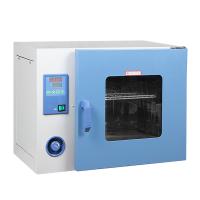
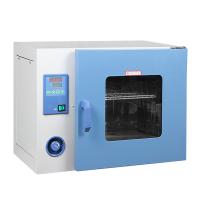
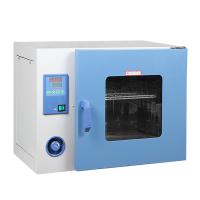
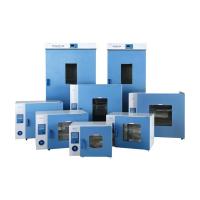
Drying oven heating characteristics of natural convection and forced convection
Introduction
In the field of laboratory and industrial testing, Drying Ovens are a basic and critical equipment that is widely used in material pretreatment, sample drying, heat treatment, and stability testing. Its core function is to provide a controlled temperature environment to remove moisture or volatile components from the material. According to the different air circulation methods in the box, the Drying Oven is mainly divided into two types: natural convection and forced convection. There are significant differences between the two technical paths in terms of heating uniformity, heating rate, and applicable scenarios, which directly affects the reliability and repeatability of the experimental results. A deep understanding of its heating characteristics is crucial for precise selection based on specific application needs.
Heating principle and aerodynamics
The heating process of the Drying Oven is essentially the process of transferring heat energy from the heating element to the space in the chamber and the sample to be processed.
Natural convection type: Its working principle relies on the floating lift generated by the change in density of the air after it is heated. The heating element (usually located at the bottom or side wall of the cabinet) increases the temperature of the nearby air, reduces its density, and the hot air naturally rises, while the cold air in the upper part of the cabinet is denser and sinks to form a circulation. This process is in line with the basic principle of Newton's cooling law, and the heat flux density q can be approximated as:
q = h · A · (Ts - T∞)
where h is the convective heat transfer coefficient, A is the heat transfer area, and Tsis the surface temperature of the heat source, T∞is the temperature of the distant air. In natural convection, the h-value is relatively low and is closely related to temperature differences and spatial geometry.
Forced convection type: Through the built-in fan or fan, the air in the box is actively driven for mechanical circulation. Forced convection greatly strengthens the heat transfer process, and its heat transfer coefficient h is significantly higher than that of natural convection, and it is less dependent on gravitational field and temperature difference. The airflow velocity v becomes a key parameter, and the forced convection heat transfer capacity increases with the increase of the Reynolds number (Re) according to the relevant hydrodynamic principles.

Comparison of performance characteristics
Based on the above differences in principle, the two types of Drying Ovens present different characteristics in a number of key performances.
| Contrast dimensions | Natural convection Drying Oven |
| Temperature uniformity | There may be temperature gradients at different locations within the box, usually slightly higher in the upper part than in the lower part. |
| Rate of warming | Relatively slow, relying on the efficiency of natural air circulation. |
| Effect on samples | Soft airflow for powders, lightweight or easily blown away. |
| Energy consumption level | There is usually no fan power consumption, and the overall energy consumption is low. |
| Structural complexity | The structure is relatively simple, with few moving parts and low maintenance requirements. |
| Typical applicable scenarios | Conventional drying, low-temperature curing, and long-term processing of samples sensitive to airflow. |
| Contrast dimensions | Forced convection Drying Oven |
| Temperature uniformity | The temperature distribution in the box is highly uniform through forced circulation, and the temperature difference control ability is strong. |
| Rate of warming | Fast, forced circulation quickly transfers heat throughout the cabinet space. |
| Effect on samples | Continuous airflow can blow small and light samples, requiring the use of containers or adjustment of wind speed. |
| Energy consumption level | Due to the inclusion of fans, the operating energy consumption is relatively high. |
| Structural complexity | The structure is complex, including fans, air ducts and other components, which require regular maintenance. |
| Typical applicable scenarios | Precision experiments that require temperature uniformity, rapid drying, and consistent processing of samples across multiple batches. |
Selection considerations
In the actual selection process, it should not simply judge which is better or worse, but should be comprehensively weighed based on specific technical needs.
Sample characteristics: For powders, fibers or materials that are sensitive to surface wind speed, the natural convection mode is more suitable. For solid blocks, metal parts, or samples placed in containers, forced convection provides a more uniform heating effect.
Process requirements: Forced convection is often necessary if the process standard or test method has clear requirements for temperature uniformity (e.g., aging testing of some materials requires the temperature difference in the chamber to not exceed a certain threshold). For conventional drying that only needs to reach a set temperature without strict uniformity requirements, natural convection may be sufficient.
Efficiency and energy consumption: When the production or experimental cycle is tight and the process time needs to be shortened, the advantages of forced convection type in terms of heating speed and drying efficiency are obvious. Conversely, if processing time is sufficient and operating costs are a concern, natural convection is more attractive in terms of energy consumption.
Standard compliance: Many industry standards or testing specifications specify the performance parameters of drying equipment. When selecting a model, it is necessary to ensure that the technical indicators of the equipment, especially temperature uniformity, fluctuation, etc., meet the requirements of relevant standards.

Conclusions and recommendations
Natural convection and forced convection Drying Ovens each have their own clear technical positioning and application boundaries. With its simple structure, quiet operation and low interference to the sample, the natural convection type has application value in mild and conventional drying scenarios. The forced convection type has excellent temperature uniformity and fast dynamic response, making it the preferred choice for precision experiments, high-standard production, and reliability testing.
It is recommended that users first clarify the physical characteristics of their samples, key parameters of the process (such as maximum allowable temperature difference, heating time requirements), and the technical standards to be followed before selection. If necessary, the actual performance of the equipment can be verified by temperature distribution tests under no-load and load. When budget allows, some modern Drying Ovens offer the ability to switch or adjust the air speed, thus being compatible with the characteristics of both modes within a certain range, providing users with more flexible options. Ultimately, the right sizing is the result of balancing technical requirements, operating costs, and long-term reliability.
References
ASTM E145 - Standard Specification for Gravity-Convection and Forced-Ventilation Ovens
IEC 60068-3-5 Environmental testing - Part 3-5: Supporting documentation and guidance - Confirmation of the performance of temperature chambers
Industrial Drying Equipment Design Manual, Chemical Industry Press
Kreith, F., & Bohn, M. S. Principles of Heat Transfer.
Technical white papers and operating manuals for related equipment manufacturers
-
![BENTING CBGL-1000B electric air blowing dryer 300 ℃/1000L]()
-
![CHINA DHG-9140BE Vertical Forced Air Drying Oven Box type Forced Air Drying Oven 300℃/136L]()
-
![CHINA DHG-9140C high temperature Drying Oven temperature control 400℃ 140L]()
-
![CHINA DZG-6090SA Vacuum Oven 1300W/50L]() CHINA DZG-6090SA Vacuum Oven 1300W/50L$ 1769.00
-
![HUITAI DHG-9240A Experimental blast drying oven temperature control 250 ℃ Volume 220L with test hole 50mm]()
-
![HUITAI HHG-9148A High temperature electric blast dryer, volume 140L with test hole 50mm]()
-
![HUITAI BPG-9620A digital blast oven volume 620L with test hole 50mm]()
-
![KENTON 101-4 Dial electric blast oven 640L with independent temperature limiter]()
-
![KENTON DZF-6090S thermostatic Vacuum Oven with 2L Vacuum Pump]()




- 1Structural differences between explosion-proof drying oven and ordinary drying oven
- 2Temperature uniformity verification method of thermostatic Drying Oven
- 3Drying oven temperature sensor calibrated and over temperature protection inspection
- 4Principle, application and selection of vertical Electric Forced Air Drying Oven
- 5Principle, application and selection of pigment Drying Oven
- 6Principle, application and selection of electric heating air Drying Oven
- 7Principle, application and selection of vacuum electric Drying Oven
- 8Principle, application and selection of nitro paint Drying Oven
- 9Principle, application and selection of industrial hot air circulation Drying Oven