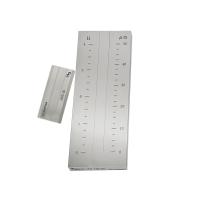
Grindometer Method and Experience for Detecting Stock fineness of grinding water-based paints
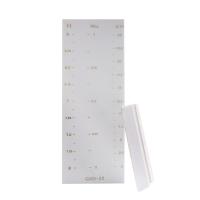
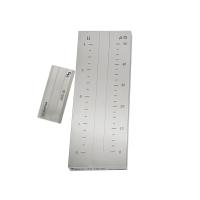
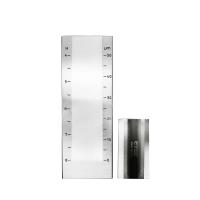
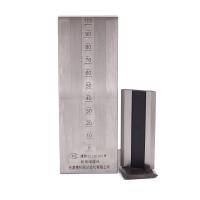
In water-based coating production, grinding fineness is a key indicator that must be controlled. The particle size of pigments and fillers after grinding and dispersion directly affects the smoothness, gloss, coverage, and storage stability of the paint. If the slurry is not thoroughly ground and has many coarse particles, the paint surface is prone to particle and rough surfaces after application, which not only looks unattractive but also leads to rapid settlement and poor scrub resistance. Therefore, the grinding process in the workshop basically relies on scraper precision meters to monitor fineness in real time, assess grinding progress at any time, and adjust equipment processes.
Many people think scraper testing is simple and can read the data with a quick scrape, but most on-site test errors are caused by improper operation. Water-based coatings differ from oil-based paints; moisture evaporates quickly, is prone to crusting, and has noticeable powder settling. The testing details are stricter than those for ordinary coatings.
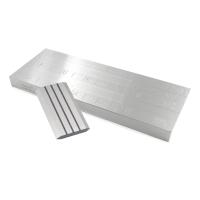
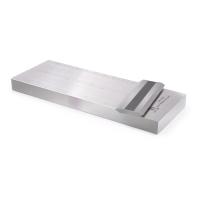
Before testing, preparations must be done thoroughly. Fine scrapers and scrapers must be thoroughly cleaned; there must be no residual dry material or dust in the channels, and no scratches on the board surface. Once the scraper wears out or becomes grooved, all the measured data is inaccurate. The water-based paint slurry to be tested must be thoroughly mixed evenly, because the specific gravity of the filler in water-based systems is relatively high, and after standing, it easily settles at the bottom. The upper layer is thin, the bottom layer is coarse. If you sample directly without mixing evenly, the measured fineness will be completely unrepresentative. When stirring, try to be gentle to avoid adding too many bubbles, as bubbles getting stuck in the channel can obstruct your view and make misjudgments.
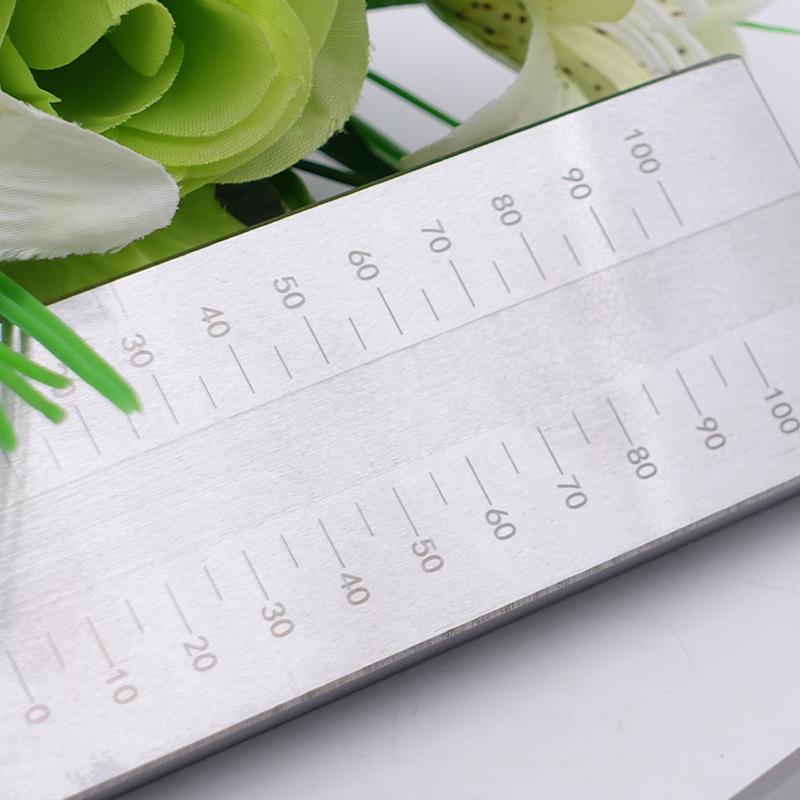
Sampling and scraping are the most critical steps. Take an appropriate amount of evenly mixed slurry and place it at the deepest end of the groove of the meter. The amount of material should cover the entire groove—neither too much nor too little. Then hold the scraper in your hand, with the blade vertically pressed against the blade surface, scraping at a constant speed from deep to shallow ends all at once. The entire process should be smooth and even, with no pauses or reactive scraping. Scraping back and forth will squeeze the slurry and cause secondary dispersion, altering the actual particle state and causing the readings to be inflated and unable to reflect the actual grinding effect.
After scraping, immediately observe the readings; this is a key point in water-based paint testing. Because water evaporates quickly, if it stays on the surface for just a few seconds, it will crease and dry out, changing the particle state and making the readings inaccurate. When observing, look straight at the scraper and follow the grooves. The point where continuous particles or large scratches first appear inside the groove is used as the fineness reading. Scattered small dots can be ignored. This is the industry's unified criterion.
To avoid randomness, it is recommended to repeat the test of the same slurry two to three times, each time retaking and cleaning the scraper. If several readings differ greatly, it can basically be determined that the slurry is unevenly stirred or the scraping force is unstable, requiring re-operation. Do not just select a single data point to finish.
Long-term on-site testing clearly shows that fluctuations in the fineness of water-based coatings have a significant impact on the quality of finished products. If the fineness is too high, it means the powder is more agglomerated and poorly dispersed, resulting in reduced film flatness and gloss, and long-term storage tends to cause layered sedimentation; Although over-grinding looks fine and attractive, it can damage the stability of the slurry system, leading to abnormal viscosity, poor defoaming, and a tendency for bubbling and cracking later on. Therefore, during grinding, random inspections are needed at regular intervals to monitor fineness changes at all times and stabilize production parameters.
Additionally, daily maintenance of the scraper is also very important. After each measurement, it must be immediately cleaned with clean water and a soft cloth to prevent the water-based paint from drying and forming in the grooves. Hard materials that have dried and are hard to clean are hard to clean; forcibly wiping or scraping them can scratch the board surface. Once the scraper channel becomes worn and deformed, the entire equipment is ruined and data can no longer be accurate. During storage, pay attention to dust prevention and protection from bumps to ensure the equipment remains stable.
In summary, the scraper fineness meter is the most practical and frequent testing tool in water-based coating workshops. Although the operation is simple, to ensure data stability and authenticity depends entirely on detailed standards. By strictly following standard methods for sampling, scraping, and reading, the quality of slurry grinding can be accurately controlled, stabilizing the finished product of each batch of water-based paint, and reducing later application defects and quality fluctuations.


- 1Gindometer Test Stock fineness of ground
- 2Grindometer evaluation of pigment particle dispersion in ink
- 3Grindometer evaluation of silver powder dispersion in conductive adhesive
- 4The key role of fineness detection in quality control of inks production process
- 5Grindometer Reading Method and Analysis of Common Error Sources
- 6Grindometer principle and inks fineness of ground detection
- 7Grindometer inspection of zinc powder dispersion in zinc-rich primer
- 8Coating fineness of ground - Fineness gauge
- 9Coating fineness test method and influencing factors