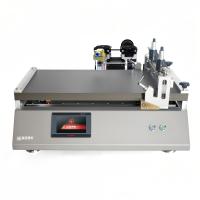
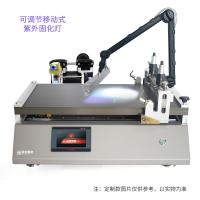
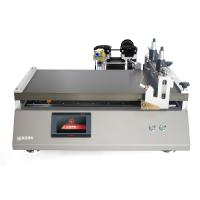
In recent years, hundreds of coating machines have been sold through Nanbeichao Trends, with over 1,000 prototype runs, and 1,000+ coating machine specifications included. It also records no fewer than 200 verbal, WeChat chats, and reviews. In view of this, it is necessary to write a selection experience guide that is as objective as possible (but actually subjective) for users' reference. The reason for saying "actual subjectivity" is that although flatbed coating machines are precision instruments, for some experimental requirements, they do not necessarily require such "precision." This article mainly selects models from the perspective of "precision." Therefore, for users who don't need to be "very sophisticated," it can be overlooked. Indeed, this article seems too "subjective" for these needs.

Industry insiders know that the main reason for choosing flat coating machines is that the wire rod coaters and wet film preparators used for conventional manual coating cannot meet the high-precision coating requirements due to uneven pressure and speed. As material development processes pursue increasing precision, every micron error may become increasingly important. A few years ago, flatbed coating machines on the market were still stuck in the "automatic" field, but in fine areas, they were actually quite rough. Even today, some brands you've never even heard of pop up from time to time. They are extremely cheap, but may not even be as precise as hand-scraped samples. This is somewhat like putting on a false front while selling dog meat.
There are many factors that affect accuracy. Take mechanical vibration as an example: let's not talk about the quality of the motor and track, but just the jitter caused by the initial and final acceleration can cause you to scrape a wide variety of film thicknesses. Instant startup and stopping can make your coating machine shake more violently than your hand scratches. Not to mention that if the coating head design is loose, it would be even harder to imagine. A genuine coating machine should be tuned in these details.

Take coated base plates as an example: the commonly processed aluminum alloy base plates on the market are not processed as a single aluminum block to achieve smoothness, but rather use a "layered" processing method. This method minimizes "compression deformation" and "thermal deformation" caused by later use. Solving this problem is relatively easy, but most factories will only tell you that the smoothness of processing can be at least one filament. Can you propose a requirement of 3μm ± and try it? In an instant, 99% of factories won't even quote you, let alone take orders. Because the processing cost and scrap rate are no longer just a few times higher. This cost issue alone scared off many coating machine manufacturers. Because even if the board problem is solved, problems with the straightness of the film maker, roughness, and mechanical vibration must also be addressed. But once these problems are solved, the costs will rise significantly, and in a market where cost performance is king, the company loses competitiveness.

Do you think solving all the above problems is the end of it? No! Differential errors in adjusting the squeegee thickness are also an unavoidable factor. The price of a micro parted hair is easy to find on the market, with varying prices, and of course, the margins of error are also quite variable. Branded micro parting heads with guaranteed precision may cost four to five or even ten times more than others. This is not an exaggeration at all; just search casually and you'll see. When the mechanical structure can guarantee accuracy, a 5-micron error in your differential head will wipe out all the materials and debugging time you had beforehand.

And that's far from over; the above are just a few scattered points. But have you noticed? All of the above remains at the level of "flatness," which affects coating accuracy. Another angle: what about speed uniformity? What about the uniformity of the heating temperature? I'll save that for another time when I have time.

By now, you should understand the difference between the cost of a high-precision coating machine and a regular coating machine, right? What would have been easy to understand business logic is unfortunately due to the messy specs on the market "inflated": if you mark accuracy ±1%, then I label it the same way; if you mark ±3μm, then I do the same, or even lower. The cost of such violations is too low, causing great confusion and even misleading for customers choosing models. In the field of inspection, this is extremely irresponsible.





- 1The Difference Between Roll-to-Roll Film Applicator and Flat Film Applicator
- 2Lab Film Applicator's Magical Use of Silica Gel on Fiber Cloth
- 3Laboratory Film Applicator on Aluminum Foil substrate preparatory suspension
- 4Beginning of coating performance testing: preparatory precision film
- 5HuiNuo TM3300 Film Applicator Measurement | drawdown Bar & Blade film machine with heating vacuum
Xanthe - 《南北潮商城》
- 6Swirl/spinning Film Applicator Suction Cup Surface Residual Glue Cleaning Skills
- 7The Influence of Aluminum Panel on Film Applicator's Accurate film
AIR - 《南北潮商城》
- 8The Influence of Driving System on Film Applicator's Accurate film
AIR - 《南北潮商城》
- 9Effect of Vacuum chuck Aperture on Flatness of Film Applicator Substrate
AIR - 《南北潮商城》