Effect of Vacuum chuck Aperture on Flatness of Film Applicator Substrate
Vacuum hole function
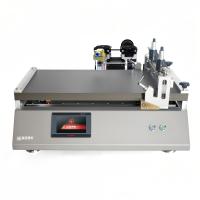
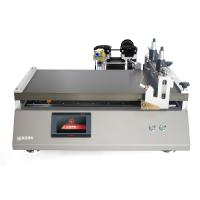
As someone who has dealt with coating machines for a long time, I often encounter users asking about substrate flatness. The reason the coating stage of the coating machine is designed with vacuum holes is fundamentally to adsorb the film. When we lay flexible substrates such as polyester film or aluminum foil on the coating table, without vacuum adsorption, the substrate will warp and wrinkle due to its own stress or airflow disturbances. The vacuum holes use negative pressure to firmly adhere the substrate to the tabletop, providing a flat and rigid support surface so that subsequent scrapers or coating heads can apply coating evenly. It can be said that vacuum adsorption is the first hurdle to ensure coating precision.
Comparison of the two processes
There are mainly two types of internal structures of vacuum coating stations:Honeycomb panelsAndSolid board。 Honeycomb panels are made with honeycomb aluminum or steel cores (most on the market are aluminum), with a surface covered with finely perforated plates, making them less expensive and lightweight. But I've seen many times in actual after-sales service that honeycomb panels tend to deform locally after long-term use, especially when alternating vacuum and heating, where the adhesive layer may fail and the countertop becomes uneven. Solid panels are made by drilling a whole piece of metal (usually aluminum alloy), making them more stable, wear-resistant, and less prone to deformation. If heating is required during the process (such as drying coatings), the advantages of solid boards in thermal conductivity uniformity and long-term flatness become even more apparent. Of course, solid boards are more complex in manufacturing and are priced higher than honeycomb boards. Users need to choose based on their budget and actual usage conditions.
Aperture size affects the area
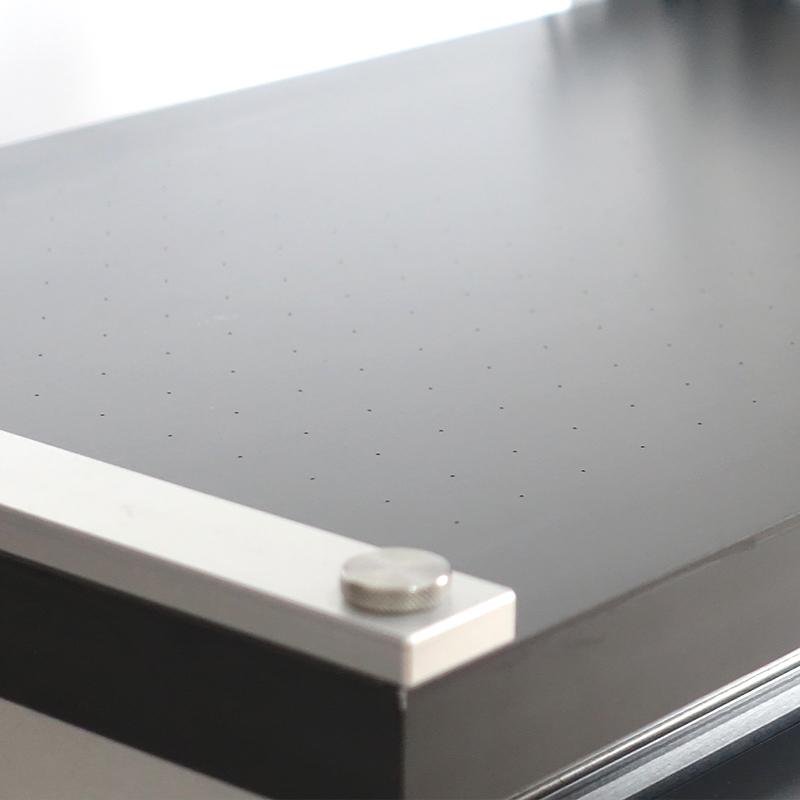
The diameter of a vacuum hole cannot be determined arbitrarily. Most mainstream coating machines on the market have a vacuum aperture of 1.0mm. A few imported devices and niche models use large apertures of 1.2mm or even 2.0mm. In my tests, I found that when the substrate is very thin (such as PET films below 5μm), large-diameter vacuum holes cause local depressions. If vacuum pressure is slightly poorly controlled, the substrate will form a tiny depression at the pore position. During coating, liquid coating accumulates or disappears at these depressions, eventually forming regular spot-like defects after drying, directly affecting the film's optical and mechanical properties. Such defects are unacceptable in optical films or precision coatings.
Comparison of aperture and cost
From a manufacturing perspective, the smaller the vacuum hole and the more holes drilled, the higher the requirements for drill bit precision and table processing capability, naturally increasing costs. But smaller aperture is not necessarily better. Because the holes are too small, if paint or impurities enter the holes, cleaning them becomes very difficult; Moreover, small holes are more easily clogged by fine particles, affecting vacuum uniformity. Conversely, although an oversized aperture can reduce manufacturing costs, it leads to the dents and spots I mentioned earlier, which is not worth the risk. In our experiments, we conducted extensive comparative tests on different pore diameters, ultimately finding that when the pore diameter is 0.8mm, sufficient adhesion uniformity is ensured, while reducing the risk of depression in thin substrates, and the cleaning cycle is reasonable, resulting in the best overall effect.
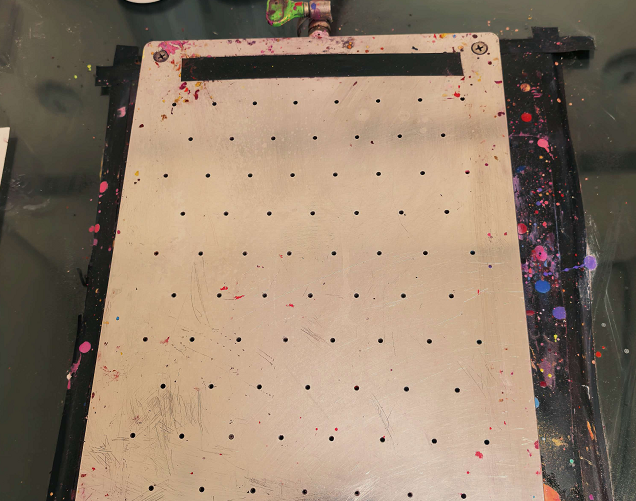
Of course, besides vacuum aperture, the flatness, wear resistance, and corrosion resistance of the coating table also directly affect the quality of the coating film. For example, factors such as the coefficient of thermal expansion, surface hardness, and whether the countertop material has been hardened will become apparent over long-term use. Due to space limitations, we won't discuss this issue here.





- 1Beginning of coating performance testing: preparatory precision film
- 2HuiNuo TM3300 Film Applicator Measurement | drawdown Bar & Blade film machine with heating vacuum
Xanthe - 《南北潮商城》
- 3Swirl/spinning Film Applicator Suction Cup Surface Residual Glue Cleaning Skills
- 4The Influence of Aluminum Panel on Film Applicator's Accurate film
AIR - 《南北潮商城》
- 5The Influence of Driving System on Film Applicator's Accurate film
AIR - 《南北潮商城》
- 6Drawdown Bar & blade Film Applicator Realizes Aluminum Foil Coating Lithium Battery Stock Preparative Electrode Sheet
Xanthe - 《南北潮商城》
- 7Laboratory Moulding roll coating, scratch coating spin coating lame plating how to choose?
Xanthe - 《南北潮商城》
- 8Differences between Film Applicator and Hand-prepared Ultra-thin wet-film
Xanthe - 《南北潮商城》
- 9Drawdown blade Applicators and their differences from bar
AIR - 《南北潮商城》