The Influence of Aluminum Panel on Film Applicator's Accurate film
Introduction
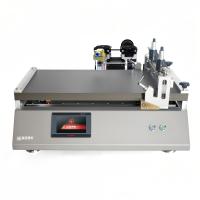
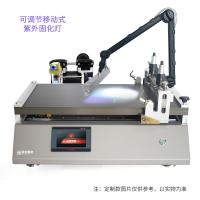
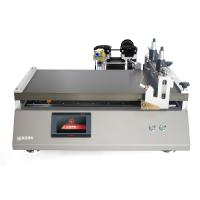
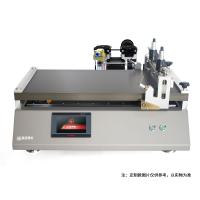
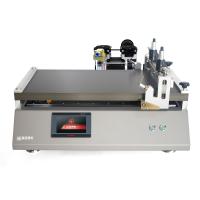
Coating quality can be divided into three mechanical assurance dimensions: the drive system, coating table, and scraping mechanism. The drive system maintains uniform speed, the scraping mechanism determines the initial thickness and shape of the coating, and the coating table provides the base platform to support the substrate. The core functions of the coating station include providing an absolutely flat bearing surface, reliably fixing substrates through vacuum adsorption, and maintaining a constant heating temperature when needed. Today, I will focus mainly on four dimensions of aluminum sheet material handling, processing precision, adsorption design, and thermal stability, comparing a specific solution with common solutions on the market to explain why a seemingly simple aluminum plate can directly affect coating uniformity.
Material pretreatment
Residual stress inside aluminum plates at the time of leaving the factory originates from manufacturing processes such as rolling and cooling. If standard aluminum plates are purchased directly without processing, residual stress will gradually be released during subsequent machining or long-term use, causing slow and continuous deformation of the panel surface. The consequence of this deformation is that the flatness of the coating table decreases day by day, making it impossible to guarantee long-term consistency in coating thickness.
To address this issue, one solution is to use stress-relieved aluminum plates as raw materials. Stress relief treatment eliminates residual internal stress from the material at the source through specific heat treatments or aging processes. After treatment, aluminum panels maintain dimensional stability during processing cycles and subsequent use, and flatness does not significantly degrade over time. This treatment increases material costs and procurement cycles, but for coating processes that require long-term stable precision, this investment is necessary. Therefore, from the very beginning, Huinuo coating machines have been positioned as mid-to-high-end products, designed for precise film production. Each Huinuo coating machine is equipped with stress-relieving solid aluminum plates.

Machining accuracy
The processing flow of aluminum panels determines the flatness level of the final tabletop. The common approach on the market is rough processing (cutting and drilling), followed by direct oxidation treatment, and then assembly and use. The surface flatness of this process is average, with microscopic undulations that are not easily detected to the naked eye. When these fluctuations are applied to the coating process, local changes occur in the gap between the squeegee and the substrate, causing corresponding fluctuations in coating thickness. At the same time, there's a low-end coating machine board lying in my office, and when you touch it, you can clearly feel the bumps and textures.
Another method is to add one more step after oxidation is completePrecision grinding process。 Fine grinding is the precise grinding of the aluminum panel surface, greatly improving surface flatness. This process significantly improves the precision of the coated surface compared to ordinary aluminum sheets, directly eliminating coating thickness fluctuations caused by uneven surfaces. However, the precision grinding process is more challenging. Precision grinding of a single aluminum plate takes about half a day to a day, resulting in low processing efficiency. Once the oxide layer is worn through, the entire aluminum plate is directly scrapped. These factors make the overall cost of the precision grinding process about twice that of ordinary aluminum sheet processing, with cost increases mainly coming from low yield and long working hours.
Adsorption design
Vacuum adsorption is the main method for fixing substrates on coating stations; the pore size and distribution of adsorption holes directly affect the uniformity of the coating film. Common solutions on the market mostly use vacuum holes with larger diameters (usually ≥ 1.0mm diameter). During vacuuming, large-diameter adsorption holes cause obvious local depressions on the back of the substrate, which transfer to the coating surface, forming pits or pits. This effect is even more pronounced for thinner wet membranes or flexible substrates.
By adopting a smaller aperture (0.8mm) adsorption hole design, the single-hole adsorption area can be reduced, thereby lowering the degree of local deformation of the substrate. This significantly reduces the formation of pits on the film surface and improves the appearance and thickness uniformity of the coating film. Although small-diameter machining requires higher drill bit precision and positioning, it is beneficial for improving the quality of the film surface. Since the adsorption pore size was explained in detail in the previous article, I won't go into detail this time.

Thermal stability
Aluminum has a relatively high coefficient of thermal expansion, so when the coating table operates in a heated state, the surface inevitably changes in size. However, these subtle changes are fatal for precise film production. Ordinary aluminum sheets on the market tend to warp after heating, i.e., arch deformation. This deformation causes the coating table surface to lose its flatness, resulting in severe loss of thickness control over the high-temperature coating film. Thermal deformation during heating is an important factor limiting the temperature range of the coating machine.
How can this problem be solved? From a structural design perspective, two measures can be taken. This high-end coating machine like Huinol uses a three-layer composite locking structure, where the lower layer and upper aluminum plate are locked together with screws to form a composite interlayer. This structure increases overall rigidity, constrains the free heat deformation of the single-layer aluminum panel, and significantly suppresses warpage under heated conditions. At the same time, the entire Huinol series (aluminum plate models) also reserve an expansion joint on one side when fixing the aluminum plate, allowing it to stretch freely along the reserved direction during heating, thereby preventing compression deformation caused by limited thermal expansion. These two designs together ensure that aluminum plates maintain high precision at both room temperature and heating conditions, expanding the temperature range of the coating machine.

Surface durability
The surface of the coating table must endure repeated scraping operations and cleaning processes, so its wear resistance and scratch resistance directly affect the long-term precision of the equipment. By combining stress-relief substrates, precision machining, oxidation fine grinding, and structural reinforcement, the final aluminum plate surface hardness, wear resistance, and flatness are all higher than ordinary aluminum sheets on the market. The high-hardness oxide layer is finely polished, offering strong scratch and wear resistance. After long-term use, accuracy degradation slows down, and equipment longevity and repeatability are also more advantageous.
Summary and comparison
| Contrast dimensions | Ordinary aluminum plates | Huinuo coating station | Impact on coating film quality |
|---|---|---|---|
| Material pretreatment | No stress relief treatment | Stress-relief aluminum substrate | Long-term flatness stability |
| Key processes | Coarsely opened → oxidized | Fine grinding → → → oxide | Flatness has been greatly improved |
| Processing is time-consuming | Short (Hourly Level) | Long (single piece can last half a day to a day) | The accuracy gap is obvious |
| Process risk | Low | The oxide layer wears down the material, which means it is scrapped | The main reason for the cost has doubled |
| The adsorption pore size | ≥ 1.0mm (obvious dent) | 0.8mm (significantly reduced pitting) | Appearance and uniformity of the film surface |
| Heat-resistant warping design | None or single-layer structure | Three-layer composite locking + expansion joints | High-temperature coating film accuracy guaranteed |
| Surface durability | Average | Higher than ordinary aluminum plates | Long-term use maintains accuracy |
Conclusion
The aluminum plate on the coating table may seem like a simple component in the coating machine, but it is precisely this component that determines the lower limit of coating quality. Through stress-relief pretreatment, post-oxidation fine grinding, small-diameter adsorption holes, three-layer composite structure for warpage pre-warping, and expansion joint design, a complete precision assurance system is formed. Its cost is about twice that of ordinary aluminum plates, reflecting the direct guarantee of uniform coating sample thickness, which is a hardware hurdle for low-cost coating machines. So, do you still think Huinol film coating machines are expensive?




- 1Beginning of coating performance testing: preparatory precision film
- 2HuiNuo TM3300 Film Applicator Measurement | drawdown Bar & Blade film machine with heating vacuum
Xanthe - 《南北潮商城》
- 3Swirl/spinning Film Applicator Suction Cup Surface Residual Glue Cleaning Skills
- 4The Influence of Driving System on Film Applicator's Accurate film
AIR - 《南北潮商城》
- 5Effect of Vacuum chuck Aperture on Flatness of Film Applicator Substrate
AIR - 《南北潮商城》
- 6Drawdown Bar & blade Film Applicator Realizes Aluminum Foil Coating Lithium Battery Stock Preparative Electrode Sheet
Xanthe - 《南北潮商城》
- 7Laboratory Moulding roll coating, scratch coating spin coating lame plating how to choose?
Xanthe - 《南北潮商城》
- 8Differences between Film Applicator and Hand-prepared Ultra-thin wet-film
Xanthe - 《南北潮商城》
- 9Drawdown blade Applicators and their differences from bar
AIR - 《南北潮商城》
