
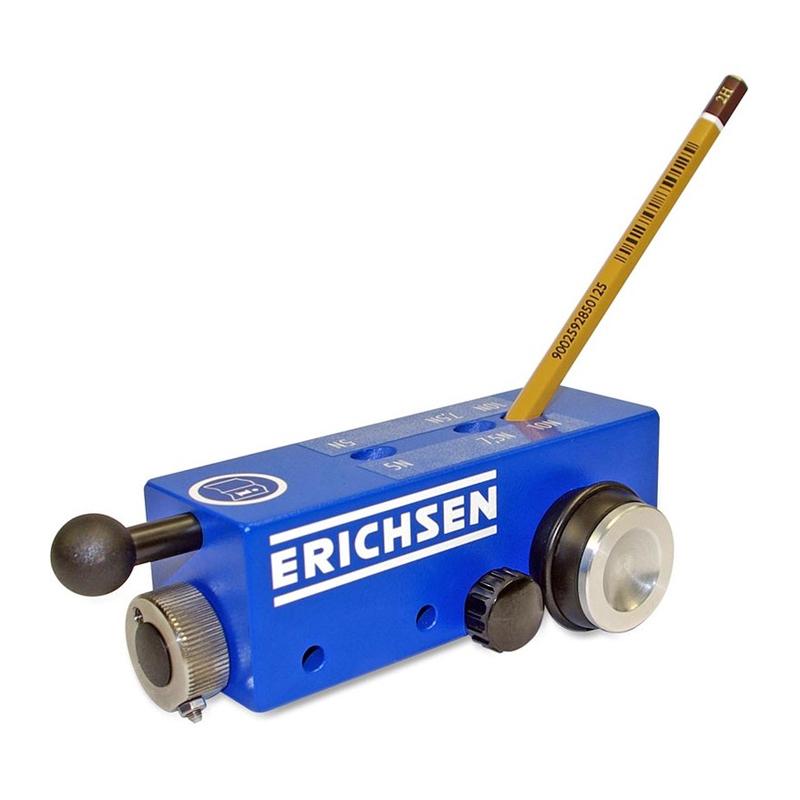
Erichsen293 Pencil Hardness Tester with 6B-9H Hardness pencil
 Erichsen293

-
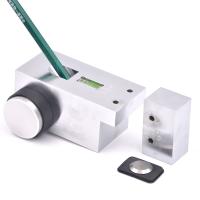 LANDTEK HT-6510P Pencil hardness Tester film Hardness detection$ 133.00SE
 -
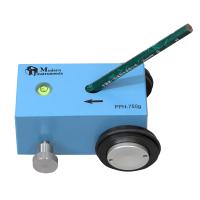 MODERNER PPH-500 Pencil Hardness Tester Weight 500g
 -
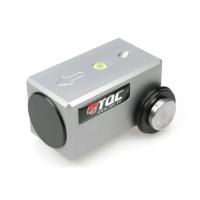 TQC VF2379 500g Pencil Hardness Tester is suitable for single or multi-layer baking paint$ 2252.00SE
 -
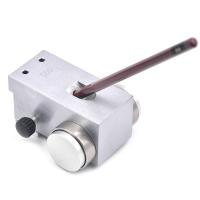 JFL QHQ-A 750g pencil hardness meter$ 151.00SE
 -
 JFL QHQ-A 500g pencil Hardness Tester$ 151.00SE
Erichsen Erichsen293 Pencil Hardness TesterSPEC
Erichsen Erichsen293 Pencil Hardness TesterDetails
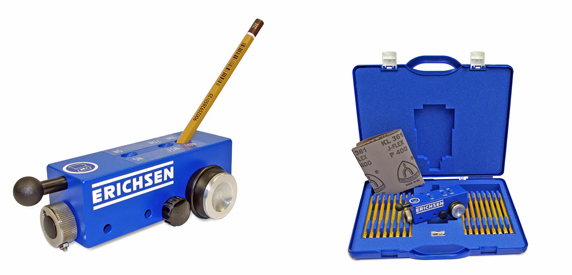
Erichsen Erichsen293 Pencil Hardness TesterPacking list
- SKU
- NB016824
- load
- 5/7.5/10N
- Applicable standard
- ISO 15184、NEN 5350、SNV 37113、SIS 184187、ECCA T4
- Standard pencil
- 6B~9H
Introduction
Erichsen293 pencil scratches belong to one of the scratch hardness testing instruments. This is a simple and quick way to test the hardness of a coating by scratching it on the surface with sharp edges or other rough surfaces. It can also be used in the production process, such as coil coating.
Test principle
Pencils of different hardness grades move on the surface of the paint film with a force of about 7.5±0.1 N at an angle of 450 to the horizontal. The hardness of a pencil is determined by two hardness scales, the softer one will produce a write mark and the other will create a noticeable scratch on the coating.
Design and functionality
The Erichsen293 pencil Hardness Tester makes the test technically Wolff-Wilborn compliant, ensuring that the force and angle remain constant throughout the test. The instrument is simple to operate and excludes pencil pressure from being manipulated. A set of test pencils consists of 17 hardness grades from 6B~9H.
Test Steps
The pencil should be planed with a graphite protrusion of about 5 mm, which can be achieved with a special pencil planer included in the scope of delivery. Hold the pencil vertically and face down against the sandpaper (grain fineness 400) to smooth the graphite core with sharp edges.
Clamp the pencil in the instrument, the pencil protrudes 5mm, and place the instrument on the surface of the sample. Grasp the axle with your thumb and forefinger and push the instrument on the sample at a speed of approximately 10 cm/s.
Choosing the right pencil for hardness is a matter of experimentation. It is advisable to start with a medium-soft pencil or a medium-hard pencil and gradually find the right pencil.
During the test, be careful not to mess up the pencil marks and penetrations. If necessary, use a damp sponge or a soft eraser to wipe off any excess thread marks.
The numbers of both pencils are marked by pencil hardness. The hardness of the pencil, e.g. 2H... 3H means that the 2H pencil can leave a mark on the surface, and the 3H pencil can slightly scratch the paint film.
Meets standards
ISO 15184、NEN 5350、SNV 37113、SIS 184187、ECCA T4。