
TRUIT TR 3301/5 Penetration cup, test area 50cm ²
SE TR 3301 / 5

TRUIT TR 3301 / 5 Penetration cupSPEC
TRUIT TR 3301 / 5 Penetration cupDetails
TRUIT TR 3301 / 5 Penetration cupPacking list

- SKU
- NB043277
- test area
- 50cm²
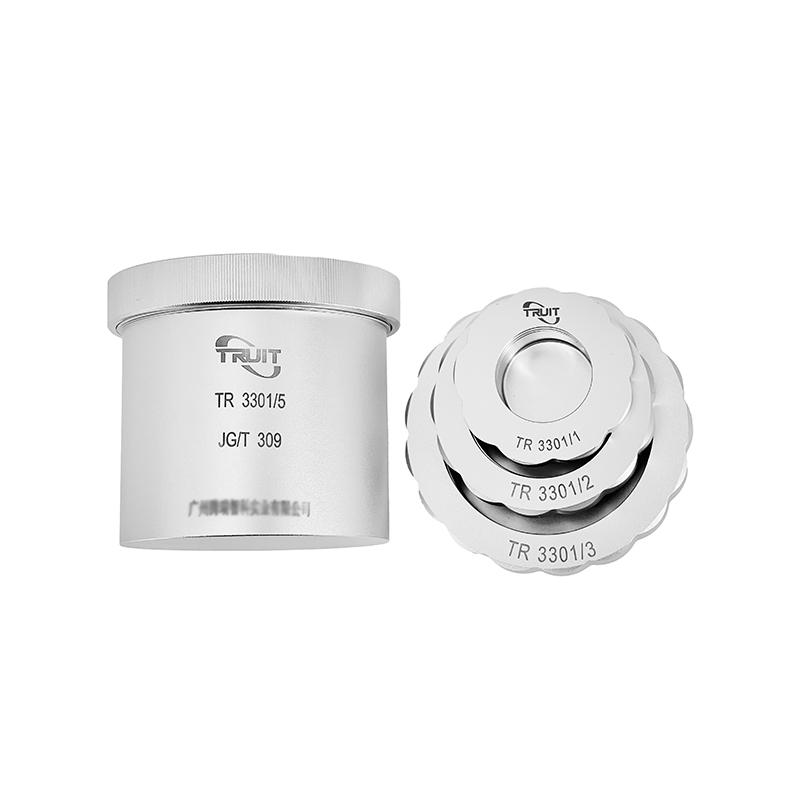
Introduction
A permeation cup is an experimental tool used to measure the permeation properties of materials. It usually consists of a transparent cup-shaped container with permeable holes in the bottom.
Permeation cups are commonly used to measure the permeability of a liquid, gas, or other solute through a material. It can be used to evaluate the permeability, air permeability or filtration performance of materials, etc. For example, in the field of building materials, permeation cups can be used to measure the moisture permeability of materials such as concrete and bricks. In agriculture, percolation cups are used to measure the water infiltration capacity of soil.
When using a permeation cup, put the material to be tested into the cup and inject a certain pressure or immersion liquid. The permeation performance of a material can be assessed by measuring the rate of penetration of the liquid or the change in level by observing the penetration of the liquid over time.
This permeation cup is designed in accordance with GB/T 17146, JG/T 309, JG/T 485, ISO 7783, ASTM D 1653 and other standards. Permeability performance, in a specific time, the water vapor through the paint film is measured by the decrease or increase of the weight of the contents of the cup. The same method can be used to determine the permeability of paint films to various other substrates in the gaseous state.
Features
This permeation cup is suitable for both self-supporting and non-self-supporting coatings. Generally, the moisture vapor permeability is concerned in high-humidity environments, so the wet cup method is the main method to measure the moisture vapor permeability of coatings. If there is no objection to other aspects, the toast method can also be used in different procedures or circumstances
Self-supporting coating: single-layer coating film, not spread on any substrate, can be tested directly
Non-self-supporting layer: refers to the need to use some permeable materials to lay underneath for testing