Micro Vibration Viscometer
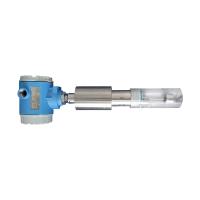
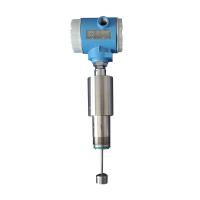
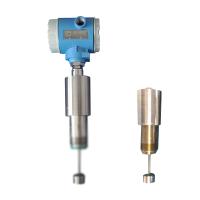
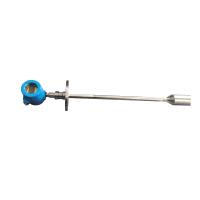
The micro-vibration Viscometer is an instrument used to measure the rheological properties of liquids. By injecting the sample into the instrument, the vibration and swirl/spin motion of the instrument are used to measure the damping Response of the sample to obtain the viscosity value of the liquid. This instrument is widely used in chemistry, food, medicine and other fields, providing key data for the study and control of liquid rheological properties.
Micro Vibration Viscometer Testing instrument
-
-
-
 $ 84.00
 -
 $ 84.00




Micro Vibration Viscometer is used to measure the viscosity of liquids and is suitable for chemical, food, pharmaceutical and other fields. The selection points include measurement range, accuracy, Measurement mode, etc., to ensure that the selected micro Vibration Viscometer can provide accurate, repeatability viscosity data, support process control and mass management.
Micro Vibration Viscometer Application Articles
Coating viscosity determination by Zain Viscometer method
Coating viscosity measurement by Zain Viscometer method is introduced in this paper. The instrument has simple structure, operation needs to pay attention to liquid state and temperature, and can be corrected by temperature Linear dispersion and standard oil.
Rotational viscometer - principle, classification, application and calibrating
This paper mainly refers to the knowledge of many parties to organize and summarize the working principle, type, different application industries and error calibrating of rotational viscometers.
Determination of coating viscosity Flow Cup
In this paper, the construction of Tu-4 Viscometer and ISO flow cup, the factors affecting the accuracy of test and the calibration method are deeply analyzed.
Application of NDJ-8S digital Rotational Viscometer in viscosity measurement of cosmetic raw materials
The NDJ-8S digital rotational viscometer is a highly efficient instrument designed for viscosity measurement of cosmetic raw materials.
NDJ-5S digital Rotational Viscometer accurate measurement of natural oil viscosity
The NDJ-5S digital rotational viscometer is a high performance instrument designed for viscosity measurement of natural oils and other fluids
Application of RVDV-1H Viscometer in epoxy resin viscosity measurement
The RVDV-1H Viscometer is used to measure epoxy resin viscosity with wide range, high-precision and precise temperature control. Linear dispersion can be monitored throughout the viscosity-temperature process.
Application of NDJ-5S Viscometer in Pesticide Suspension
This paper discusses the application of NDJ-5S Viscometer in viscosity measurement of pesticide suspension, emphasizing its optimization of formulation and quality control.
Viscosity of polypropylene (PP) amide measured by NDJ Viscometer
This article is aimed at testing the viscosity of polypropylene (PP) amide. Can NDJ Viscometer be used to measure the viscosity of polypropylene (PP) amide?
Application of SNB-1 + L0 digital swirl/spin Viscometer in Oil Industry
This paper introduces the SNB-1 + L0 digital display swirl/spin Viscometer and its application in the oil industry. SNB-1 + L0 has the advantages of efficient and fast measurement, adapting to low viscosity samples, easy operation and high Repeatability.
Application of HBDV-1H swirl/spin High Temperature Viscometer in Viscosity Determination of Plastic Particles
The HBDV-1H swirl/spin High Temperature Viscometer offers significant advantages in the field of plastic particle viscosity determination with its high-precision, wide-range measurement and intelligent operation functions. Measurement accuracy of +/- 1% FS ensures the accuracy of test results.
Rotational viscometer selection guide: How to choose the right viscosity equipment for you?
This article details the selection recommendations and Precautions for use of rotational viscometers, covering application scenarios such as laboratory, industrial production and field testing, emphasizing the importance of equipment calibrating and maintenance, helping users choose the right equipment and ensure Measurement accuracy.
Coating viscosity determination and application of Flow Cup method
The flow cup method is a simple and practical test method commonly used for Coating viscosity determination. Coating-4 Viscometer and ISO flow cup are common flow cup models suitable for different types of Coating. By measuring the time the liquid flows out of the cup, the kinematic viscosity of the Coating can be calculated in combination with the standard formula, and then its flow performance can be evaluated.
Online Viscometer Selection Guide
This article introduces the selection idea of online Viscometer in detail, including liquid characteristic analysis, Installation method selection, data output requirements and environmental conditions, etc., to help engineers choose the right viscosity measurement equipment in different industrial applications to optimize process control and mass monitoring.
Principle, type and accuracy control of Rotational Viscometer
This paper deeply analyzes the working principle of rotational viscometer and its application in different industrial fields, introduces the main types and their selection basis, and discusses the calibration method and error control strategy of Viscometer in detail to help users optimize the accuracy and Reliability of viscosity measurement.
Which Viscometer to Choose for Licorice Extract Viscosity Testing? How to Test?
This article will discuss the technical methods of measuring the viscosity of licorice extract, which Viscometer is suitable for testing, and what specific applications are there.
Micro Vibration Viscometer Relevant standards
ActiveTAPPI T 230
Viscosity of pulp (capillary viscometer method)
ActiveASTM E2975-23
Standard Test Method for Calibration or Calibration Verification of Concentric Cylinder Rotational Viscometers
ActiveISO TS 289-4
Rubber, unvulcanized - Determinations using a shearing-disc viscometer - Part 4: Determination of the Mooney stress-relaxation rate
ActiveISO 19613
Fine ceramics (advanced ceramics, advanced technical ceramics) - Measurement of viscosity of ceramic slurry by use of a rotational viscometer
ActiveISO 2555
Plastics - Resins in the liquid state or as emulsions or dispersions - Determination of apparent viscosity using a single cylinder type rotational viscometer method
ActiveISO 12058-1
Plastics - Determination of viscosity using a falling-ball viscometer - Part 1: Inclined-tube method
ActiveISO 1628-2
Plastics — Determination of the viscosity of polymers in dilute solution using capillary viscometers — Part 2: Poly(vinyl chloride) resins
ActiveISO 23581
Petroleum products and related products — Determination of kinematic viscosity — Method by Stabinger type viscometer
ActiveISO 1628-1
Plastics — Determination of the viscosity of polymers in dilute solution using capillary viscometers — Part 1: General principles
ActiveASTM D5478-13(2022)
Standard Test Methods for Viscosity of Materials by a Falling Needle Viscometer
ActiveASTM D562-10(2023)
Standard Test Method for Consistency of Paints Measuring Krebs Unit (KU) Viscosity Using a Stormer-Type Viscometer
ActiveASTM D5478-2013(2018)
Standard Test Methods for Viscosity of Materials by a Falling Needle Viscometer
ActiveASTM D4287-2000(2019)
Standard Test Method for High-Shear Viscosity Using a Cone/Plate Viscometer
ActiveDB 13/T 5026.1-2019
Graphene conductive pastes - Determination of physical properties - Part 1: Determination of paste viscosity - Rotational viscometer method
ActiveASTM D2171/D2171M-2018
Standard Test Method for Viscosity of Asphalts by Vacuum Capillary Viscometer
Micro Vibration Viscometer Instrument terminology
Micro Vibration Viscometer Testing FAQ
- Can rotational viscometers measure multiple flow patterns?
- Is Viscometer torque related to Rotation speed?
- Can rotational viscometer measure polyvinyl alcohol?
- What is the principle of Viscometer?
- What are the factors that affect the determination of the Viscometer?
- What are the common faults of Stormer Viscometer?
- What are the differences between a Viscometer and a six-speed Viscometer?
- Can the Viscometer measure ethanol?
- What are the reasons why the Viscometer does not swing vertically?
- How to calibrate kinematic viscosity meter?