Why measurement Film thickness? How measurement?

The wet Film Thickness Gauge can be used for almost all coating products, but it is not suitable for inorganic zinc silicate coatings because the solvent evaporates too quickly. At the same time, for physical coatings, such as weathered rubber coatings, it is not suitable for the measurement of the second coat, because it will redissolve the previous coat. (Related instrument: wet film analyzer)
The correct film thickness will be stated in the technical data sheet. Of course, slight differences are allowed. If we only remember or only have dry film thickness (DFT) and volume solid content (%VS) in the technical specification, we can also calculate its wet film thickness.
Adding a certain amount of diluent to thin the paint (% Thinning), the wet film thickness will change significantly. When calculating, the amount of dilution must be considered to calculate the correct wet film thickness.

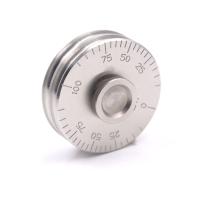
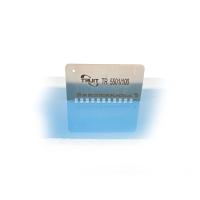
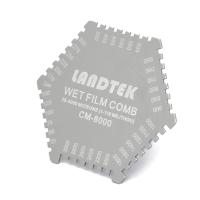
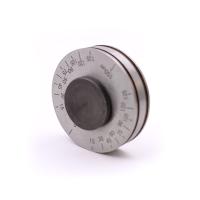
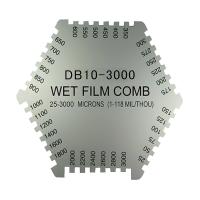
The comb-shaped wet Film Thickness Gauge (as shown in Figure 7-5) is usually made of stainless steel or aluminum alloy, and also made of plastic materials, but its service life is not very long. When measuring, place the wet Film Thickness Gauge stably in the wet film on the surface of the substrate, and then take out the Thickness Gauge to check which of its comb teeth touches the wet film the shortest. The thickness of the wet film is between the last tooth that touches and does not touch the wet film, and we take the thickness indicated by the tooth that touches the wet film. Take at least two to three measurements to obtain a more representative reading. After use, the wet Film Thickness Gauge should be cleaned very well immediately.


- 1Paint transparency detection method
- 2Principle, Characteristics and Application of Wet Film Comb
- 3Determination method of dry and wet paint film thickness
- 4Wet film thickness measurement tool and applicable method
- 5Wet film thickness measurement and coating mass control
- 6How to detect the thickness of steel structure paint?
- 7Coating rheology and thixotropic
- 8How to convert Dry-Film and wet film thickness of concrete structure paintings?
- 9Coating unit talk
-
![MODERNER YQH-100 Wet Film Thickness Wheel Gauge 0~100μm/5μm]()
-
![TRUIT TR 5501/100 Wet Film Comb Gauge 10~100μm]()
-
![Germany Erichsen 234 R/IV wet-film thickness measuring wheel Wet Film Wheel Gauge]()
-
![LANDTEK CM8000 hexagonal wet-film gauge wet-film card, for WFT on the surface of a new paint layer, stainless steel material]()
-
![JINGKELIAN QUL WFT gauge 0~500μm]() JINGKELIAN QUL WFT gauge 0~500μm$ 123.00
JINGKELIAN QUL WFT gauge 0~500μm$ 123.00 -
![Defelsko PosiTest PC Non-Contact Uncured Powder Thickness Gauge]()