Talking about the cross-cut test of ISO 2409 Paints and varnishes
ISO2409 is a standard test method for evaluating the adhesion of paint and varnish coatings to substrates. This test method, also known as a cross-cut test or cross-hatch test, involves making a series of cuts through the coating and assessing the extent to which the coating has been removed or delaminated from the substrate.
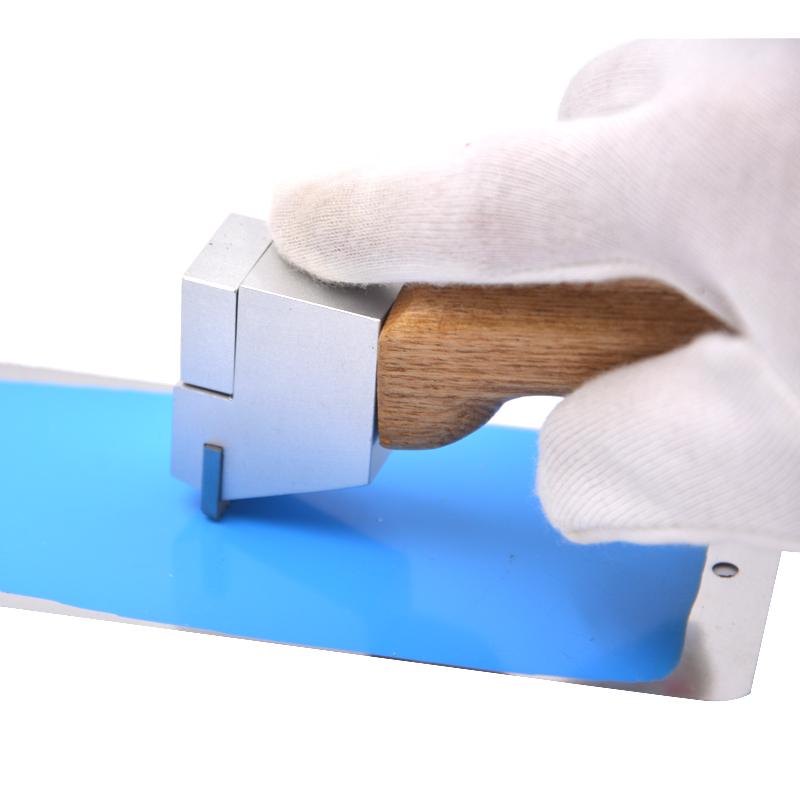
Below is the step-by-step procedure for conducting an ISO 2409 test:
Prepare the test substrate: The substrate should be clean and free of any surface contamination such as oil, grease or dust. The substrate should also be dry and at room temperature.
Prepare the coating: Apply the coating to the substrate according to the manufacturer's instructions. The coating shall be allowed to dry and cure for the specified time.
Prepare the cutting tool: The cutting tool should consist of a series of parallel blades spaced at a distance, usually 1 mm or 2 mm apart.
Cross-cut: Using the cross-cut tool, cut the coating at a 90-degree angle. Then, make a second series of cuts perpendicular to the first series to create a lattice pattern.
Remove any loose material: Use a soft brush or air stream to remove any loose material from the wound.
Evaluate Results: Check the lattice pattern for coating removal or delamination. The test is usually rated on a scale from 0 to 5, with 0 indicating no coating removal and 5 indicating complete coating removal.
The ISO 2409 test method is commonly used in the paint and coatings industry to evaluate the adhesion of coatings to a variety of substrates, including metals, plastics and wood. It is a simple and reliable method of assessing coating adhesion and is often included in coating codes and standards.
- 1Film adhesion detection method and its applicability analysis
- 2Purpose, method, principle and operation points of coating adhesion test
- 3Working principle and application of UV coating Cupping testing device
- 4Principle and Application Analysis of Film Adhesion Tester
- 5Optical inspection device Anti-reflection film adhesion Measuring method
- 6Automatic scratch test to evaluate film strength, hardness, adhesion
- 7Comparison of film adhesion determination methods
- 8Determination of film adhesion
- 9Paint film adhesion and test method thereof