Purpose, method, principle and operation points of coating adhesion test
Coating adhesion is a measure of the ability of a coating to bond with the surface of the coating or with each other. Good adhesion is essential for the protective effect of the coating. Even if the coating product performs well in terms of Miscellaneous performance, if its adhesion is not good, it may lead to premature peeling of the coating during transportation or use, thus affecting the protective effect. The quality of coating adhesion mainly depends on the bonding force between the coating and the surface of the coated object and the construction mass of the painting.
Key factors affecting coating adhesion
Coating adhesion is affected by the following key factors:
1. The bonding force between the coating and the coated surface is the main factor determining the adhesion.
2, painting construction mass, especially the surface preparation mass, including the removal of oil, rust, oxidation skin and Miscellaneous impurities.
3, different substrates, coatings on steel adhesion is usually better than aluminum alloy, stainless steel and galvanized workpiece adhesion.
The bonding between the coating and the surface of the coated object can be mainly divided into three types: chemical bonding, mechanical bonding and polar bonding. These bonding methods are usually two or three bonding methods that work at the same time. Chemical bonding occurs when the coating and the metal surface, that is, some components in the coating react chemically with the metal surface. Typical examples are the bonding of phosphating undercoating and chromate undercoating to the metal surface. Mechanical bonding is related to the surface roughness of the substrate. A rough surface will cause the contact area between the coating and the object to be coated to increase, thereby enhancing adhesion. Polar bonding is caused by the combination of polar groups (such as hydroxyl or carboxyl groups) of the polymer in the film and the polar groups on the surface of the coated object.
Method of testing coating adhesion
1. Circle-drawing method
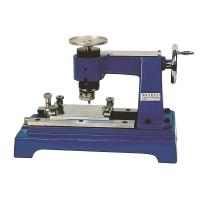
Circle-drawing method evaluates the adhesion of coatings by circling. The principle is to use the stylus as the needle, the sample coating faces up, fixed on the test platform of the instrument, so that the tip of the stylus touches the coating, and through the transmission mechanism, the needle tip draws a circle of a certain diameter on the coating at a constant speed.

Using the circle-drawing method Adhesion Tester, the sample coating is fixed on the test platform facing upwards. Make the tip of the stylus contact the coating. Through the transmission mechanism, draw a circle of a certain diameter at a uniform speed. Check and grade the coating on the scratch. For more accurate test results, it is recommended to choose an electric drive adhesion Tester to reduce operating errors.
2. Cross-cut method
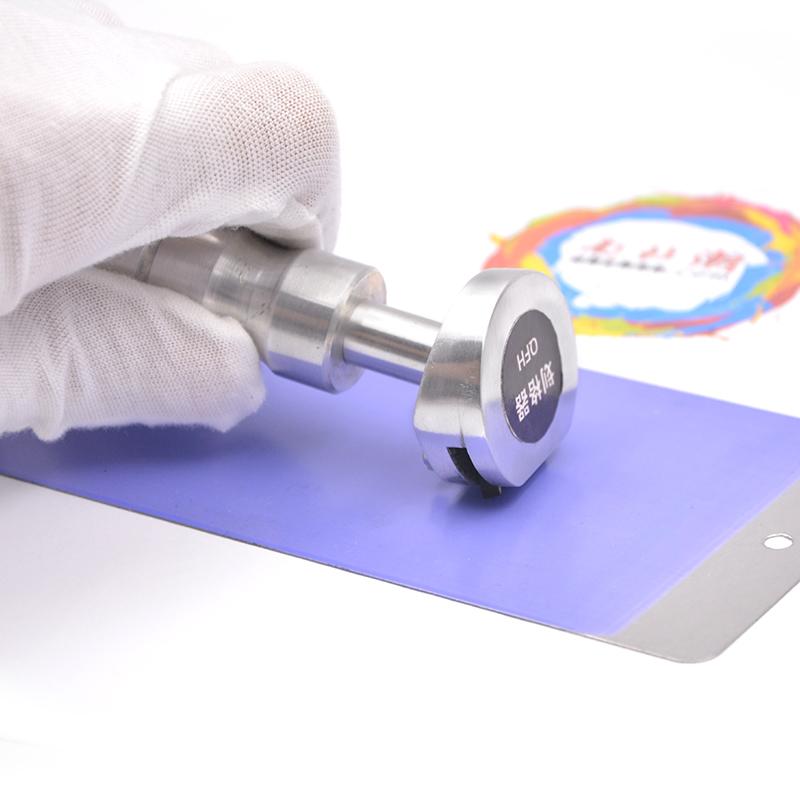
The cross-cut method is the mainstream adhesion evaluation method, which mainly evaluates the adhesion of coatings in different directions. Cut the lattice on the coating manually or mechanically to evaluate the damage of the coating. You can use the Cross Hatch Cutter to cut 6 or 11 parallel and equally spaced cuts on the test strip coating. Then cut vertically with the same number and spacing of cuts as the former. When cutting, the force should be uniform and the speed should be smooth and free of vibration.
3. Adhesive tape method
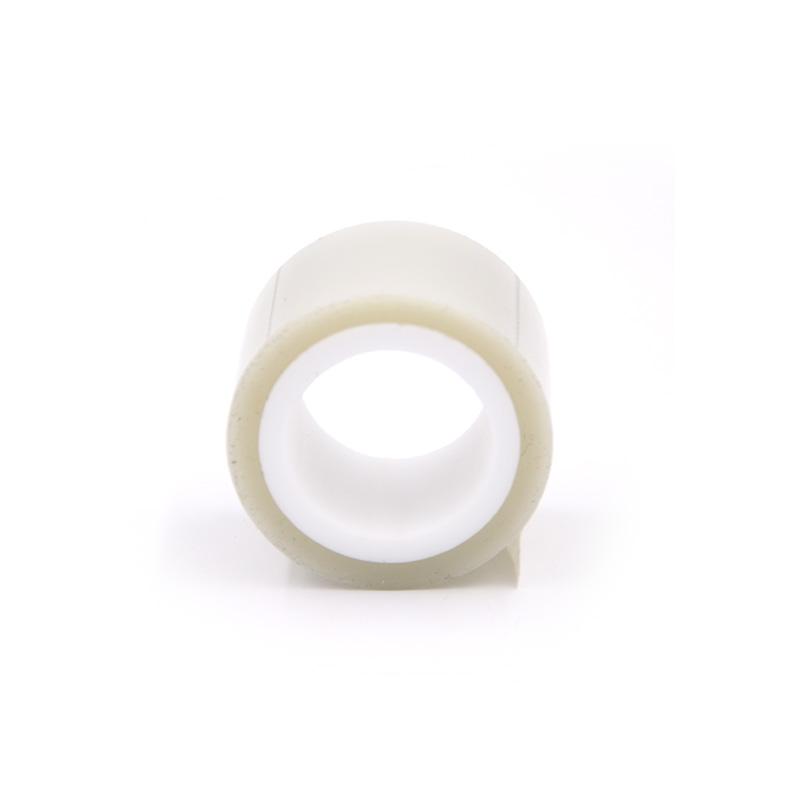
The adhesive tape method evaluates the adhesion of the coating by observing its adhesion state after stripping the tape. Paste the tape on the coating with the incision, and then disbonding the tape to observe the adhesion state of the coating. 25 or 100 squares through the coating to the substrate are drawn on the sample. Paste the scotch tape with a width of 18mm or 24mm, and the paste length is about 50mm. Tear the tape off quickly (do not pull it suddenly). Tensile test using a tensile machine Tape method Determination of coating adhesion According to the difference in the form of its incision, it is usually divided into two types: orthogonal incision and "X" incision.
4. Pull-off method
The pull-off adhesion method evaluates the adhesion of the coating. The scraper is attached to the painted test plate, and the load on the scraper is gradually increased until the coating is peeling from the substrate surface. Usually a pull-off adhesion Tester (usually automatic and manual) is used, the spindle is placed on the painted test plate, AB glue is used to ensure that the spindle and paint surface are firmly adhered, and the puller load is adjusted manually or automatically until the coating and substrate peeling. This method can better quantify the evaluation of coating adhesion than the Miscellaneous method. Although the cost is higher than the cross-cut method, the test data is also more convincing.
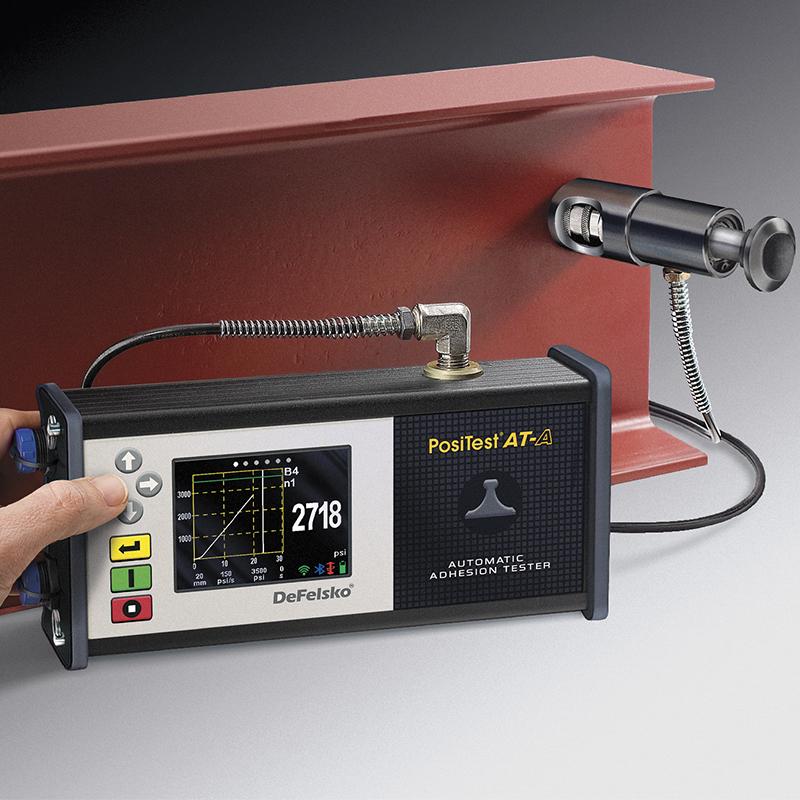
Coating adhesion is an important factor affecting the protective effect of coatings. The adhesion of coatings can be accurately evaluated by testing methods such as circle-drawing method, cross-cut method, tape method and pull-off method. Choosing appropriate test methods and instruments and operating them correctly is the key to ensure the accuracy of coating adhesion test. In order to obtain accurate and reliable test results, it is recommended to carefully select and operate suitable test methods and instruments when conducting coating adhesion tests to ensure that the mass and performance of coatings are effectively guaranteed.
- 1Film adhesion detection method and its applicability analysis
- 2Working principle and application of UV coating Cupping testing device
- 3Principle and Application Analysis of Film Adhesion Tester
- 4Optical inspection device Anti-reflection film adhesion Measuring method
- 5Automatic scratch test to evaluate film strength, hardness, adhesion
- 6Comparison of film adhesion determination methods
- 7Determination of film adhesion
- 8Paint film adhesion and test method thereof
- 9Significance of inclined plane flowability test for powder coatings