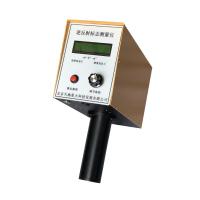
Full analysis of inverse coefficient Measurement Instrument: types, application scenarios and scientific selection guide
1. The type division logic of the reverse coefficient measuring instrument
The classification of inverse coefficient measuring instruments is usually based on two dimensions: the characteristics of the measurement object and the requirements of environmental adaptability, and different types of equipment have their own emphasis on functional design.
1. Classification by measurement object: Accurate matching of material properties
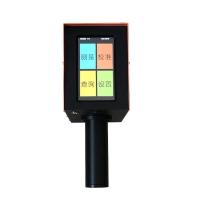
• Special type for road markings: Specially designed for road markings, the core measurement parameter is the retroreflection coefficient R' (unit: mcd·lx⁻¹·m⁻²), which strictly follows the optical reflection characteristics of road markings. This type of equipment needs to simulate the specific angle of incidence (such as 15°, 30°) and observation angle (usually 0.2°~1°) of the vehicle's headlights to ensure that the detection results meet the road night visibility standards.
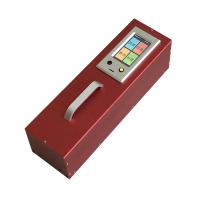
• Fabric reflective material type: developed for reflective fabrics (such as reflective clothing, reflective vests, and reflective films for traffic signs), focusing on adapting to the flexible materials and multi-layer structure reflection characteristics of fabrics. For example, when testing reflective clothing, the composite reflection effect of fabrics and reflective strips needs to be considered, and the measurement results directly affect the safety level certification of personal protective equipment.
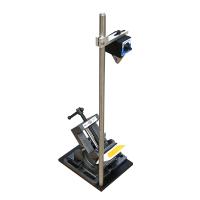
• Comprehensive sign detection type: covering flat or three-dimensional reflective signs such as traffic signs and vehicle rear sign boards, and the reflection uniformity of different sizes of signs needs to be taken into account when measuring, which is suitable for the overall evaluation of the reflective performance of signs in traffic management.
2. Classification by environmental adaptability: differentiated needs of the laboratory and the field
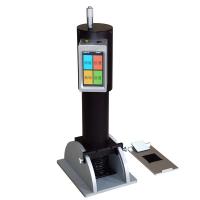
• Laboratory precision type: Emphasizing high precision and environmental control, usually equipped with constant temperature and Humidity Chambers and stable light source systems, suitable for the research and development stage of reflective materials (such as testing of new reflective film formulas) or factory quality control of manufacturers. These devices have strict requirements for the measurement environment (e.g., temperature 20±2°C, humidity 40%~60%) to ensure data repeatability.
• On-site portable: with lightweight and fast detection as the core, it adopts a handheld design or movable bracket to adapt to complex scenarios such as field construction (such as road marking acceptance) and emergency accident sites (such as temporary reflective sign inspection). The equipment needs to be dustproof and shockproof, and can work stably in a wide temperature range of -10°C~40°C.

2. Typical application scenarios: the whole chain coverage from transportation to personal protection
The value of the reverse coefficient meter is reflected in the practical needs of multiple industries, and its application is directly related to night visibility safety and material performance verification.
1. Transportation: Ensuring the "Night Language" of Roads and Vehicles
• Road construction and maintenance: The construction party uses the road marking measuring instrument to detect the retroreflection coefficient of the new marking in real time to ensure that the reflection effect under different conditions such as rainy nights and dry conditions meets GB/T 16311 and other standards; The maintenance department regularly inspects the aging markings and replaces the over-limit markings with reduced reflective performance in a timely manner to reduce the risk of accidents at night.
• Traffic sign detection: Sign measuring instruments are used to verify the reflective film performance of signs and warning signs, especially in complex road conditions such as highways and mountainous areas, where highly reflective signs can effectively shorten driver recognition time and reduce misoperation.
• Vehicle safety protection: The reverse reflection efficiency of the body reflective sticker and reflective markers is tested by the fabric measuring instrument to ensure that trucks, construction vehicles, etc. are clearly visible when illuminated by high beams at night to avoid rear-end collisions.
2. Security Protection: The "Invisible Shield" for Individuals and Occupations
• Occupational protective clothing: The production of professional reflective clothing such as construction workers and traffic police needs to be measured by measuring instruments to ensure that it meets the safety level of GB 20653 and other standards (such as high visibility warning clothing requires minimum reflection brightness at a specific angle).
• Student safety protection: In the detection of reflective school uniforms for primary and secondary school students, the measuring instrument verifies its reflection effect under vehicle lights, helping students to be more easily detected by drivers in low-visibility environments such as dusk and foggy days.
3. Reflective material production field: the cornerstone of quality from R&D to mass production
• Quality control link: The manufacturer ensures that the retroreflective coefficient of each batch of reflective film and reflective coating fluctuates within the standard range (such as 0~3500 cd·lx⁻¹·m⁻²) through sampling and testing, so as to avoid customer complaints caused by batch differences.
• R&D optimization support: The scientific research team uses measuring instruments to compare the reflective properties of different formulations (such as bead structures and resin substrates) to provide data support for the development of new products such as reflective materials and highly weather-resistant reflective films.
3. Scientific selection guide: a balancing strategy for the five core elements
The selection of an adapted reverse coefficient measuring instrument should comprehensively consider the following key factors to avoid affecting the detection efficiency due to insufficient equipment performance or functional redundancy.
1. Clarify the core requirements: the dual matching of objects and environments
• Priority of measurement objects: If the main inspection of road markings, it is necessary to select special equipment that supports multi-scene measurement on dry/wet/rainy nights (such as models that meet the GB/T 16311 - 2024 standard); If the focus is on fabric reflective clothing, it is necessary to pay attention to the adaptability of the equipment to flexible materials (e.g., compatibility between contact and non-contact measurements).
• Environmental Adaptability Requirements: Laboratory testing should focus on high-precision instruments (e.g., equipment with angular resolution of 0.01°), while on-site testing should prioritize portability (weight <3kg), dust and water resistance (e.g., IP65), and quick start function (calibration within 3 minutes).
2. Key indicators of technical parameters
• Measurement accuracy and range: high-precision equipment (error ≤±2%) is suitable for standard certification testing, and equipment with an accuracy ± 5% can be selected for conventional industrial testing; The measurement range should cover the retroreflection coefficient range of the target material (e.g., the road marking is usually 50~3000 cd·lx⁻¹·m⁻²).
• Angle setting compliance: Different standards have clear regulations on observation angles (such as 0.2°, 0.5°) and angles of incidence (such as -4°, 15°, 30°), and the selection of equipment should ensure that the angle adjustment function is consistent with GB/T 18833 (reflective film), GB 20653 (reflective clothing) and other standards.
• Stability and repeatability: Equipment with a repeatability error ≤ 2% can ensure the consistency of multiple measurement results, while long-term stability (such as 8 hours of continuous operation without drift) will affect the durability of the equipment.
3. Balance of portability and durability
• Portable requirements: For frequent on-site testing, you need to choose handheld or folding stand equipment (volume ≤ 20×15×8cm), and the recommended weight is <2.5kg. If you only need to test in a fixed place, the extended functions of desktop devices (such as automatic data storage, Bluetooth transmission) are more advantageous.
• Durable design: Outdoor operations focus on the protective performance of the equipment (e.g., shockproof rubber housing, waterproof buttons), while lab equipment can focus on ease of operation (e.g., touchscreen interface, automatic angle calibration).
epilogue
The diversity of types and wide application of the inverse coefficient measuring instrument determine that its selection needs to be closely combined with the core requirements of specific scenarios. From road safety marking detection to reflective clothing verification for personal protection, from laboratory research and development to on-site rapid screening, scientific selection of equipment can not only improve detection efficiency, but also provide reliable technical support for night visibility safety. When selecting a model, practitioners should comprehensively evaluate the five dimensions of measurement objects, environmental conditions, technical parameters, portability requirements and service guarantee, and finally achieve a suitable match of "equipment performance-usage scenario-cost-effectiveness".