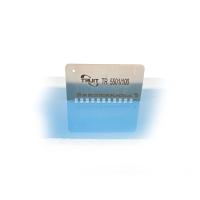
Thickness Wheel for thickness of wet film measurement
wet film thickness
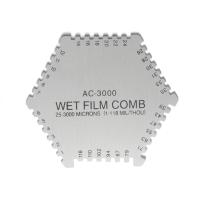
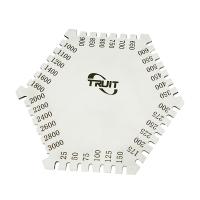
In the detection of paint and coating film, coating film thickness is a very important control item content. In the process of coating film construction, due to the uneven thickness of the paint film after coating or the thickness not meeting the specified requirements, it will have a significant impact on the performance of the coating. This method is applicable to the determination of wet film thickness, which needs to be carried out immediately after the paint film is prepared to avoid shrinkage of the paint film due to the evaporation of volatile solvents. At present, there are three types of wet Film Thickness Gauges commonly used: wheel gauge, comb gauge and Pfund wet film gauge. This article describes the method and steps of using the wheel gauge.
Scope and description
This method is suitable for the measurement of wet film thickness on laboratory test panels or on freshly painted surfaces.
Instruments and Materials
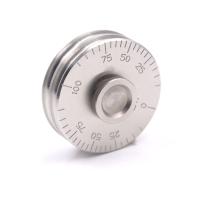
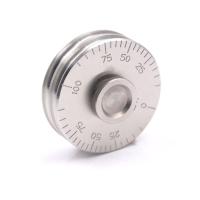
Wheel gauge: It consists of three equally spaced wheels coaxially, the middle one is slightly smaller than the outer wheel, and is eccentric with a height difference. When the instrument rolls on the wet film, the thickness of the wet film can be read from the position where the edge of the middle wheel just touches the surface of the wet film, corresponding to the scale on the outer wheel, as shown in the figure below.

test methods
(1) During the test, the wheel gauge should be placed vertically on the surface of the paint film, so that the maximum scale of the two outer wheels is in contact with the substrate, and the wheel gauge cannot shake left and right, otherwise, the measured value will have errors.
(2) Roll the wheel 180° along the surface and check where the middle rim first contacts the wet film surface. The calibrated scale will indicate the wet film thickness at this point.
Note: When the wheel gauge rolls on the coating surface, it is better to start from the place with the largest gap, so that the wet film is not pushed and squeezed, and the measured value is more accurate.
The result shows
Take at least two more readings in the same manner at different locations to obtain a representative result, expressed in μm, over the painted range.
Reference standard
National standard GB/T 13452.2 "Determination of paint film thickness of paints and varnishes".
- 1Determination method of dry and wet paint film thickness
- 2Wet film thickness measurement tool and applicable method
- 3Wet film thickness measurement and coating mass control
- 4Measuring method of wet film thickness: Thickness Wheel and Wet Film Comb
- 5How to convert Dry-Film and wet film thickness of concrete structure paintings?
- 6Wet film thickness preparation and measurement
- 7The relationship between wet film and dry film
- 8Discuss the relationship between wet film and dry film
- 9What is "film thickness"?