How to choose an adhesive for tensile (peel) adhesion testing?
introduce
One of the questions commonly asked when testing the tensile strength of industrial protective coatings is: "Which glue should I use to secure the loading jig?" This short article lists the criteria for evaluating tensile adhesion Test methods, and some considerations when choosing an adhesive.
Standardized Test Method
Tensile (peel) adhesion testing provides a quantitative method for evaluating the adhesion/cohesion strength of a coating system.
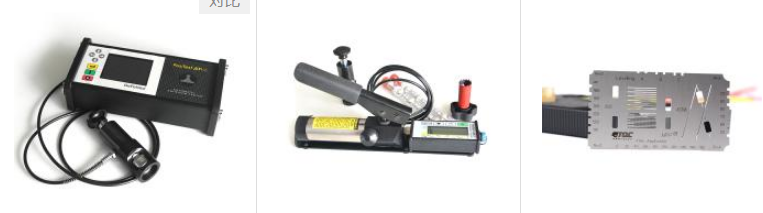
There are several standardized test methods for performing pull testing, including:
ASTM D4541, "Standard Test Method for Peel Strength of Coatings Using a Portable Adhesion Tester," for testing the adhesion of coatings to metal substrates, but can also be used for other rigid substrates such as wood and plastics;
ASTM D7234, "Standard Test Method for Peel Adhesion of Concrete Coatings Using a Portable Peel Adhesion Tester," is a method for testing concrete coatings in accordance with ASTM D4541, Method A; and
BS EN ISO 4624, 'Paints and varnishes - Peel test for adhesion', describes three methods that can be used on a variety of substrates, including deformable substrates.
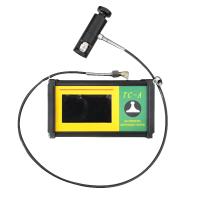
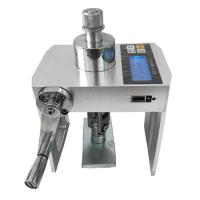
Tensile Tensile testing is usually performed in the field, in a shop, or in a laboratory using a portable adhesion Tester. The Tester is designed to apply force to separate the bonded loading fixture from the coated surface. They also keep the force normal to the surface, which is important so as not to introduce any cleaving effects during the test that could cause excessive variation in test results. If the test is performed correctly, either the coating (or one layer of a multilayer coating system) separates from the substrate or other layers (known as "adhesive failure"), or the coating (or layer) internally ruptures (known as "inner bonding"). Convergence Disruption").
The glue used to attach the loading fixture to the coated surface needs to be stronger than the adhesion strength of the coating to the substrate or other layers of the coating system (if multiple coatings are applied), as well as the internal strength of the various coatings. layer. This will ensure that the strength of the paint or paint system being tested is assessed, not the strength of the glue itself.
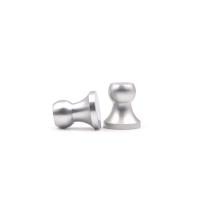
Pull-out testing procedures typically involve the following:
preparation of a fully dried and cured coating or surface portion of a coating system that has been applied to the surface of a rigid substrate (usually steel or concrete with a relatively uniform surface texture), usually by light sanding part of the coating to be applied then wiped clean
A two-component, 100% solids, viscous liquid adhesive (glue) is usually used to bond the head of the charging jig directly to the surface of the paint or paint system, and
Once the glue is sufficiently cured, separate from the charging jig perpendicular to the surface (thus applying a "pull" stress) using equipment designed specifically to measure the force required. "Scoring" is sometimes performed where the coating is scored on the outside of the test area to better reduce the potential effect of lateral adhesion from the surrounding area to the test result.
Adhesion theory
To understand how to better select the correct adhesive for peel testing, it is beneficial to understand the various theories of adhesives. A material can adhere to another material in one or more of the following ways:
Mechanical – describes the penetration of the adhesive into the pores and cavities of the substrate surface. A good example is white or wood glue. When applied, the glue's polymers wick into the substrate (paper, fabric, wood), forming a physical bond after the carrier (water) has evaporated.
Diffusion - The polymers in the adhesive diffuse to the surface of the substrate on a microscopic level; for example, when bonding plastics together, a good adhesive penetrates the plastic surface slightly on a microscopic level to provide the bond.
Chemical – Adhesives form a chemical bond directly with the substrate, for example, using "super glue" to repair damaged items.
Wetting – If the surface tension of the adhesive is lower than the surface energy of the substrate, the adhesive can spread well on the surface. Think about how water beads up on a freshly waxed car; if an adhesive behaves like water, it won't be able to properly wet and bond to the substrate.
Acid-Base – A type of chemical bonding specifically involving the reaction of acidic and basic chemical groups on the adhesive and substrate to form bonds. Imagine how Velcro® works, where the "hook" might be the acid group and the "loop" might be the base group. Both need to form a bond, and neither will bond. Note that Velcro® works by the mechanical interlocking of the hook and loop, but try to use your imagination on this.
Electrostatic – works on a subatomic level through electrostatic interactions between the adhesive and the substrate. Consider rubbing an inflated balloon to create an electrostatic charge, which then sticks to a wall.
other considerations
Keeping the previously stated bond theory in mind, there are a few other factors that can affect the quality of a bond created for a pull-off test:
Degree of Curing – The adhesives and coatings used need to be fully cured.
Curing and Testing Temperatures – The temperature at which both the coating system and the adhesive used for peel testing have cured affects the quality and strength of the bond being tested.
Environmental and Chemical Exposure – If the coated surface is exposed to any conditions or chemicals that may degrade it prior to testing, it may interfere with the binding of the loading fixture, or form a weak layer on the coated surface.
Surface Preparation and Cleaning – Anything on the surface of the coating that may interfere with any of the above bonding mechanisms (e.g. chalking) can also lead to abnormally low tensile strength values by inhibiting the bonding of the adhesive to the coating. Typically, the surface of the coating and the bottom of the charging jig are abraded and then cleaned to provide a high-quality surface for the adhesive.
Adhesive type
Peel adhesion testing can use several different adhesive chemistries. The key is to maintain a balance between bond strength to the substrate, internal bond strength and a reasonable cure time. Since there are a variety of coating systems that can be applied to a variety of substrates, only trial and error and/or previous experience can help determine the correct adhesive to use. It is important to consult the adhesive manufacturer's product information sheet and consider the following:
the ultimate tensile strength of the cured adhesive (some coatings can reach tensile strengths of nearly 4,000 psi),
which paint (or compatibility) should be used with the adhesive, and
Curing time of the adhesive (typically a few hours to 24 hours) at the prevailing temperature and humidity to which the loading fixture will be attached
The following types of adhesives may be considered for pull-off testing:
Epoxy (2-component solvent-free epoxy). Epoxy adhesives are the main type used for pull-off testing. They are compatible with most paints and adhere well to suitably rough loading fixtures with good tensile strength and a reasonable cure time. Before use, the components need to be mixed together. Products include:
Huntsman Araldite 2011 Slow Cure / Araldite 2010 Fast Cure
JB Welding
3M DP460 / Scotch Weld 1838
Hardman Double Bubble Ultra Fast Setup
Loctite Hysol 1C slow curing agent
Acrylic (2-component acrylic). Acrylic adhesives have been used in the past, but have largely been replaced by epoxy adhesives. However, they can be useful in situations where epoxies don't work very well. The components can be mixed together prior to application, or the accelerator can be applied to the substrate first and allowed to dry before the adhesive is applied. Products include:
Lord Westlock 204
Palm Labs Turbo Bond 300
Cyanoacrylates ("super" glues) generally have very fast cure times and are much less viscous and stronger than epoxies. Even though they cure quickly, allowing an additional few hours to cure will improve their bond strength. Products include:
Palm Labs Turbo Fuse 170
Persistence 240
Loctite 416
聚酯(过氧化物催化)。聚酯粘合剂已基本被环氧粘合剂取代,但在ISO 4624方法中进行了粘合力测试。
UV可固化(需要特殊的装料夹具)。单组分丙烯酸胶粘剂可以专门设计用于在暴露于紫外线(UV)时固化。一家供应商ME Taylor Engineering设计了一套工具包(PIPS,或“ PATTI Instant Pull Stubs”),其中将这种类型的胶粘剂与专门设计的包含半透明底座的Pull Stub一起使用)和将UV光传输至胶粘剂。涂完粘合剂并将拉杆连接到涂层表面后,将便携式发射紫外线的灯具放在拉杆上方,并在几分钟内固化粘合剂。然后使用气动附着力测试仪确定拉伸附着力。
评估粘结失效/失效模式
在完成剥离试验并确定抗张强度之后,需要评估最终的失效模式,以正确表征涂料体系的粘合性能。ASTM D4541描述了这样的过程,该过程涉及在分离后评估涂层和装填夹具的表面,并According to发生断裂的位置和断裂程度对断裂进行评级。一种可能的失效模式是断胶,其中涂层系统的粘合力和/或内聚强度超过了加载夹具与涂层表面的粘合力。发生这种情况时,可能需要或不必重新安装新的加载装置并重复测试。
管理胶水故障
ASTM D4541,如果在测试过程中出现可见的胶水断裂(定义为占装载面积的5%或更多的胶水破坏),并且最大载荷小于通过/失败,则测试结果不确定标准。可以重新执行不确定的测试以确定通过或失败的结果。如果重做测试,并且在低于测试标准的负载下胶水破裂仍持续存在,建议操作人员查看测试程序并进行调整以减少胶水破裂或表明测试不确定。如果胶水破裂发生在施加的负载大于通过/失败标准时,则无需重新测试(将结果报告为“通过;> [标准] psi”)。
摘要
When performing tensile (peel) bonding according to ASTM or ISO standards, the adhesive (glue) chosen to attach the loading jig to the coated surface cannot be overemphasized for testing importance. If the glue breaks down below acceptable standards, the actual adhesion properties of the paint system remain unknown. There are a variety of adhesives available in the market. However, they need to be compatible with the coating (not dissolve) and need to have high tensile strength properties. Be sure to follow the adhesive manufacturer's instructions and allow the adhesive to effectively cure before testing.

- 1How to ensure that the anti-corrosion coating of the product does not peel off?
- 2The composition of the circle adhesion instrument? How to judge the test results?
- 3Why handle the substrate? What does it do?
- 4Two Methods of Adhesion Testing
- 5What is the coating pull-off strength?
- 6What is the cause of poor coating adhesion?
- 7Coating Adhesion Test FAQ
- 8Concrete Coating Adhesion Tensile Strength Test (ASTM D4541)
- 9Application Case of Adhesion Tester Gravure Ink Adhesion Test on PET Film Surface
张复忠,魏先福,黄蓓青,李鑫 - 《《水性凹印油墨在PET薄膜表面附着力的研究》》
-
![TRUIT TR 3599/2 Automatic Circular Adhesion Tester]()
-
![TIANDIXINGHUO TC-M20 Manual Pull-off adhesion Tester kit Diameter 20mm]()
-
![TIANDIXINGHUO TC-M14 Manual Adhesion Tester adhesion kit Diameter 14mm]()
-
![TIANDIXINGHUO TC-A20 Automatic Adhesion Tester with 20mm kit]()
-
![TIANDIXINGHUO TC-A14 automatic Pull-off adhesion Tester with 14mm kit]()
-
![Pushen 20mm spindle]() Pushen 20mm spindle$ 76.00
Pushen 20mm spindle$ 76.00