Several Methods of Coating Adhesion Test on Glass
Adhesion requirements for UV digital printing on glass are set forth by ASTM International. ASTM specifies and standardizes specific adhesion requirements for various substrates. North and South Tide Tip: Not every product requires all adhesion requirements, however, familiarity is key.
1. Tape adhesion test
The first method of glass adhesion testing is gentle. To perform this test, simply stick a piece of pressure-sensitive tape to the trim and press firmly with your thumb. Then, peel off the tape at a 180-degree angle. If ink appears, the test has failed and the adhesion is insufficient. If no ink comes off the tape, the object passes the test.
2. Scratch adhesion test
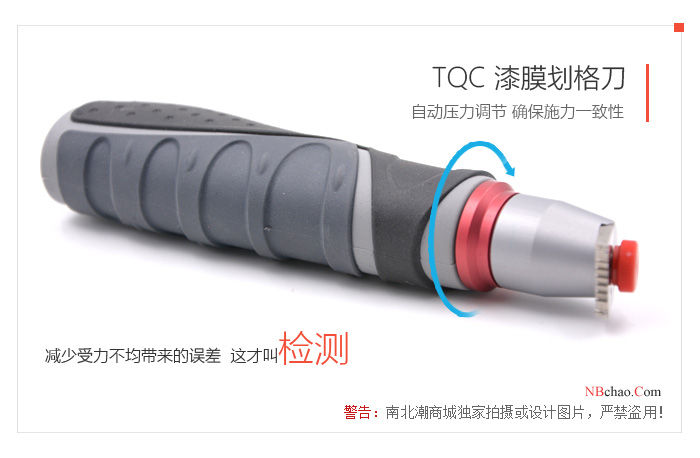
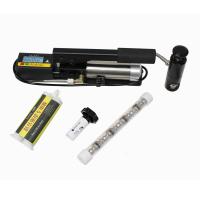
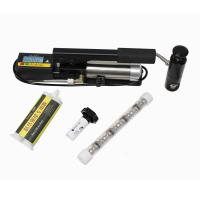
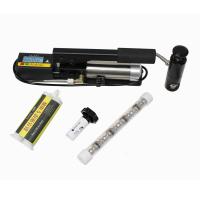
Scratch testing uses a pen-like tool called a durometer. This tool is specifically designed to measure the scratch hardness of substrates.
First, loosen the screw on the collar and move the scale to 8 Newtons of force.
The Hardness Tester should be perpendicular to the object to be tested. It needs to be drawn down through the ink from the outside of the image. If no ink comes off, or if there is a line but no jagged edges, the test passes.
3. Cross-hatch A adhesion test
To accomplish the cross-hatch test, use a blade to make an X-shaped cut in the substrate. Then, apply the pressure sensitive tape like a tape test and remove it at a 180 degree angle. If any ink comes off, the object has failed the adhesion test to the glass.
4. Cross-line B adhesion test
A multi-prong sticky cutter is required for this test. Drag the blade across the decorative surface of the glass so that it passes 0.75 to 1 inch. Repeat the process with the second cut intersecting the first, as close to a 90 degree angle as possible, creating a lattice pattern. The results were evaluated according to the following ASTM standard classification table. A score of 5 is most desirable, indicating that all squares remain intact.
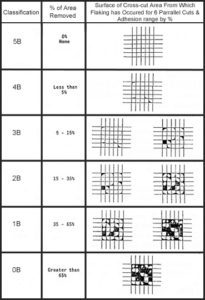
The methods mentioned in Section 1 of the International Standard for differentiating higher levels of coating adhesion For testing purposes we ensure a generally adequate level of adhesion. As mentioned above, additional tests may be performed upon request.

- 1Film adhesion detection method and its applicability analysis
- 2Purpose, method, principle and operation points of coating adhesion test
- 3Working principle and application of UV coating Cupping testing device
- 4Principle and Application Analysis of Film Adhesion Tester
- 5Optical inspection device Anti-reflection film adhesion Measuring method
- 6Automatic scratch test to evaluate film strength, hardness, adhesion
- 7Comparison of film adhesion determination methods
- 8Determination of film adhesion
- 9Paint film adhesion and test method thereof