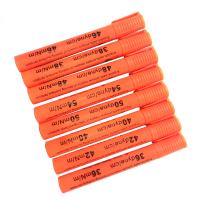
Dyne pens and test fluid -- how do they work?
Achieving high surface energy is required for proper adhesion when printing, gluing or coating on various substrates. The low surface energy of polymer-based substrates often results in poor adhesion of inks, glues and coatings. Surface energy can be easily determined using a surface energy test pen and ink (dyne level test).
Dyne Test Fluid performs well on most non-absorbent materials. It cannot be overemphasized that the test fluid does not alter the surface properties of the substrate. For example, if the test fluid penetrates a fibrous substrate (such as paper) and causes swelling, the results will show unrealistically easy wetting. Chemical reactions between the test fluid and the substrate can completely invalidate the results.
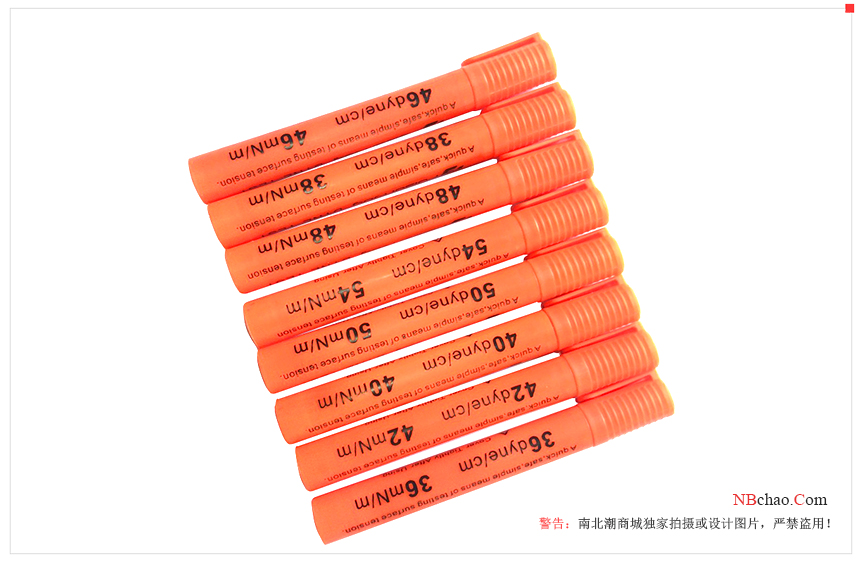
When a dyne level test fluid is applied to a surface, the fluid either forms a continuous film on the surface or is pulled back into small droplets. If the Dyne test fluid remains in a film for 3 seconds, the substrate will have the minimum surface energy for that ink value, expressed in mN/m (Dynes). If the Dyne test liquid forms a network or retracts droplets in less than 1 second, the surface energy of the substrate is lower than that of the liquid itself. The exact surface energy (dyne level) can be determined by applying a series of increasing or decreasing dyne test fluid values.
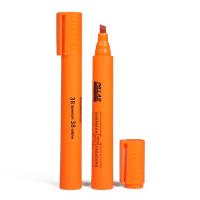
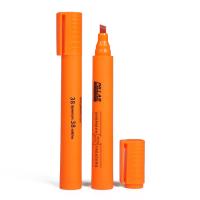
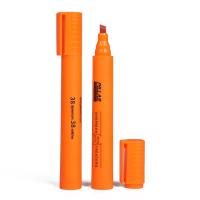
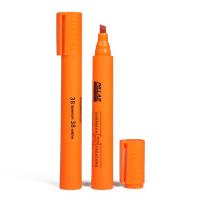
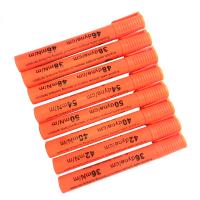
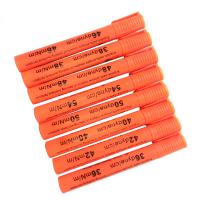
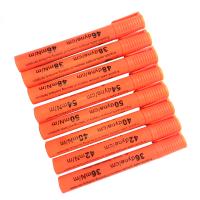
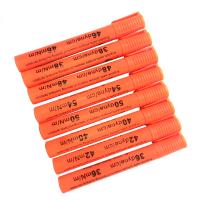
The liquid contained in the Dyne pen is based on the ISO 8296 method for measuring the surface energy of polyethylene films and is provided as a valve tip applicator type of pen rather than a "felt tip" type which tends to produce excess liquid during testing and may produce inaccuracy. Dyne testing offers a range of dyne levels from 30 – 72mN/m, supplied in disposable pens or vials of test fluid.
Surface energy can easily be determined using a surface energy test pen or ink (dyne level test) or by contact angle measurement.
-
![Fengzhiyue 38 Printing ink Dyne pen Dyne value 38 blue]()
-
![Fengzhiyue 54 Dyne pen]() Fengzhiyue 54 Dyne pen$ 84.00
Fengzhiyue 54 Dyne pen$ 84.00 -
![Fengzhiyue 36 Dyne pen surface tension coefficient 36]()
-
![Fengzhiyue 48 Dyne pen]() Fengzhiyue 48 Dyne pen$ 84.00
Fengzhiyue 48 Dyne pen$ 84.00 -
![Fengzhiyue 34 Dyne pen tension coefficient 34]()
-
![Fengzhiyue 40 Dyne pen surface tension coefficient 40]()
-
![Fengzhiyue 56 Dyne pen]() Fengzhiyue 56 Dyne pen$ 84.00
Fengzhiyue 56 Dyne pen$ 84.00 -
![Fengzhiyue 46 Dyne pen surface tension 46]()
-
![Fengzhiyue 50 Dyne pen]() Fengzhiyue 50 Dyne pen$ 84.00
Fengzhiyue 50 Dyne pen$ 84.00

- 1Film adhesion detection method and its applicability analysis
- 2Application of Dyne pen in surface tension measurement
- 3Purpose, method, principle and operation points of coating adhesion test
- 4Working principle and application of UV coating Cupping testing device
- 5Principle and Application Analysis of Film Adhesion Tester
- 6Optical inspection device Anti-reflection film adhesion Measuring method
- 7Dyne pen in film printing
- 8Automatic scratch test to evaluate film strength, hardness, adhesion
- 9Comparison of film adhesion determination methods