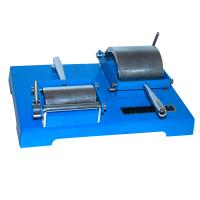
What is coating flexibility? (test principle)
Coating Mechanical Properties
The mechanical properties of a coating have a great influence on its performance. Coatings on substrates are often subjected to several types of mechanical or physical stress during their service life, caused by impacts, harsh environments or dimensional changes in the substrate. These stresses can cause damage to the membrane.

Therefore, it is important for coatings to exhibit the required balance of mechanical properties, such as impact resistance, flexibility, hardness, toughness, etc., to meet the service requirements of a particular application.
As we have already discussed the importance of impact resistance, flexibility and toughness are two other important mechanical properties of coatings and paint formulations. Affects final properties and contributes to coating life. For example, to obtain good outdoor durability on coated wood substrates, the coating needs to be flexible enough to compensate for changes in wood dimensions due to changes in temperature or humidity.
Flexibility and toughness describe the ability of a coating to withstand different stresses.
Flexibility is the ability of a coating to bend or bend without cracking or other failure. It is the resistance of the coating to damage when the substrate and coating are deformed.
Toughness, on the other hand, is the ability of a coating to withstand large strains for a short period of time without tearing, breaking or cracking.
Coating Flexibility Basics
Flexibility is a material property described by the flexural modulus or flexural modulus of elasticity. Flexural modulus indicates the ability of a coating material to bend. It is a measure of the stiffness/flexibility of the coating when a force is applied perpendicular to the long side of the sample.
The flexural modulus is called "flexural modulus of elasticity", also known as modulus of elasticity, modulus of elasticity or simply modulus.
The international standard unit of flexural modulus is Pascal (Pa or N/m 2 or m -1 .kg.s -2).
The actual unit used is megapascal (MPa or N/mm 2 ) or gigaPascal (GPa or kN/mm 2 ).
In US customary units, it is expressed as pounds (force) per square inch (psi).

Flexural modulus measurement
The standard flexural strength test for materials including coatings, paints and films is ASTM D790. Different varieties of this test include the three-point method and the four-point method. For ASTM D790, the pressure is applied to the central region of the bendable specimen. Stop the test when the sample reaches 5% deflection or the sample breaks before 5%.
It goes without saying that this test is important for evaluating coatings applied to flexible substrates, such as thin metal or unsecured strips of plastic, to determine the quality of the material.
- 1Detailed explanation of 3 methods for measuring film flexibility
- 2Flexibility: comprehensive film performance
- 3Coating performance testing: the key to ensuring quality coatings
- 4Two Methods and Instruments of Film Flexibility Test
- 5Key performance and specific detection methods of resilience Coatings
- 6Key performance of powder coatings and their testing instruments
- 7How are architectural coatings flexibility tested?
- 8ASTM D5019 Single-layer roofing film reinforced CSM board (chlorosulfonated polyethylene (PE)) standard interpretation
- 9Analysis of Conical Mandrel Test of ASTM D522 Film