When the dry film thickness is greater than 250pm, can the pull-off method be used to test the adhesion?
The adhesion requirement of ISO 12946 for the coating system (when the dry film thickness is greater than 250pm) is to test the adhesion according to the ISO 4624 pull-off method, and it should be at least 5MPa.
For the repair of the old coating, the reference value needs to reach at least 2MPa, in order to determine that the original coating has a certain adhesion and can be retained. Otherwise, the old coating should be removed. In the "Technical Code for Anti-corrosion of Concrete Structures in Seaport Engineering" (JTJ 275-2000), the adhesion between the anti-corrosion coating of new structures and the concrete surface shall not be less than 1.5MPa. If the adhesion of the coating system has reached the designed service life and is still not less than 1.0MPa, and there are no cracks, air bubbles and severe crushing on the surface, the coating system can be considered to continue to be used.
According to the ISO 12944-4 standard, the coating performance test was carried out after 3 weeks (21 days) of curing in the atmospheric environment. In the field test, although the curing environment of the coating is unstable, after 21 days of weathering, the coating system has entered a relatively stable state. At this time, the adhesion test results are more accurate and scientific. GB 5210-85 is formulated with reference to the international standard ISO4624-1978. The adhesion of the coating is expressed in kgf/cm2 (lkgf/cm=9.8665kPa). Coating adhesion was calculated as follows:
F = G/S
In the formula, F is the adhesion of the coating;
G is the load value when the sample is pulled to failure, kgf (1kgf=9.80665N);
S - the cross-sectional area of the coating test column, cm2.
The form of destruction is as follows
1. Damage at the interface between the coating and the substrate, the composite coating, expressed as A
2. Internal damage The coating itself is damaged, indicated by B
3. If the adhesive itself is damaged or the surface part of the coating to be tested is pulled up, it means that the adhesion between the coating and the substrate or the interfacial adhesion between the coatings has no value, expressed by C
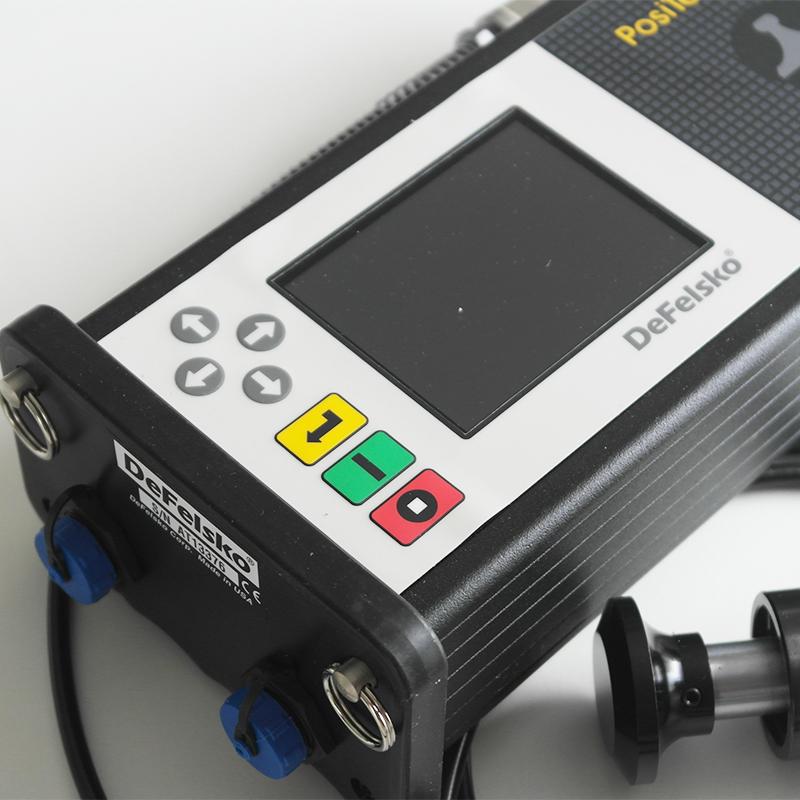
4. The unbonded adhesive is separated from the uncoated test column, or completely separated from the top coat of the coating under test, expressed as D
When the failure mode is A, B or C, the measurement results meet the adhesion test requirements. If there are two or more failure types, the percentage of the failure area shall be indicated, and greater than 70% is valid. If it is D, the selection, process and quality of the adhesive should be checked or replaced. When C appears, it means that the strength of the adhesive cannot meet the requirements, and materials with higher strength can be replaced
The test results are expressed in the form of bonding and failure, such as 735MPa·A (75kgf/cm2 * A)
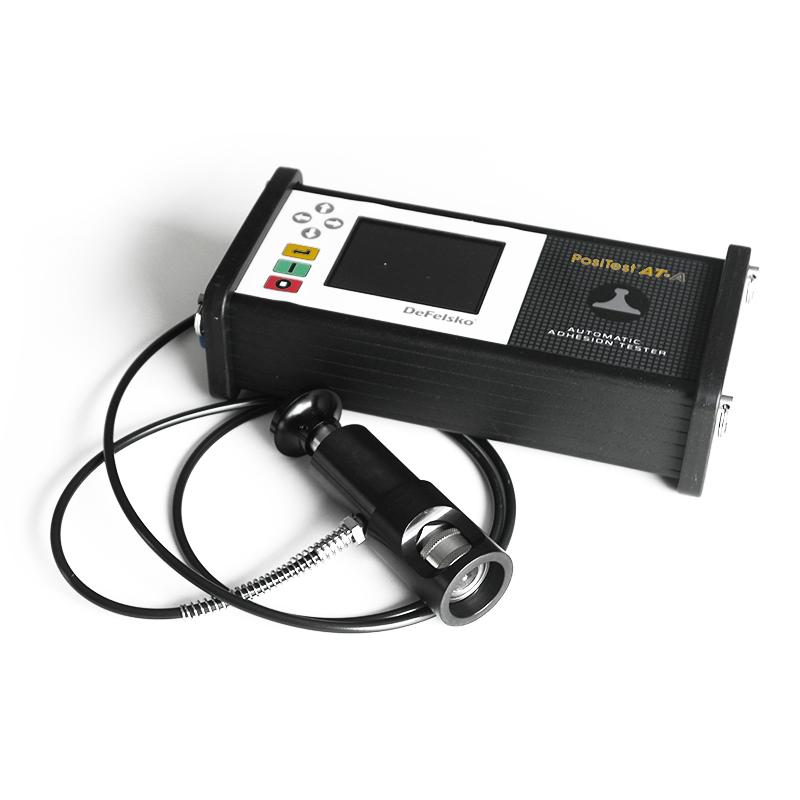
The pull-off method is a destructive coating inspection method. In order not to damage the coating, a certain pull-out strength can be specified as the basic requirement when performing the adhesion pull-out test. As soon as this strength is reached, the test can be stopped to avoid new brittleness and weakness in the coating. If the coating is torn off, it indicates non-compliance. This is more reasonable and beneficial for on-site coating tests.
-
![KOSON KS-T Manual pulling method coating adhesion Tester, top 50mm]()
-
![KOSON KS-T intelligent drawing adhesion instrument, top 10mm]()
-
![KOSON KS-T Intelligent Adhesion Tester Spindle 14mm]()
-
![KOSON KS-A Automatic Digital Display Adhesion Tester]()
-
![KOSON KS-T smart Adhesion Tester]() KOSON KS-T smart Adhesion Tester$ 1086.00
KOSON KS-T smart Adhesion Tester$ 1086.00 -
![CHINA Pull-off adhesion Detector NBC-M kit 10mm]()


- 1Film adhesion detection method and its applicability analysis
- 2Purpose, method, principle and operation points of coating adhesion test
- 3Working principle and application of UV coating Cupping testing device
- 4Principle and Application Analysis of Film Adhesion Tester
- 5Optical inspection device Anti-reflection film adhesion Measuring method
- 6Automatic scratch test to evaluate film strength, hardness, adhesion
- 7Comparison of film adhesion determination methods
- 8Determination of film adhesion
- 9Paint film adhesion and test method thereof